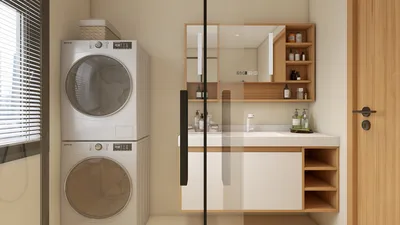


Locker room privacy guidelines vary widely across gyms, schools, workplaces, and healthcare settings due to each environment's unique balance of supervision, safety, liability, and user comfort. While fitness centers prioritize member comfort and optional privacy, schools focus on visibility and supervision. Workplaces emphasize efficiency and regulatory compliance, and healthcare facilities demand the highest degree of personal privacy. Successful locker room designs tailor partitions, layouts, and circulation flow to align with these distinct priorities, often supported by advanced tools like Homestyler for spatial planning.
Locker room privacy standards are not one-size-fits-all, as expectations shift based on who uses the space and for what purpose. For instance, a boutique gym risks losing members if changing areas feel too exposed, whereas schools require visibility for staff supervision to ensure safety. Misapplying a single design blueprint across diverse industries is a common error. Using software tools such as Homestyler, designers prototype and test circulation and sightlines to identify privacy gaps early in the planning stage.
Each facility type dictates unique privacy standards shaped by different priorities such as supervision, liability, and user comfort. While public discourse sometimes treats locker room privacy as a universal issue, operational policies ultimately drive design choices. Architects and planners often map out these priorities before finalizing the floor plan to best fit the facility’s intended use.
In modern fitness centers, there is a clear movement away from fully open locker rooms toward creating flexible privacy zones. A decade ago, communal bench layouts were prevalent; however, recent projects reveal that members increasingly desire more personal changing spaces. Many large gym chains integrate hybrid designs mixing open access lockers with enclosed changing booths to strike a balance between efficiency and comfort. Homestyler's 3D visualization tools often assist planners in verifying sightlines and minimizing unintended exposure in these layouts.
School locker rooms favor designs that maximize visibility to promote supervision and student safety—priorities that differ significantly from commercial gyms. While parents might expect private changing areas mirroring gyms, administrators must comply with legal requirements that encourage openness as a safety measure. Still, some newer university recreation centers are introducing private changing stalls to accommodate diverse comfort needs.
In workplace and industrial settings, locker rooms prioritize durability, hygiene, and fast turnover rather than personal privacy. These spaces support swift shift changes, equipment storage, and shower access, resulting in layouts that usually feature partial partitions instead of fully enclosed booths. Layout planning in these environments, similar to industrial space planning methodologies, carefully balances efficient worker movement with sanitation zones, often utilizing tools like Homestyler for accurate spatial management.
Healthcare and rehabilitation locker rooms demand the strictest privacy standards due to patient dignity and regulatory requirements. Facilities such as rehabilitation centers and hospital wellness areas must accommodate individuals recovering from injuries who require ample personal space and assistance. Their design often incorporates fully enclosed private changing areas, honoring guidelines from entities like the Facility Guidelines Institute that emphasize privacy and respect.
Locker room privacy standards diverge because facilities emphasize different risks and user needs. Schools focus on supervision, gyms on user comfort, workplaces on efficiency, and healthcare centers on privacy and dignity. These distinct priorities shape how locker rooms are designed and operated.
Multi-use facilities encounter the challenge of merging diverse privacy expectations within a single building serving students, athletes, general gym members, and rehab patients. The most effective designs partition the locker room into graduated privacy zones, blending open, semi-private, and fully private areas. Using advanced design platforms like Homestyler enables precise spatial planning that accommodates diverse user groups without significantly escalating construction costs.
Frequently asked questions about locker room privacy include: Why do gyms favor semi-private changing areas with optional stalls? Because these features balance comfort with efficient locker access. Are schools required to maintain open layouts? Often yes, to allow staff supervision, though some incorporate private changing booths. Do legal requirements exist? Yes, they vary, with healthcare and workplaces typically enforcing stricter privacy and accessibility regulations. Why are workplace locker rooms more open? To facilitate rapid shift changes and equipment handling. What is the ideal design for multi-use facilities? Layered privacy zones combining open lockers, semi-private stalls, and private rooms work best. How do regulations influence design? They shape accessibility, supervision, and hygiene considerations. What functionality improves school locker room privacy? Adding partial partitions and private changing spaces enhances privacy while maintaining necessary visibility. Common pitfalls include applying uniform gym locker layouts across facilities with different operational needs.

Minimalist Solid Wood Open Bookshelf Storage Display 3D Model

Modern Minimalist Solid Wood Entryway Storage Cabinet with Bench 3D Model
Minimalist Blush Metal Rolling Utility Cart 3D Model
Homestyler is an easy-to-use online platform offering powerful home design tools, stunning 3D renderings, and a vast collection of interior projects. With helpful DIY video tutorials, it’s perfect for bringing your decorating ideas to life quickly and beautifully.
立即免费设计
































