

As summer approaches, many embrace new trends like the 2026 nail styles to refresh their personal look. This seasonal focus on self-expression naturally extends to living spaces, where vibrant colors and innovative textures can inspire home decor choices. Incorporating bold hues and playful patterns in furniture and accessories allows your space to reflect the same renewed spirit that summer fashion trends encourage. Using Homestyler, an intuitive AI-powered home design tool, you can effortlessly visualize such refreshing interiors and experiment with color palettes and textures to match this vibrant summer vibe.
Executive Summary
Japandi bedroom design perfectly marries Japanese minimalism with the inviting warmth of Scandinavian style, creating serene and uncluttered refuges characterized by natural materials, low-profile furnishings, and a subtle warm-neutral color scheme. With the advancement of AI-driven design platforms like Homestyler, you can now swiftly envision and tweak a Japandi-inspired bedroom before making any purchases. This guide outlines the essential elements of Japandi style, provides practical AI prompt workflows, and supplies ready-to-use prompts tailored for compact bedrooms, master suites, rental-compatible rooms, and minimalist aesthetics. Additionally, you will find a comprehensive layout checklist and answers to frequently asked questions.
What Defines a Japandi Bedroom
Japandi transcends mere visual appeal—it's a design philosophy that fuses the Japanese wabi-sabi ideal, which finds beauty in simplicity and imperfection, with the Scandinavian hygge principle, emphasizing comfort through warmth, texture, and mindful living. The outcome is a bedroom ambiance that feels grounded, airy, and rejuvenating.
The core materials in Japandi interiors include wood, bamboo, rattan, stone, linen, cotton, and wool. Common wood species like light oak, ash, and walnut are favored for bed frames, nightstands, and shelving units. These natural elements impart a tactile warmth that synthetic or painted surfaces seldom replicate. An authentic Japandi bedroom typically features at least three distinct natural textures—such as a linen duvet cover, a solid wood side table, and a jute area rug.
Furniture in Japandi bedrooms is generally low to the floor. Platform beds and tatami-inspired frames with minimal headboards ground the room elegantly without overpowering it. This philosophy extends to bed stands, dressers, and seating options—pieces should feel anchored yet unobtrusive. This low-profile furniture approach also visually enlarges the space, which benefits smaller bedroom layouts.
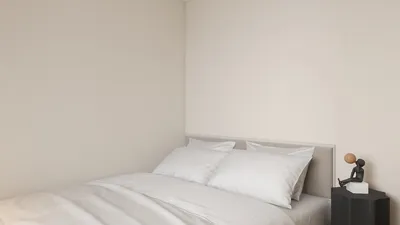
The color scheme for Japandi bedrooms revolves around creamy whites, gentle beiges, soft taupes, muted greys, and subtle earthy tones. Dark shades like charcoal or rich brown are used sparingly, perhaps in a handmade ceramic piece or a woven bench. The emphasis lies in creating tonal harmony rather than bold contrasts. Walls tend to remain light and airy, maximizing natural daylight reflection.
Every element placed in a Japandi bedroom serves a deliberate purpose. Surfaces remain uncluttered, storage is seamlessly integrated or hidden, and only a few carefully chosen objects—such as an artisanal bowl, a unique ceramic vase, or a curated book stack—are displayed. This intentional minimalism doesn’t imply lacking possessions but rather allocating each item a designated hidden space. Homestyler’s AI-powered room design capabilities allow you to experiment with various storage solutions before deciding on custom cabinetry or standalone closets.
Natural lighting is paramount. Sheer linen curtains or shoji-inspired panels gently diffuse daylight without obstructing it. After sunset, warm ambient lighting—such as fabric-shaded wall sconces, upward-facing floor lamps, and ceramic-based table lamps—creates a cozy glow. Bright overhead fixtures are typically avoided to maintain a softly illuminated atmosphere.
Bedding fabrics like crisp linen and washed cotton in off-white, oatmeal, or pale sand hues craft an inviting yet relaxed bed setting. Layering a lightweight quilt with a textured throw and adding a few cushions in complementary natural fabrics provides subtle variety. In Japandi, texture substitutes for busy patterns, ensuring a calm and harmonious aesthetic.
AI Workflow for a Japandi Bedroom Design
Employing AI tools such as Homestyler for interior design is both efficient and precise. Here’s a repeatable process to translate your design concept into an immersive digital room experience.
Begin by accurately measuring the bedroom’s length, width, and ceiling height. Record window locations, door swing directions, and any immovable features like radiators or built-in closets. Precise measurements ensure the AI generates viable layouts fitted to the actual room.
Launch Homestyler and input the dimensions. If you possess an existing floor plan in PDF or image format, upload it to let the AI interpret the boundaries and produce a clean digital layout.
Choose “Japandi” as the preferred design style. This informs Homestyler’s AI to favor neutral tones, natural materials, and low-profile furniture while populating the digital space.
Generate two or three layout options. The AI will suggest various bed placements, storage organizations, and circulation paths. Compare these to evaluate spatial efficiency and ensure adequate breathing room between the bed’s foot and the opposite wall—a hallmark of Japandi design.
Leverage suggested AI prompt examples to fine-tune the mood, material preferences, or functional needs. Rapid iteration is possible—adjust the prompt, regenerate designs, and review results efficiently.
Once satisfied with a layout, switch to 3D visualization in Homestyler to virtually stroll through the room. Assess sightlines from the entrance, bed, and seating areas, and confirm optimal natural light distribution. Make adjustments if necessary.
Japandi Bedroom AI Prompts by Room Type
The upcoming prompts are designed for use within AI home design platforms like Homestyler. Each prompt details style cues, material selections, color palettes, and functional specifics. Copy any prompt, paste it into your preferred AI tool, and customize it as you iterate.
For small bedrooms, prioritize floating furniture to enhance floor space visually; use sliding doors to save space otherwise consumed by door swings; and a single bedside table often suffices.
Master bedrooms benefit from clearly defined zones, such as sleeping, dressing, and small seating areas. The AI can intelligently position these based on window placements.
Rental properties necessitate non-permanent solutions like tension rods, stick-on wall lights, and freestanding storage, enabling a Japandi aesthetic without permanent alterations.
One prompt pushes Japandi minimalism to an extreme—focusing solely on function and material honesty. Even if the final design incorporates additional pieces, this exercise helps distill the style’s essence.
Room Type Comparison at a Glance
Layout Principles for a Japandi Bedroom
Regardless of room dimensions, Japandi layouts adhere to several consistent principles:
These guidelines apply whether you’re designing a standalone bedroom or one integrated into an open-concept home. The cohesive approach also translates well to AI-generated living room designs, reinforcing an overall Japandi ambiance.
Common Mistakes to Avoid
FAQ
A Japandi bedroom fuses Japanese minimalism with Scandinavian coziness. It emphasizes natural materials, low-profile furnishings, warm neutrals, abundant daylight, and purposeful simplicity. Every object has meaning, and clutter is minimized.
Plain minimalism can feel detached or sterile because it values emptiness above warmth. Japandi is minimalism imbued with warmth, utilizing texture, organic shapes, and natural materials to cultivate serenity rather than emptiness. Its color palette favors warm creams, beiges, and soft browns over cold whites and harsh greys.
Yes, achieving Japandi style needn’t be costly: thorough decluttering, painting walls in warm off-white, selecting neutral linen or cotton bedding, and replacing heavy drapes with sheer curtains are affordable steps. Costlier items like bed frames and storage can be found secondhand in light wood or prioritized as investment pieces around which the rest of the décor is built.
Japandi principles work exceptionally well in small rooms. The combination of low-rise furniture, integrated storage, and a muted palette visually enlarges the space and promotes calm. Floating furniture, sliding doors, and rigorous decluttering strategies are especially beneficial in compact bedrooms.
Homestyler’s AI home design platform empowers users to set Japandi style parameters, generate dimension-accurate layouts from real floor plans, and explore the outcomes in an immersive 3D environment. This synergy of AI speed and precision is crucial when translating virtual designs into physical rooms.
Japandi’s clean lines complement organic modern, wabi-sabi, and select mid-century furnishings. A solitary mid-century walnut chair can comfortably coexist in a Japandi bedroom. Avoid ornate classics, reflective surfaces, shiny synthetics, and busy fabric patterns.
Rental-friendly approaches include using tension rods for sheer curtains, adhesive cordless sconces for ambient lighting, large natural fiber rugs to mask existing floors, freestanding garment racks in place of built-in closets, and movable low furniture. Investing primarily in bedding and textiles delivers the essential tactile quality of Japandi without major renovations.

Minimalist Rattan Solid Wood King Size Bed 3D Model

Mid Century Modern Solid Oak Nightstand with Single Drawer 3D Model

Minimalist Solid Wood Wall Mounted Bed with Built in Bookshelves 3D Model
Homestyler offers an easy-to-use online home design tool with stunning 3D renderings, a vast collection of design projects, and helpful DIY video tutorials—perfect for turning your interior ideas into reality.
Design Now for FREE
































