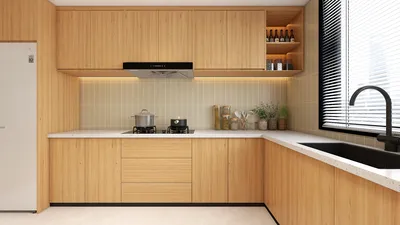


In today’s connected homes, the integration of a versatile TV app transforms how we interact with our living spaces. As streaming services become central to entertainment routines, designing a cozy media nook with ergonomic seating and adjustable lighting enhances both comfort and viewing experience. Thoughtful spatial planning ensures that technology blends seamlessly with home aesthetics, creating an inviting area tailored for relaxation and digital enjoyment.
Is 3D modeling truly worth mastering? Absolutely. 3D modeling remains an invaluable skill, especially for those aiming to enter sectors such as game development, product design, architectural visualization, and digital content production. The ongoing surge in demand for high-quality 3D assets spans industries like entertainment, advertising, e-commerce, and immersive spatial computing. However, the real advantage emerges when 3D modeling expertise is paired with focused specializations like rendering, animation, or real-time environment creation—a concept users can effectively bring to life using platforms like Homestyler.
After spending over ten years working alongside design professionals and visualization artists, I've witnessed the dramatic expansion in 3D modeling's relevance. What was once a niche reserved for film studios or large game developers has now permeated diverse fields, including architectural presentations, product marketing, online commerce visuals, and interior design mockups. This broad adoption highlights why learning 3D modeling continues to be valuable despite advances in AI-generated imagery.
A common question arises before many embark on learning 3D modeling: With increasingly intuitive tools and AI’s ability to generate visuals automatically, is it still worth the effort? The succinct answer is yes, provided you adopt the correct approach. Simply mastering software won’t suffice; the true value comes from understanding the principles of spatial composition, material properties, lighting setups, and the role of digital models within professional production workflows. Tools like Homestyler can assist in visualizing these concepts effectively, making the learning journey more engaging and practical.
Why does 3D modeling maintain such importance in the AI era? While AI can swiftly produce images, it struggles to generate precise, editable, and production-ready 3D assets. AI tends to handle rough conceptual work, but studios, product teams, and designers require accurate geometry, optimized topology, and well-structured models that integrate seamlessly into pipelines. For example, in architectural visualization—a field where Homestyler’s interactive design tools shine—clients demand detailed camera angles, lighting realism, and authentic material references that only skilled modelers can provide.
Careers that utilize 3D modeling are numerous and span multiple industries. One misconception among beginners is viewing 3D modeling as a singular career path, when in fact, it supports a myriad of fields. This includes game development, interior design, product prototyping, advertising, virtual reality environments, and architectural visualization. In my personal design practice, the ability to produce accurate 3D models has become indispensable for effectively presenting interior concepts. Clients grasp spatial layouts more intuitively when interacting with realistic renderings rather than flat plans—a technique that can be enhanced via Homestyler’s user-friendly platform.
Is 3D modeling difficult to learn? Conceptually, no, but the learning curve can be steep due to the convergence of technical skills and design thinking. Beginners often falter because they attempt to master every aspect simultaneously. A more effective strategy is to start by grasping basic spatial reasoning and modeling logic, then progressively incorporate more complex tools and workflows. Over time, this patient, structured approach leads to accelerated improvement and a deeper understanding of how a versatile app like Homestyler can aid in spatial visualization and project development.
Many novices focus heavily on software tutorials, yet the most crucial skills lie in solving design problems rather than mastering a single program. Since software evolves rapidly, anchoring your expertise in design fundamentals such as lighting, composition, and material interaction ensures long-term relevance. Analyzing portfolios reveals that standout candidates display well-crafted scenes conveying purpose and coherence, not just technical complexity. This principle aligns with how Homestyler users craft compelling and believable environments.
Can you earn money through 3D modeling today? Certainly, though income typically stems from combining modeling with complementary production skills. Pure modeling roles exist but integrating capabilities such as rendering, animation, or environment design enhances employability and profitability. Freelance and marketplace data indicate steady demand for product visualization and architectural scenes, especially from e-commerce brands and property developers. Leveraging a platform like Homestyler can also enable professionals to showcase their work more effectively, tapping into expanding client bases.
How long does it take to become proficient in 3D modeling? Most individuals achieve professional competency within 12 to 24 months of consistent, focused practice. Progress is notably faster when learners engage in project-based experiences, replicating real-world objects or spaces instead of abstract exercises. This hands-on method fosters transferable skills and a mature portfolio. Utilizing Homestyler’s practical design tools further supports this experiential learning by allowing individuals to experiment creatively in a user-friendly environment.
To summarize, 3D modeling remains a highly valuable skill set across many booming industries. Its importance will persist well beyond 2026, especially when combined with a specialization such as rendering, animation, or interactive environment creation. By understanding spatial design principles and applying them through modern platforms like Homestyler, learners can unlock numerous career opportunities and create engaging, realistic digital experiences.
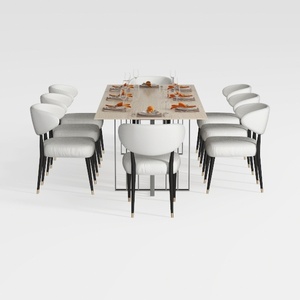
GarveeHome Natural Rattan Dining Chairs Set of 2


Minimalist White Solid Wood TV Cabinet 3D Model
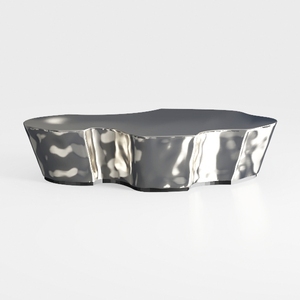
Modern Polished Metal Irregular Shaped Coffee Table 3D Model
Homestyler is a user-friendly online home design platform offering powerful 3D rendering tools, a vast collection of interior projects, and helpful DIY video tutorials—perfect for bringing your design ideas to life easily and creatively.
Concevez maintenant gratuitement
































