

As summer approaches, many embrace new trends like the 2026 nail styles to refresh their personal look. This seasonal focus on self-expression naturally extends to living spaces, where vibrant colors and innovative textures can inspire home decor choices. Incorporating bold hues and playful patterns in furniture and accessories allows your space to reflect the same renewed spirit that summer fashion trends encourage.
Direct Answer
3D model trials are temporary or feature-limited versions of 3D modeling software that let users explore tools, workflows, and performance prior to purchase. Designers typically take advantage of these trials to assess rendering quality, modeling speed, and compatibility with their projects. Gaining insight into how these trials function helps avoid wasted effort and unpleasant surprises.
Quick Takeaways
Introduction
Over the past decade working on residential interior design projects, I've sampled numerous digital platforms—from basic floor planners to sophisticated 3D modeling applications. One pattern I notice is designers downloading a trial, experimenting for a brief time, and hastily deeming the software "good" or "bad." Such judgments usually miss the bigger picture.
An effective 3D model trial simulates the real design workflow: constructing geometry, experimenting with materials, lighting renders, and exporting client-ready files. When leveraged properly, trial versions reveal far more than mere feature summaries. In this article, I’ll explain how 3D model trials operate, outline common constraints, and share evaluation techniques pros use before committing to software.
save pin
What Are 3D Model Trials and Why Do Software Companies Offer Them?
Key Insight: 3D model trials exist because hands-on experience is essential for professionals to truly evaluate advanced modeling tools.
Most professional design software—from SketchUp to Blender-integrated renderers—possess a steep learning curve. Vendors understand that screenshots and spec lists can’t convey real value. A 3D model trial empowers prospective users to test the software in their own environment.
Based on my experience with interior design firms, these trials generally fall into several types:
Major platforms such as Autodesk and others typically employ time-limited trials so users can quickly explore the entire feature range.
How Long Do Most 3D Model Trials Last?
Key Insight: Professional 3D model trials usually span from two to four weeks.
In reality, this timeframe feels short if you don’t plan your trial usage carefully. Often, designers spend the initial days just familiarizing themselves with the interface.
Typical trial lengths in the industry are:
One common error I observe is initiating a trial without an active project, resulting in running out of time before useful testing. Instead, testing with a current or recent design ensures meaningful feedback.
save pin
What Limitations Should You Expect During a 3D Model Trial?
Key Insight: Trials frequently limit export quality, collaborative tools, or rendering options rather than core modeling functions.
Creators allow full access to modeling features but protect advanced capabilities by restricting exports or resolution.
Typical restrictions include:
A less obvious constraint many overlook is hardware optimization—some software underperforms without GPU acceleration. Always assess rendering speed on your actual machine during a trial.
save pin
How Should Designers Evaluate a 3D Modeling Tool During the Trial?
Key Insight: The best approach is to reconstruct a real design project from beginning to end within the trial period.
In our design studio, we use a standardized checklist when assessing new tools.
Recommended evaluation steps include:
This procedure uncovers workflow bottlenecks that typical feature demos don’t reveal.
save pin
Why Do Many Designers Misjudge 3D Model Trials?
Key Insight: Evaluation often fails when users focus on isolated features instead of overall workflow compatibility.
It is important to distinguish between excellent modeling functions and slow rendering pipelines or limited asset libraries.
Common pitfalls in evaluation include:
In professional settings, software seldom works alone and must integrate with render engines, asset databases, and presentation platforms.
Is a 3D Model Trial Enough to Choose Professional Software?
Key Insight: While useful for checking workflow fit, long-term reliability assessment requires ongoing use across projects.
Most firms undertake multiple trial phases—initial tests assess usability, whereas further projects evaluate stability and scalability.
An effective selection process looks like:
Only after thorough testing across stages can software be fully trusted.
Answer Box
3D model trials provide temporary access to professional modeling software. The optimal evaluation involves recreating an actual project while monitoring modeling speed, rendering quality, and export capabilities. Tools like Homestyler can enhance this process by offering user-friendly workflows for home design simulations.
Final Summary
FAQ
What is a 3D model trial?
A 3D model trial is a temporary or partial-function version of modeling software that lets users test features before buying.
How long do most 3D model trials last?
Typically, these trials run between 14 and 30 days, with some offering shorter periods such as 7 days.
Are 3D model trials fully functional?
Some provide full features temporarily, others restrict export resolution, rendering options, or asset libraries.
Can you export files during a 3D model trial?
Many trials do permit exports, although file types or resolutions may be limited according to the software policy.
Do professionals rely on 3D model trials before buying software?
Yes, designers frequently assess modeling speed, visual output quality, and integration with existing workflows prior to purchase.
What should you test during a 3D model trial?
Evaluate modeling workflows, material libraries, lighting controls, render speed, and export functionality using an actual design project.
Is hardware important when testing a 3D model trial?
Absolutely—rendering and viewport performance hinge greatly on GPU and CPU capabilities, making hardware evaluation critical.
Can beginners benefit from a 3D model trial?
Definitely. Trials help novices acclimate to software interfaces and determine if the learning curve is suitable for their experience level.

Modern Solid Wood Metal Live Edge Dining Table 3D Model

Modern Leather Tufted Chaise Lounge 3D Model
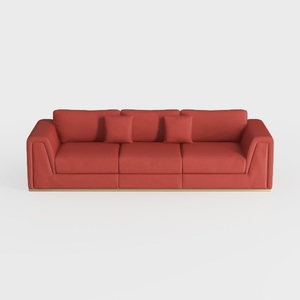

Modern Red Fabric Three Seater Sofa With Gold Base 3D Model
Homestyler is an easy-to-use online home design platform offering powerful 3D rendering tools, a vast collection of interior design projects, and helpful DIY video tutorials—perfect for bringing your home design ideas to life effortlessly.
Design Now for FREE
































