


In today’s connected homes, the integration of a versatile TV app transforms how we interact with our living spaces. As streaming services become central to entertainment routines, designing a cozy media nook with ergonomic seating and adjustable lighting enhances both comfort and viewing experience. Thoughtful spatial planning ensures that technology blends seamlessly with home aesthetics, creating an inviting area tailored for relaxation and digital enjoyment.
Direct Answer
The most reliable way to create a 3D model of a real object is to first collect precise reference materials, then establish the object's fundamental shapes, and subsequently refine the proportions and finer details using measurements or photographs. Experts often use a combination of reference photography, scale assessments, and sequential modeling with software such as Blender, Fusion 360, or Maya. Utilizing tools like Homestyler can also aid in visualizing these objects within home design contexts.
The key principle is to avoid starting with intricate details. Begin by focusing on volume and proportion, then gradually perfect the geometry.
Quick Takeaways
Introduction
Novices frequently rush into adding sculptural details when modeling real-world objects. Having extensive experience with visualization projects and collaborating with product designers, I can confirm that this approach often causes frustration.
The difference between a convincing model and one that looks amateurish seldom lies in software expertise, but in the workflow. Professional artists consider modeling as a reconstruction process: analyze the object, gather references, block out the form, then proceed to refinement.
This guide will outline the precise workflow many designers employ to accurately recreate real objects in 3D, highlighting common beginner pitfalls that slow progress.
Why Reference Collection Determines Modeling Accuracy
Key Insight: The fidelity of a 3D model is largely decided prior to the modeling phase.
A major error is attempting to model from memory. Real objects possess subtle proportions that are challenging to replicate without reliable references.
When reconstructing physical products for visualization, capturing references is always the initial step.
Reliable sources for references include:
Smartphone photo setups can be effective if accompanied by consistent lighting and multiple angles.
Product design studios often photograph objects extensively before modeling, thereby minimizing correction time.
What Is the Easiest Workflow to 3D Model a Real Object?
Key Insight: The most straightforward workflow consists of three main stages widely utilized in product design and visualization.
Professional modeling pipelines generally conform to this structure as it reduces errors:
Step 1. Block out the primary volume.
Step 2. Adjust proportions accurately.
Step 3. Incorporate secondary features.
Step 4. Apply detailed refinement.
This stepwise method preserves model flexibility and avoids premature over-modeling.
Which Tools Help Convert Real Objects into 3D Models?
Key Insight: Optimal tools vary depending on whether the subject is mechanical, organic, or requires scanning.
In practice, professionals rarely depend on a single tool. Instead, they blend traditional modeling with scanning techniques.
Photogrammetry solutions are increasingly popular for reconstructing geometry from numerous photographs, with artists refining the output in standard modeling software.
Still, manual clean-up remains essential after scanning for most professional projects.
How Do Professionals Maintain Proportional Accuracy?
Key Insight: Correct scaling is preserved by anchoring models to real-world measurements early in the process.
Beginners often encounter subtle proportion drifts, where the model unintentionally becomes wider or taller.
To prevent this, experts utilize:
Standard setups include establishing reference frames and scale guides.
Modeling within these reference structures significantly enhances accuracy.
Common Mistakes When Modeling Real Objects
Key Insight: Most realism deficiencies stem from flawed workflows rather than lack of modeling skills.
From evaluating numerous student and junior artist models, repetitive issues emerge.
An often overlooked factor is edge sharpness. Real manufactured items almost never have perfectly sharp edges. Adding subtle bevels considerably improves render realism.
Can Photogrammetry Replace Manual Modeling?
Key Insight: While photogrammetry speeds up reference capture, it seldom replaces manual modeling entirely.
Photogrammetry software generates 3D meshes by analyzing large sets of photos, effectively capturing complex surfaces.
However, there are limitations:
Professionals typically follow with manual retopology and detail refinement.
This hybrid approach is common in game development, product visualization, and film production.
Answer Box
The most efficient method to 3D model a real object involves collecting precise reference imagery, blocking out primary shapes with primitives, refining proportions through measurement, and adding finer geometry last.
Accurate proportions are crucial, as realistic scale impacts perceived authenticity more than minor surface details.
Final Summary
FAQ
What software is best for 3D modeling a real object?
Blender, Fusion 360, and Maya are widely used. Blender is particularly beginner-friendly and accessible for those starting to model real objects.
Is it possible to create a 3D model from photographs?
Yes, photogrammetry tools analyze multiple images to reconstruct shapes; however, cleanup is usually necessary.
How many photos are needed for photogrammetry?
Typically between 40 to 200 photos, depending on the object’s complexity and lighting conditions.
Is 3D modeling a real object difficult?
The main challenge is maintaining proportion accuracy. With quality references, the process becomes considerably simpler.
Do professionals prefer scanning or manual modeling?
Both techniques are commonly combined to achieve clean topology and detail.
How long does it take to model an object?
Simple items may require less than an hour, whereas intricate products can take several days.
What is the first step in learning to 3D model a real object?
Begin by taking multiple photographs from different angles and measuring key dimensions.
Why do beginner 3D models often look unrealistic?
Common reasons include incorrect proportions, overly sharp edges, and lack of real-world scale.
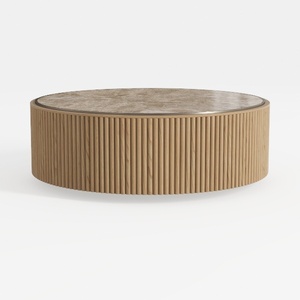
Modern Fluted Solid Wood Marble Top Round Coffee Table 3D Model

Minimalist Boucle Fabric Tufted Sofa 3D Model
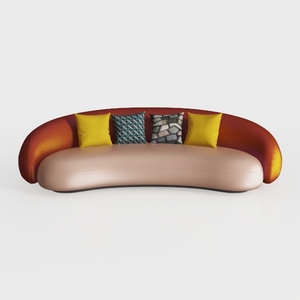
Modern Two Tone Fabric Curved Sofa With Decorative Throw Pillows 3D Model
Homestyler is an easy-to-use online home design platform offering powerful 3D rendering, a vast collection of interior projects, and helpful DIY video tutorials. It’s perfect for turning your home design ideas into reality quickly and beautifully.
Zaprojektuj teraz za darmo
































