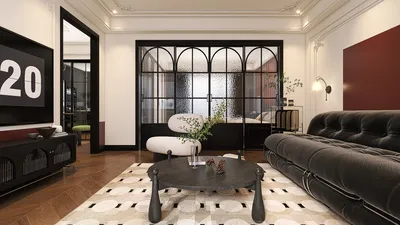


As more people embrace the convenience of steam machines for their daily cleaning and fabric care, incorporating dedicated spaces within our homes for such technology becomes essential. Designing a multifunctional laundry area that accommodates a steam machine not only enhances efficiency but also elevates the overall functionality of your living space. Thoughtful layout and proper ventilation ensure that these appliances integrate seamlessly into modern home environments.
Crafting an effective bathroom floor plan involves more than just placing essential fixtures like toilets and sinks; it requires an accurate representation of the room’s dimensions, ensuring that all elements fit harmoniously, and identifying any potential conflicts before demolition or installation begins. Utilizing an online design tool such as Homestyler allows users to create bathroom layouts in 2D, experiment with various configurations, and visualize results in immersive 3D.
The critical approach is following a structured sequence: begin with precise measurements, outline the fixed room components, incorporate actual fixture dimensions, check clearance spaces, and finally explore surface finishes and details.
What you should prepare before initiating your design process
Gathering basic tools such as a tape or laser measure, graph paper for rough sketches, a pencil, and a smartphone for capturing reference images is essential. Whenever possible, enlist assistance to hold the measuring tape for longer walls. Additionally, collect dimensions of any fixtures you plan to retain or purchase.
Before launching into digital design, create a quick field sketch—not for aesthetics but to record critical data while onsite, including:
Measure walls at multiple heights, especially if you suspect they aren’t perfectly square. Rooms can vary in width at different points, such as near doorways compared to beside the bathtub. Document these variations precisely instead of averaging them out.
How to design a bathroom floor plan online
Access a browser-based floor planner, for example, Homestyler, and select your preferred measurement units. You can start from a blank canvas or upload existing sketches, images, PDFs, or CAD files if supported by the platform.
If uploading a blueprint or hand sketch, calibrate the scale using a known dimension and validate it against another measurement to prevent distortion, as images may appear correct but be slightly stretched or skewed.
For straightforward rectangular bathrooms, input the internal length and width. For more complex shapes like L-shaped rooms or those with recesses and angled walls, build the layout incrementally, segment by segment. Avoid fitting irregular rooms into simple rectangles as minor geometric inaccuracies can affect fixture usability, such as drawer operation or shower fit.
Outline the room perimeter and close the shape. Specify wall thickness where possible, especially if sharing plans with contractors to ensure accurate construction. Remember that centerline and finished inside measurements are not interchangeable.
Differentiate between exterior walls, interior partitions, and boxed service walls. For walls housing concealed elements like toilet tanks or plumbing stacks, draw the finished surface that will constrain the space, yielding a more reliable fixture layout than representing every wall as a thin line.
Validate the digital perimeter against your field notes before proceeding. Check total wall lengths, diagonals if measured, and positions of every directional change to ensure accuracy.
Prioritize placing doors and windows because they define usable wall space and influence traffic flow.
For each door, input the precise leaf width and depict its swing arc, confirming whether it opens inward into the bathroom, outward into a hallway, or slides into a pocket. Consider potential clashes with fixtures or user movement, as an inward-opening door may interfere with the toilet, vanity, shower screen, towel rails, or a person using the sink.
Add windows at accurate distances from corners, specifying sill and head heights in 3D views. A two-dimensional floor plan alone might not reveal issues such as mirrors overlapping windows or showerheads spraying toward operable sash windows.
Include other fixed architectural elements like structural columns, lowered ceiling sections, radiators, and plumbing chases, treating them as permanent unless a professional indicates otherwise.
Map existing utility supply and waste locations accurately, such as the toilet centerline and outlet, vanity drain, shower or tub drain, water connections, ventilation points, electrical outlets, switches, and lighting fixtures. These factors heavily influence remodeling feasibility and costs.
While these symbols don’t substitute detailed plumbing and electrical construction documentation, they serve to anchor layout decisions within the existing room context. For major system relocations, discuss routing, floor support, venting, waterproofing, and local code requirements with qualified tradespeople, referencing your bathroom layout sketch.
Begin fixture placement with the largest or most rigidly positioned items such as tubs, showers, or toilets. Subsequently, add vanities, storage units, towel bars, and other accessories.
Apply manufacturer-provided dimensions once products are selected. Generic fixture representations can underestimate elements like projection depth, handles, frames, and necessary installation clearances. Always incorporate the full footprint including such details.
Employing a dedicated bathroom design application like Homestyler can streamline the process by enabling precise 2D fixture positioning alongside 3D proportion reviews. Lock the room shell geometry while testing different arrangements to avoid inadvertently altering measurements.
Remember that mathematical fit does not guarantee comfort. Introduce temporary guides or rectangles to assess standing zones, door swings, shower entrances, drawer operation clearances, and cleaning accessibility.
Guidelines from the National Kitchen & Bath Association suggest approximately 30 inches (762 mm) of unobstructed floor space in front of bathroom fixtures. Their residential recommendations include minimums such as 21 inches (533 mm) clearance before lavatories, toilets, bidets, or tubs, and 24 inches (610 mm) at shower entries, with showers ideally at least 36 x 36 inches (914 x 914 mm) internally.
Use these standards as checkpoints rather than rigid requirements; local building, plumbing, accessibility, and electrical codes differ by jurisdiction and project. Always verify relevant codes and permit requirements with authorities or qualified professionals.
When designing accessible bathrooms, plans must consider approach paths, transfer spaces, reach ranges, and turning radii rather than simply enlarging the room size. For instance, U.S. accessibility guidelines typically call for a 30 x 48 inch (762 x 1219 mm) clear floor space for accessible elements and separate provisions for door maneuvering.
Duplicate your plan before rearranging fixtures to preserve the measured existing state and generate various proposed layouts.
One layout option might minimally disturb plumbing, whereas another could replace a tub with a shower or use a wall-mounted vanity to improve visible floor area. Compare all options by addressing key functionality and flow questions.
Often, the most effective bathroom design prioritizes simple layouts with comfortable movement and practical storage over overly crowded plans.
Utilize 3D visualization to uncover issues hidden in 2D diagrams
While 2D drawings provide precise horizontal measurements, 3D views reveal vertical conflicts. Regularly toggle between both instead of treating 3D as merely a final presentation step.
Explore the model from the doorway and typical eye height to evaluate spatial feel — is the vanity too deep? Does the toilet dominate the entrance? Does tall cabinetry make the room seem cramped? Also examine vertical relationships between fixtures carefully.
Use authentic fixture dimensions but avoid assuming a visual 3D model represents construction-ready conditions. Finishing layers such as tile, backer boards, waterproofing, framing tolerances, and plumbing connections can reduce clear space. Cross-check final manufacturer specs with on-site measurements before purchasing.
Avoid common bathroom planning mistakes
Record both full wall lengths and partial dimensions locating doors, windows, and plumbing fixtures to precisely place openings and obstacles.
Depict full door swing arcs and consider interactions with fixtures and users. A door that technically opens might still create awkward or unsafe conditions.
Avoid using generic symbols for toilets or shallow vanities, which may misrepresent clearance; replace these with precise product sizes as selections are finalized.
Remember that usable room space is defined by finished surfaces, not just line drawings; tile assemblies, shower enclosures, and concealed plumbing can shift these boundaries.
While tiling and paint colors can be easily modified, relocations of drains or walls are more complex. Confirm access, fixture usability, storage openings, and circulation before finalizing aesthetics in your design software such as Homestyler.
Planning guidelines are helpful for risk identification but do not guarantee code compliance, which varies by jurisdiction, building type, accessibility scope, and code editions.
Save your measured plan separately from proposed designs to clearly track changes and facilitate communication with contractors or clients.
Final checks prior to sharing your plans
Before exporting, verify each critical dimension against your notes. Clearly label the room, fixtures, openings, and items retained from existing conditions. Provide both overall and detailed dimensions locating doors, windows, plumbing, and fixtures for clarity.
Export a neat 2D plan for dimensional review along with multiple 3D views for spatial understanding. When distributing to contractors or designers, specify which products are confirmed and which remain placeholders. Although online planners like Homestyler offer excellent tools for decision-making and communication, remodeling may still necessitate onsite verification, detailed technical drawings, permits, and professional approvals.
The most effective bathroom drawings prioritize accuracy, clear visibility of movement and circulation, and maintain ease of revision as the design process advances, rather than focusing solely on ornamental appearance.
Originally incubated at Autodesk, Homestyler has grown into one of the most widely adopted home design platforms in the world, now trusted by over 18 million users. Whether you're a homeowner exploring ideas or a professional designer delivering client-ready renders, Homestyler brings industry-leading 3D technology to your fingertips — no experience required.


Modern Marble Oak Double Bathroom Vanity Cabinet 3D Model
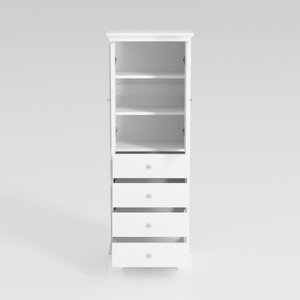
Minimalist White Solid Wood Tall Cabinet With Drawers And Open Shelves 3D Model

Modern Marble Top Solid Wood Double Bathroom Vanity with Wall Mirror 3D Model
Homestyler offers an easy-to-use online design tool with stunning 3D renderings, a vast collection of interior design projects, and helpful DIY video tutorials. It’s the perfect platform to creatively visualize and bring your home design ideas to life.
Design Now for FREE
































