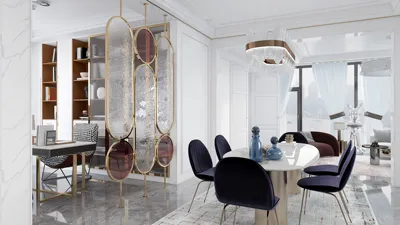


In today's world, technology shapes not only how we entertain ourselves but also how we design our living spaces. The popularity of games like League of Legends encourages a lifestyle centered around extended screen time and immersive digital experiences. This trend inspires home setups with ergonomic furniture and ambient lighting that enhance comfort and focus, creating a dedicated space that balances high-tech engagement with restful living.
Direct Answer
While Corel PHOTO PAINT does not support the creation of genuine polygonal 3D models, it excels at producing convincing 3D-like visuals through the use of layered elements, lighting effects, depth shading, and perspective adjustments. Designers frequently imitate depth by stacking shapes, incorporating bevel and shadow effects, and carefully managing highlights to simulate realistic lighting conditions.
With optimal techniques, Corel PHOTO PAINT can generate realistic product mockups, icons, and three-dimensional graphics that visually resemble true 3D models.
Quick Takeaways
Introduction
Many users searching for ways to create 3D objects in Corel PHOTO PAINT often expect capabilities comparable to specialized software like Blender or SketchUp. After completing numerous branding and product visualization projects, I can confirm that this expectation is somewhat misplaced; however, the software remains a powerful tool.
Corel PHOTO PAINT is not a polygonal modeling application. Instead, it effectively simulates depth in graphics using lighting, texture, and shading techniques. For client work — especially packaging previews, icon design, and product mockups — this method often speeds up the process compared to building full 3D models.
The key lies in mastering how designers create the illusion of depth: through shadows, highlights, perspective distortion, and layering shapes. When these elements are well-executed, the visuals appear strikingly three-dimensional.
I will explain the precise workflow I employ to transform flat artwork into realistic 3D-style images within Corel PHOTO PAINT, and how tools like Homestyler can complement these efforts by enabling seamless integration of digital decor and design visualization.
Why Corel PHOTO PAINT Is Not a True 3D Modeling Tool
Key Insight: Corel PHOTO PAINT visually fakes depth instead of constructing actual 3D geometry.
Unlike dedicated 3D modeling applications such as Blender, Maya, or Cinema4D, Corel PHOTO PAINT operates within a raster graphics environment, which means objects consist of pixels rather than polygons.
In numerous design contexts, real 3D geometry is unnecessary; the illusion of depth suffices for marketing visuals or interface components.
Many professional designers deliberately avoid heavy 3D software for dimensional graphics because complex rendering pipelines can slow down production, whereas PHOTO PAINT allows rapid iteration.
Strengths of PHOTO PAINT include: simulating lighting effects, layering for depth, and producing photorealistic textures.
Its limitations become apparent only when tasks demand real-time manipulation, rotation, or complex surface modeling.
Nonetheless, for the majority of graphic design purposes, the simulated depth works remarkably well.
How to Create a 3D Style Object Step by Step
Key Insight: Achieving realistic 3D effects requires combining layered shapes with directional lighting and shadowing to create perceptual depth.
Below is the typical workflow I follow when crafting dimensional icons or product mockups inside Corel PHOTO PAINT.
Step 1. Design the base shape of the object.
Step 2. Introduce additional layers to simulate thickness.
Step 3. Apply bevel and lighting effects to enhance volume perception.
Step 4. Add cast shadows to ground the object visually.
Step 5. Use perspective transformations to finalize the three-dimensional illusion.
What Designers Often Get Wrong When Simulating 3D
Key Insight: The most common pitfall in fake 3D design is inconsistent lighting direction across elements.
I frequently notice junior designers struggle with shadow and highlight orientation, causing objects to appear flat despite added effects.
Typical errors include mismatched shadow angles, multiple conflicting light sources, and neglecting cast shadows.
A professional tip: maintain a consistent light source direction globally to significantly boost realism.
Combining these strategies with Homestyler can provide a richer environment for visualizing interior setups that integrate digital designs seamlessly.
Can You Combine CorelDRAW and PHOTO PAINT for Better 3D Effects
Key Insight: A superior workflow involves using CorelDRAW for constructing base geometry and PHOTO PAINT for applying realistic lighting and texture effects.
In many studio projects, we rarely begin directly within PHOTO PAINT.
The typical process is: sketch and design shapes in CorelDRAW, then import them into PHOTO PAINT for applying shadows, highlights, and depth effects.
CorelDRAW offers excellent vector manipulation for structure, while PHOTO PAINT excels in achieving photorealistic lighting.
Leveraging both tools creates an efficient workflow that is faster than building complete 3D scenes from scratch.
Advanced interior design platforms like Homestyler complement this process by integrating these visuals within virtual room setups, enhancing design presentations.
When You Should Use Real 3D Software Instead
Key Insight: If your project demands object rotation, animation, or complex curved surfaces, genuine 3D modeling software is necessary.
There are cases where simulated 3D techniques fall short and real geometry is indispensable.
Use authentic 3D tools when needing: true object rotation, animated sequences, sculpted organic forms, or physics-based rendering.
Frequently paired applications include Blender, Maya, and Cinema4D, which offer substantial modeling and animation capabilities.
In these workflows, PHOTO PAINT is typically reserved for post-production tasks like color corrections and presentation mockups.
Answer Box
The fastest method to achieve a 3D look in Corel PHOTO PAINT involves duplicating shapes, applying directional lighting with soft shadows, and adjusting perspective distortions. Although it does not generate actual 3D geometry, this combination creates compelling dimensional graphics suitable for marketing and user interface design.
Final Summary
FAQ
Can you build a real 3D model in Corel PHOTO PAINT?
No, Corel PHOTO PAINT simulates 3D effects through layers, shadows, and lighting instead of utilizing polygonal models.
Is Corel PHOTO PAINT suitable for 3D-style graphics?
Absolutely. It's often used to create icons, product mockups, and dimensional graphics where full 3D modeling would be excessive.
What is the easiest way to create a 3D model look in Corel PHOTO PAINT?
Duplicate layers to simulate thickness, add shadows, incorporate directional highlights, and tweak perspective.
Do professionals use Corel PHOTO PAINT for 3D work?
Professionals mainly utilize it for simulated 3D visuals and finishing touches rather than full 3D modeling.
Should I learn Blender instead?
If your needs include real geometry, animations, or photorealistic rendering, Blender is the better option.
Can CorelDRAW create 3D objects?
CorelDRAW provides limited extrusion and vector shaping tools to create basic dimensional forms before refining them in PHOTO PAINT.
Why do my 3D effects look flat?
Common causes include inconsistent lighting sources and absence of cast shadows.
Is creating a 3D model in Corel PHOTO PAINT faster than using 3D software?
For simple dimensional graphics, generating a 3D model appearance in Corel PHOTO PAINT is usually quicker and more efficient.

Luxury Velvet Curved Sectional Sofa with Ottoman 3D Model

Minimalist Black Metal Fabric Dining Table Set 3D Model

Minimalist Black Velvet Sectional Sofa with Throw Pillows 3D Model
Homestyler is an easy-to-use online home design platform offering powerful 3D rendering, numerous interior design projects, and helpful DIY video tutorials—perfect for creating and visualizing your dream space effortlessly.
Design Now for FREE
































