


In today's world, technology shapes not only how we entertain ourselves but also how we design our living spaces. The popularity of games like League of Legends encourages a lifestyle centered around extended screen time and immersive digital experiences. This trend inspires home setups with ergonomic furniture and ambient lighting that enhance comfort and focus, creating a dedicated space that balances high-tech engagement with restful living.
Direct Answer
3D models empower businesses to communicate concepts faster, visualize products prior to manufacturing, and produce captivating marketing content. Companies employ these models for product previews, architectural renderings, e-commerce showcases, and interactive campaigns. Across many sectors, 3D visualization cuts development expenses while enhancing customer comprehension and boosting conversion rates.
Quick Takeaways
Introduction
Over the past decade working on interior design and digital product presentations, I've witnessed a significant evolution in how companies convey ideas. Previously, static images sufficed. Nowadays, clients demand the ability to rotate, explore, and experience products or environments virtually before making a purchase decision.
This is where 3D models have quietly revolutionized the industry. Whether selling furniture, crafting architectural designs, or promoting consumer products, photorealistic 3D visualization enables customers to truly grasp what they're acquiring. It eliminates guesswork, expedites approval processes, and often shortens sales timelines.
However, most discussions highlight only the apparent advantages. Rarely do they delve into how organizations integrate 3D models into actual workflows and uncover where tangible business gains arise. After extensive collaboration with architects, developers, and product teams, here are the practical ways 3D models deliver measurable results.
Why Do 3D Models Improve Customer Understanding?
Key Insight: Customers decide more rapidly when they can visually inspect a product or space from various perspectives.
A major challenge in marketing is the 'imagination gap.' Viewing flat images or reading descriptions forces customers to mentally reconstruct the product — a task many cannot accomplish effectively.
3D models address this issue immediately.
Instead of guessing functionality or appearance, users explore items visually and interactively.
In furniture projects I've contributed to, clients routinely approve designs much quicker after viewing 3D visualizations than after studying technical drawings. This psychological effect also applies in online retail.
According to several e-commerce usability studies by the Baymard Institute, interactive product visualization notably enhances buyer confidence, especially concerning high-value purchases.
How Businesses Use 3D Models in Marketing
Key Insight: Marketing departments leverage 3D models to produce visual content quicker and at lower cost compared to traditional photography.
Conventional product photography requires studios, specialized lighting, shipping prototypes, and multiple photo sessions. High-quality 3D models allow a single digital asset to generate numerous marketing visuals effortlessly.
Typical marketing applications include:
For instance, many furniture companies now debut new products solely through 3D renderings prior to producing the first units. This strategy minimizes risk and supports early market feedback.
In real estate marketing, developers frequently sell properties years ahead using 3D visualizations before construction begins.
Can 3D Models Reduce Product Development Costs?
Key Insight: Evaluating ideas in 3D cuts down the expense of physical prototypes and design errors.
One often overlooked cost in product development is iteration. Each physical prototype consumes time and financial resources.
3D modeling facilitates immediate testing of alternatives.
A standard development process using 3D models includes:
In interior design, we frequently modify room layouts digitally multiple times before building starts. Early detection of mistakes avoids costly construction rework.
Manufacturers apply similar principles when creating consumer electronics, vehicle components, or furniture systems.
What Industries Benefit Most from 3D Models?
Key Insight: Companies selling complex or high-ticket items derive the most advantage from 3D visualization.
Nearly any business can utilize 3D graphics, yet some sectors rely heavily on this technology.
Prominent industries using 3D models include:
For example, in architecture, 3D models help investors understand projects well before ground is broken, facilitating financing.
Hidden Business Advantages Most Companies Miss
Key Insight: The primary value of 3D models lies in operational efficiency rather than solely marketing imagery.
Many believe 3D modeling is only a marketing tool, but its biggest benefits often come from streamlining internal processes.
Real-world cases I've observed include:
A furniture producer I consulted reduced their design approval cycle by nearly 50% just by enabling executives to review 3D renderings instead of interpreting complex drawings.
Answer Box
3D models enhance business outcomes by increasing customer insight, lowering product development expenses, and enabling versatile marketing content. Organizations embracing 3D visualization often accelerate internal decisions while providing more engaging buyer experiences.
Should Small Businesses Invest in 3D Modeling?
Key Insight: Even small enterprises benefit significantly from 3D models when marketing visual or customizable products.
Previously, professional 3D visualization was costly, but advances in software and AI-powered tools have drastically lowered barriers.
Small businesses frequently use 3D models for:
If your product requires customers to "imagine" its appearance or function, 3D visualization typically boosts trust and improves conversion rates.
Final Summary
FAQ
What are 3D models used for in business?
They serve product visualization, architectural previews, marketing assets, training materials, and digital configurators.
Do 3D models improve e-commerce sales?
Absolutely. Interactive visualization helps buyers better understand items, increasing confidence and conversions.
Are 3D models expensive to create?
Costs depend on complexity, but current software solutions make professional 3D models much more affordable compared to a decade ago.
Can small businesses use 3D models?
Definitely. Many small brands employ 3D models for online catalogs, prototypes, and promotional content.
What software is used to create 3D models?
Popular choices include Blender, 3ds Max, Maya, SketchUp, CAD tools, and importantly, user-friendly platforms like Homestyler, which streamline the design process.
Are 3D models better than product photography?
Not necessarily better, but more adaptable. A single 3D model can produce unlimited marketing images and animations.
How do 3D models help product design?
They allow teams to digitally test proportions, materials, and functionality ahead of physical prototyping, saving time and cost.
Why are 3D models important for architecture projects?
3D renderings assist architects and clients in visualizing buildings before construction, enhancing communication and reducing errors.

Modern Black Velvet L-shaped Sectional Sofa 3D Model

Modern Minimalist Black Metal Round Coffee Table 3D Model
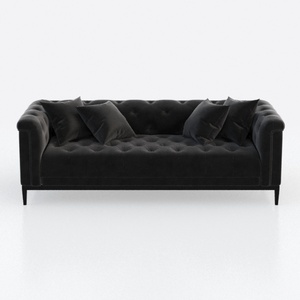
Black Velvet Tufted Contemporary Sofa With Throw Pillows 3D Model
Homestyler is a fantastic online platform offering easy-to-use design tools, stunning 3D renderings, inspiring interior projects, and helpful DIY video tutorials. It’s perfect for turning your home design ideas into reality quickly and beautifully.
지금 무료로 디자인하세요
































