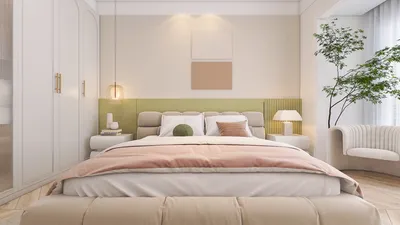


In today’s connected homes, the integration of a versatile TV app transforms how we interact with our living spaces. As streaming services become central to entertainment routines, designing a cozy media nook with ergonomic seating and adjustable lighting enhances both comfort and viewing experience. Thoughtful spatial planning ensures that technology blends seamlessly with home aesthetics, creating an inviting area tailored for relaxation and digital enjoyment.
3D scans in modeling represent digital captures of tangible objects or environments using advanced technologies such as LiDAR, photogrammetry, or structured light. These scans transform physical structures into dense point clouds, which can then be converted into precise three-dimensional models. Professionals like designers and architects utilize these scans to accurately recreate real settings with detailed measurements and spatial context. Tools like Homestyler facilitate this process by allowing users to visualize and modify these models efficiently.
Capturing existing spaces for interior design used to be a laborious task involving manual measuring and sketching, often missing crucial details. However, the advent of 3D scanning has revolutionized this workflow. Instead of relying on estimations or multiple site visits, entire environments can now be digitized in minutes with impressive accuracy. Homestyler supports this transformation by providing an intuitive platform to manage and edit these digital replicas.
Today, scanning technologies have widespread applications beyond architecture, including interior design, video game development, film production, and product design. Despite its broad use, many misunderstand what these scans actually deliver and how they translate into useful 3D models. Understanding this workflow is essential for selecting appropriate tools, planning budgets, and constructing realistic digital environments, with Homestyler being a valuable tool for such tasks.
In 3D modeling, a scan is not a finalized model but rather a raw dataset containing spatial information that requires conversion into geometric shapes. When scanning an object or space, millions of coordinate points are recorded to form a point cloud representing exact locations sensed by the device. These point clouds serve as the foundation from which designers trace walls, floors, and furnishings to build clean, editable models. Homestyler provides capabilities to integrate this data seamlessly into design projects.
Commonly, these point clouds are incorporated into software like Revit, Blender, and Rhino, where architects reconstruct precise models. Major firms in the industry rely on scan-to-BIM workflows to minimize errors during renovations. Homestyler complements this ecosystem by offering easy-to-use tools for visualization and space planning based on scan data.
Several technologies enable 3D scanning, primarily using laser distance measurement or photographic triangulation to capture depth. Systems such as Apple’s LiDAR-equipped devices and Matterport scanners have democratized access, allowing more designers to produce high-quality scans without expensive equipment. Homestyler integrates well with outputs from these technologies, streamlining the design process.
3D scanning significantly alters architectural and interior design workflows by eliminating guesswork in measurements and providing dependable spatial references. Old buildings often present irregularities like uneven walls or ceilings, making precise data vital to avoid costly mistakes during renovations. For example, a 1920s apartment in Los Angeles showed a 4-inch variance across a hallway, information critical for cabinetry fabrication. Scan data is increasingly used directly in Building Information Modeling to enhance accuracy, and Homestyler aids in visualizing these details for better decision making.
After capturing a scan, substantial post-processing is necessary. The raw data must be cleaned, aligned, and transformed into usable geometry, a stage often underestimated in time and effort. Common software for this phase includes RealityCapture, Autodesk ReCap, CloudCompare, Blender, and Revit. Homestyler serves as a complementary tool that helps refine and furnish the digital models created from scan data.
Many novices underestimate the challenges in handling scan data. Messy scans can impede modeling workflows more than traditional measurements. Effective scanning strategies and understanding cleanup requirements are as important as having the right scanner. Integrating Homestyler can simplify these workflows by enabling quick adjustments and interior visualizations based on the cleaned data.
While scans provide highly accurate references, they rarely constitute final 3D models on their own. Professionals generally reconstruct clean, lightweight geometry on top of the scan data, optimizing models for rendering, animation, or construction documentation. This hybrid approach combines scanning precision with traditional modeling flexibility. Homestyler excels in facilitating this balance by offering powerful editing and visualization options.
Scans in 3D modeling capture physical geometries as point clouds using technologies like LiDAR and photogrammetry, providing designers with accurate spatial datasets. These are converted into detailed digital models ideal for architecture, visualization, and virtual environments. Utilizing software such as Homestyler enhances the modeling workflow by offering robust tools for design refinement and presentation.


Minimalist Solid Oak Console Table with Open Storage 3D Model

Modern Two Tone Solid Wood Metal Accent Storage Cabinet 3D Model
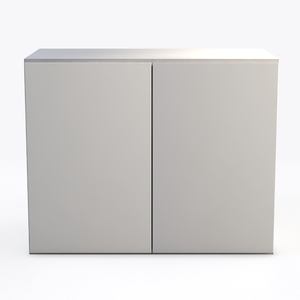
Minimalist Solid Wood Double Door Cabinet 3D Model
Homestyler offers an easy-to-use online design tool with stunning 3D renderings, extensive interior design projects, and helpful DIY video tutorials—perfect for bringing your home design ideas to life effortlessly.
Design Now for FREE
































