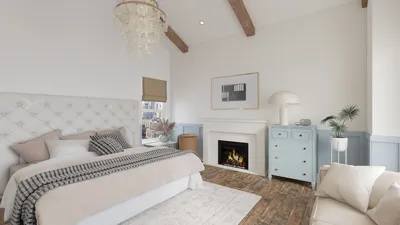


The evolving "state of play" in technology has transformed how we interact with our living spaces, blending digital innovation seamlessly into home environments. As gadgets become central to daily routines, thoughtful spatial design now emphasizes integrating smart devices with comfortable furniture, creating versatile zones for work, relaxation, and entertainment within the home.
Several years ago, a client requested I design a compact reading nook that was "just large enough for a chair and a mountain of books." We meticulously planned a 60-square-foot corner, but midway through the project, she decided she also wanted a desk, a window seat, and a cat tree incorporated. Suddenly, that small space felt as packed as a suitcase moments before a trip. That experience highlighted a vital lesson I share with every homeowner: even the tiniest rooms require careful planning, and changes in size can impact costs more than one might expect. This is where tools like Homestyler demonstrate their value by enabling visualization of design options early in the process.
Small interiors are where imagination truly flourishes. While designing cozy rooms, every inch is crucial—arrangement, illumination, storage, and budget operate together like pieces in a puzzle. In this overview, I'll explore how expenses for a 60-square-foot room stack up against 80 and 100 square foot spaces, alongside practical insights I've gathered from years of creating compact yet functional areas, aided by digital platforms such as Homestyler.
Typical Expenses for a 60-Square-Foot Room
When clients inquire about the minimum reasonable room addition, 60 square feet frequently marks the starting point. Think of a petite office alcove, a calm reading spot, or a modest walk-in closet enhancement. Based on numerous U.S. projects, constructing a 60-square-foot room generally ranges between $6,000 and $15,000, influenced by finishes, electrical installations, and structural modifications.
An interesting challenge is that smaller rooms often incur a higher expense per square foot. Fixed costs such as permits, wiring, insulation, and labor setup remain constant regardless of room size. When sketching preliminary layouts, I often use Homestyler to draft straightforward floor plans facilitating effective compact space planning and verifying that the room meets clients’ requirements.
Costs of Constructing an 80-Square-Foot Room
Increasing from 60 to 80 square feet might seem minimal but is a remarkable difference in design terms. Those extra 20 square feet can elevate a cramped workstation into a comfortable office or convert a tiny guest area into a restful sleeping nook.
For many renovations I've managed, an 80-square-foot room tends to cost between $8,000 and $18,000. Interestingly, the price per square foot frequently decreases slightly since fixed construction expenses are distributed over a larger area. Clients are often surprised to find that expanding the space marginally does not disproportionately raise the overall budget. Utilizing Homestyler’s 3D room visualization helps illustrate these advantages and optimize layouts.
Costs Associated with a 100-Square-Foot Room Addition
Once the size reaches approximately 100 square feet, the room gains considerable flexibility. I've designed 100-square-foot guest rooms, compact studios, and even micro home offices equipped with built-in storage. From my projects, the cost typically lies between $10,000 and $22,000, subject to structural elements, plumbing installations, and local labor rates.
At this scale, arranging furniture and partition walls becomes significantly more convenient. Employing digital tools like Homestyler to visualize compact spaces in full 3D layouts prevents common spatial errors, a resource I wish had been available earlier in my design career.
Comparison Table: Cost Per Square Foot
Through numerous small-space remodels, I've observed that comparing costs per square foot provides more insight than total expenditure.
Average national estimates include:
• 60 sq ft room: approximately $100–$250 per sq ft
• 80 sq ft room: approximately $100–$225 per sq ft
• 100 sq ft room: approximately $95–$220 per sq ft
This trend holds true in most projects I’ve tackled: smaller rooms command higher per-square-foot costs due to the relatively fixed nature of construction setups.
Determining Which Size Offers the Best Value
When asked "Which size provides the best value?" my sincere recommendation often lands in the 80- to 100-square-foot range. Such spaces become notably more practical, yet the additional expense generally remains moderate.
I also notice that slightly larger compact rooms bring enhanced flexibility for furniture placement. For instance, experimenting with layout options using Homestyler for small rooms, the difference between 60 and 100 square feet can significantly affect how comfortable and usable a space feels.
When a 60-Square-Foot Room is the Ideal Choice
Despite the economic benefits of a somewhat larger room, 60 square feet can still be the perfect selection in some cases. I've crafted multiple compact meditation spaces and home offices where the priority was privacy over complete functionality.
If the structure already exists — such as converting part of an attic or garage — opting for 60 square feet can be cost-effective. In densely packed urban houses, a small additional room like that often becomes the most prized square footage in the entire home.
Frequently Asked Questions
Is constructing a 60 square foot room less expensive than larger additions?
Yes, in terms of total cost; however, the cost-efficiency can differ. Since many construction expenses are fixed, the price per square foot is usually higher in smaller rooms.
What is the typical cost per square foot for building a small room?
Most home additions in the United States range from $100 to $250 per square foot, depending on materials, geographical location, and labor costs.
Why do smaller rooms sometimes have a higher cost per square foot?
Permits, electrical wiring, insulation, and contractor setup fees tend to stay fairly constant regardless of room size. Smaller rooms spread these costs over fewer square feet, leading to higher unit costs.
Is 60 square feet sufficient for a bedroom?
Technically, it might accommodate a very small sleeping space, but many building codes require larger minimum bedroom dimensions. Always consult local regulations before deciding.
How significantly does labor affect the cost of small room construction?
Labor typically comprises 30–50% of the construction budget. Skilled tradespeople, including contractors, electricians, and finish carpenters, greatly influence the final pricing.
Does adding plumbing facilities substantially increase costs?
Yes. Incorporating sinks or bathroom features can add several thousand dollars because of plumbing installation and drainage requirements.
Are permits necessary for adding a small room?
In most municipalities, yes. According to the International Code Council (ICC), structural changes and room additions generally require permits and inspections to ensure compliance with safety standards.
What is the optimal room size for a home office?
Based on my design experience, an area around 80–100 square feet is ideal. It provides sufficient room for a desk, chair, and storage without feeling confined.

Minimalist White Solid Wood Display Cabinet With Drawers Doors 3D Model


Minimalist White Metal Solid Wood Office Desk With Drawers 3D Model
Homestyler is an easy-to-use online home design platform offering powerful 3D rendering, a vast collection of design projects, and helpful DIY video tutorials. It’s perfect for bringing your interior design ideas to life quickly and creatively.
Progetta ora GRATIS
































