

Direct Answer
Architectural entrance design revolves around the key principles of transition, scale, hierarchy, and material continuity. Entrances are crafted by architects not just as mere doorways but as spatial thresholds that orchestrate movement, shape the initial impression of a building, and harmonize the exterior architecture with the interior environment.
In residential architecture, a thoughtfully designed entryway balances factors like proportion, traffic flow, lighting, and material choice to create a purposeful and inviting approach to the home.
Quick Takeaways
Introduction
With over a decade of experience in residential projects, I've observed that many homeowners tend to undervalue how significantly the entrance influences the perception of a house. Often, when people seek out architectural entrance design principles, they expect advice focused on aesthetics—door styles, handles, or porch lighting.
However, architects approach entrances from a different perspective.
In professional residential design, entrances are treated as "transition spaces" that regulate movement, establish visual hierarchy, and shape the emotional experience. They guide visitors from the public exterior into the private interior sanctuary of the home.
Examining high-end residences reveals a consistent trait: entrances are rarely incidental. Every aspect—from the pathway, lighting, and ceiling height to door framing—is carefully orchestrated.
When beginning to design an entry sequence, I usually start with the layout. If you're interested in seeing how designers approach circulation planning, tools like Homestyler provide excellent visual workflows for residential layouts that clarify this process.
This guide will delve into the architectural concepts behind professional entryway design, outline key principles architects use, and highlight common pitfalls found in residential projects.
save pin
Why Architects View the Entrance as a Transition Space
Key Insight: Architects design entrances as spatial transitions that psychologically prepare individuals for entering the building.
A frequently neglected aspect in residential design is that moving from outdoor to indoor areas should feel gradual rather than sudden.
To achieve this, architects utilize what's called a "threshold sequence." Instead of moving directly from the sidewalk into the living room, visitors encounter multiple spatial cues signaling arrival.
Typical residential architecture transition sequence:
Each progressive step subtly compresses or expands space to help visitors mentally switch from the public to the private realm.
Architectural theorists like Christopher Alexander thoroughly discussed this, describing entrances as "arrival experiences" rather than mere doorways in his seminal work, "A Pattern Language."
Without this sequence, homes can feel abrupt, as if walking straight into someone's living room without any preparatory context.
Key Architectural Principles for Designing Entrances
Key Insight: Strong entrance design is driven by hierarchy, orientation, protection from the elements, and visual prominence.
Professionals typically evaluate entryways based on a concise set of architectural principles.
Four essential entrance design principles:
One common yet hidden error seen in modern homes is excessive minimalism—removal of porch details, trims, and framing to pursue simplicity. This often causes the entrance to lose visual significance.
If guests struggle to find the front door, the architectural hierarchy has not been properly established.
Scale, Proportion, and Symmetry in Entrances
Key Insight: The relationship of entrance size to the building facade dictates whether the entry feels harmonious or awkward.
In numerous residences, the entry seems "off" primarily because of disproportion rather than stylistic choices.
Architects carefully manage three key proportional relationships:
Typical proportion considerations in residential design include:
While symmetry isn't mandatory, it remains a straightforward method to evoke visual stability.
For projects exploring various layout options, designers often leverage 3D floor planning tools like Homestyler to rapidly visualize and compare entrance configurations before committing to construction documents.
save pin
Material Choices by Professional Designers
Key Insight: Maintaining material continuity from exterior to interior is among the most effective strategies in entrance design.
Architects rarely choose entrance materials arbitrarily. Instead, they intentionally use them to create a visual connection between outdoor and indoor environments.
Common material approaches for entryways include:
A frequently overlooked design flaw is sudden material shifts right at the door threshold. Abrupt changes in flooring, lighting, or texture can disrupt the visual flow and feel jarring.
Gradual material transitions, however, foster a seamless and pleasant spatial experience.
How Entrances Link Exterior and Interior Spaces
Key Insight: Effective entrances offer a glimpse into the interior while preserving privacy.
Architects often implement what can be described as "controlled transparency."
This technique allows subtle hints of the inside without revealing the entire home.
Common architectural strategies include:
Well-designed entryways also facilitate circulation. The route from the door to main living areas should feel natural and intuitive.
During circulation planning, many designers utilize interactive room layout tools such as Homestyler to simulate furniture placement and movement within the entry and foyer spaces before finalizing plans.
save pin
Real-World Examples of Architect-Designed Home Entrances
Key Insight: The most successful residential entrances integrate spatial sequencing, proportion, and material continuity into a cohesive experience.
Throughout various projects I've reviewed or contributed to, some consistent patterns emerge in effective entrance design.
Example 1: Recessed Modern Entry
Example 2: Courtyard Entrance
Example 3: Framed Traditional Entry
Though stylistically diverse, these examples consistently adhere to core architectural entrance design principles.
save pin
Answer Box
Entrances are shaped by architectural principles including spatial transition, hierarchy, proportion, and material continuity. A well-executed entryway signals arrival, guides movement, and visually connects the exterior facade to the interior arrangement.
Final Summary
FAQ
What are architectural entrance design principles?
They are foundational guidelines architects rely on to shape entryways, encompassing hierarchy, spatial transition, scale, proportion, lighting, and material consistency.
Why is the entrance significant in residential architecture?
The entrance forms the home's first impression, guiding visitors from public exterior areas to the private interior.
How do architects design residential entrances?
Designers plan approach paths, define entry hierarchy, optimize lighting, scale, and material choices that integrate the exterior facade with the interior foyer.
What dimensions are ideal for residential front doors?
Contemporary homes typically feature doors ranging from 7 to 9 feet tall to enhance architectural presence.
Are home entrances required to be symmetrical?
Symmetry is not obligatory; however, it helps create balance, though asymmetrical designs work when visual hierarchy is clear.
Which materials are preferable for entrance areas?
Popular choices include wood, stone, glass, steel, and concrete, often repeated inside the foyer to maintain continuity.
What does entry sequence mean in architecture?
An entry sequence describes the gradual progression from the approach path to the doorway and finally to the interior foyer, facilitating spatial transition.
Which errors undermine entrance design?
Hidden doors, poor lighting, disproportion, and abrupt material changes commonly degrade the architectural effectiveness of entrances.
Built on technology originally developed at Autodesk, Homestyler empowers anyone to design beautiful, realistic spaces in minutes. Join over 18 million users who have already discovered a smarter way to plan, visualize, and bring their dream homes to life — all from the comfort of a browser.

Rustic Solid Wood Round Side Table Vintage Decorative 3D Model

Traditional Solid Wood Console Table with Drawers and Carved Details 3D Model
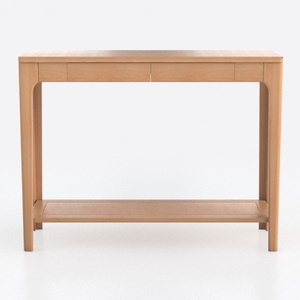
Minimalist Solid Wood Console Table With Lower Shelf Drawers 3D Model
Homestyler offers an easy-to-use online design tool with stunning 3D renderings, inspiring interior projects, and helpful video tutorials. It empowers you to create and visualize your dream home design effortlessly, whether you’re a beginner or an enthusiast.
Zaprojektuj teraz za darmo
































