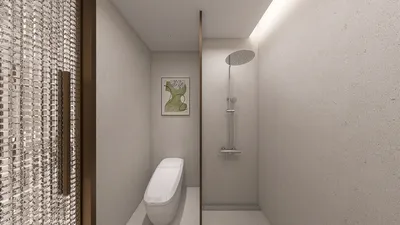


In today's smart homes, seamless integration of technology like the Nest app is key to managing comfort and security effortlessly. When the Nest app faces interruptions, it reminds us how crucial a reliable tech setup is in our living spaces. Designing furniture that accommodates smart devices while maintaining aesthetic harmony can enhance the overall functionality and atmosphere of any room, making technology a natural part of our home environment.
Executive Summary
AI-driven dining room layouts optimize space within one of the most constraint-filled areas in a home. Dining rooms require balancing table dimensions against chair clearance for pulling out, centering lighting against fixture size, ensuring storage accessibility without hindering movement, and maintaining flow between kitchen and living spaces. These rooms experience daily use but must remain adaptable for gatherings. Tools like Homestyler and other AI design platforms systematically address these interconnected factors: they uphold the 36-inch clearance rule around tables, align lighting fixtures precisely above centralized tables, position sideboards on secondary walls to keep pathways open, and preserve unobstructed passages to connected rooms. For insight into managing various room types within a unified design process, guides on AI-assisted layouts cover comprehensive methodologies spanning living rooms, bedrooms, dining areas, home offices, children’s rooms, and compact spaces.
What Makes Dining Room Design Uniquely Constraint-Heavy
Dining rooms represent a critical intersection of functionality and aesthetics. Unlike bedrooms anchored by a singular focal piece like a bed, or living rooms where seating arrangements can be versatile, dining rooms revolve around a fixed centerpiece—the dining table—from which all other decisions emanate.
The size of the table dictates how many chairs can fit, which in turn governs clearance requirements and ultimately the feasibility of the space. Lighting fixtures need to be centered over the table rather than the entire room. Storage solutions must support dining activities without competing for essential floor space. Since dining rooms often link kitchens and living rooms, pathways must allow uninterrupted circulation without disrupting guests seated at the table.
A layout that looks balanced on a 2D plan might fail in reality due to design oversights such as a chandelier centered on the room but off-center to the table, a sideboard obstructing the flow from kitchen to dining, or insufficient chair clearance on one side. AI-powered design tools like Homestyler mitigate these issues by prioritizing the table, then calculating chair clearance, circulation routes, secondary furnishings, and lighting alignment in sequence.
Inputs to Prepare Before Starting
The accuracy of any AI-generated dining room layout is highly dependent on the input data provided. Prior to launching a design tool, collect precise measurements and details:
AI Dining Room Design Workflow
Document exact wall lengths and ceiling height. Note locations, widths, and swing directions of doors and openings. Mark window placements and sill heights, as low windows behind chairs can cause obstructions. If the AI accepts images, capturing photos of each wall can enhance accuracy.
For open-plan spaces, define a boundary box representing the maximum area the dining zone can occupy without encroaching on adjacent living or kitchen areas. This boundary acts as the operative 'room' for AI design.
Input table dimensions—length and width for rectangles, diameter for rounds, or side length for squares. For extendable tables, provide both standard and extended measurements; clearance calculations should suit the largest footprint.
The AI calculates a clearance perimeter by adding the table edge to chair depth (usually 18–24 inches) plus the walkway behind (minimum 30 inches, ideally 36–48 inches on main circulation sides). This results in a zone typically 7–8 feet beyond the table edge on all sides and defines if the table fits comfortably.
Specify chair quantity and style. The AI will space chairs 24–30 inches apart center-to-center along table edges and extents the clearance ring accordingly. On circulation-heavy sides—commonly those between kitchen and other living spaces—maintain 42–48 inches of clearance.
Bench seating adjacent to a wall reduces clearance needs as chairs don't require pull-back room. Indicate to the AI which sides use benches instead of chairs.
Add sideboards, buffets, bar carts, or display cabinets; these should be along walls without encroaching circulation zones. Typical sideboard depths range between 18–22 inches, roughly two feet from the wall. The AI must verify that walkways between furniture fronts and chair backs meet at least 36 inches.
Center pendant or chandelier fixtures above the table rather than the room itself. Input fixture diameter or width, and the AI ensures it’s proportionally sized—generally between half to two-thirds of the table width. For 8-foot ceilings, fixture height starts at 30–36 inches above the tabletop, scaling up proportionally for taller ceilings.
For linear lighting over rectangular tables, fixture length should be approximately two-thirds of the table’s length. When using multiple pendants, space them 24–30 inches apart center-to-center for uniform lighting.
Generate multiple design variants—at least five—and rigorously assess them against key criteria before selecting the best. Fine-tune offsets, verify outlet placement for powered furniture, and ensure ease of access from all entry points using a platform like Homestyler.
Dining Room Planning Table
The following table outlines essential clearance standards, furniture dimensions, and AI validation checkpoints serving as a reference for evaluating AI-generated dining room layouts.
Formal vs. Casual Dining: How Use Pattern Changes the Layout
The AI’s dining room design outputs will differ depending on whether the space is designated for formal occasions, casual daily use, or mixed purposes.
Formal dining prioritizes symmetrical table placement, accommodating 8–12 guests at typically rectangular tables, and incorporates sideboards or buffets aligned symmetrically. Lighting favors statement pieces like large chandeliers centered over the table. Chair clearance is generous (42–48 inches), enabling comfortable seating and serving flow during gatherings. Tables may remain set or adorned even when unused.
Casual dining emphasizes daily flow and proximity to kitchen access. Round or oval tables help soften circulation paths. Bench seating against walls reduces clearance space. Storage often sits near kitchen entries for convenience. Lighting is simpler, with single pendants or linear fixtures, and kitchen-side clearance may be minimized due to frequent foot traffic.
Mixed-use dining zones, serving multiple functions like homework stations or buffet areas during parties, require explicit boundary definitions. The AI must understand primary functions, dining zone limits, and whether storage has dual purposes. Design layouts for both everyday use and gatherings to ensure functional furniture arrangements in both scenarios.
Common AI Dining Room Design Mistakes and How to Detect Them
Even advanced AI tools can make predictable errors when designing dining rooms. Awareness of these pitfalls saves time and prevents furnishing mistakes.
Under-sizing tables relative to room size is common; overly small tables create sparse, unused visual impressions. Ensure the table occupies about one-third of the floor space.
Centering light fixtures on the room instead of the table is a frequent mistake, especially in rectangular layouts with asymmetric table placement. Always manually verify alignment to prevent off-center chandeliers.
Ignoring uneven chair pull-back clearance, often tighter against walls or sideboards, leads to functional issues. Check that chairs can be pulled out comfortably on all sides.
Blockage of kitchen-to-dining circulation routes is a major concern in open plans. Avoid furniture placements that narrow essential traffic paths. Trace kitchen to dining routes to ensure unobstructed flow.
Neglecting the extended table footprint when designing for extendable tables can result in insufficient clearance in extended mode. Generate separate layouts for both standard and extended dimensions to verify fit.
Overcrowding the perimeter with additional furniture or decor may impede circulation. Restraint is key; the table should remain the focal point, and supplementary items must justify their footprint.
How AI Dining Room Design Connects to the Larger Workflow
AI planning for dining rooms operates within the defined room envelope but integrates into broader architectural processes.
Initially, the room envelope is created via AI floor plan or room layout generators that define walls, doors, and proportions. For single-room remodels, existing dimensions suffice; larger projects depend on upstream structural plans.
Subsequently, layouts transition to full visualization stages involving selection of finishes, lighting setups, and photorealistic rendering. Platforms like Homestyler integrate these steps—translating 2D plans into 3D renders seamlessly—ensuring that dimensionally sound designs also perform visually.
Quality Checks Before Trusting an AI-Generated Dining Layout
Before finalizing furniture purchases or renovations, systematically review AI-generated dining layouts through a comprehensive checklist to ensure practicality and design intent.
FAQ
What's the ideal dining table size for my room dimensions?
Subtract 72 inches total (36 inches per side) from room length and width for clear walkways, then subtract another 48 inches (24 inches per side) to accommodate chair pull-back and seating. For instance, a 12x14-foot room can comfortably hold a table roughly 48x72 inches with proper clearance.
How much clearance does a dining chair need to pull back?
A chair generally requires 20–24 inches of pull-back space from the table edge to allow smooth sitting and standing. Beyond this, allocate 30–36 inches for walkways behind seated diner's zone, totaling around 50–60 inches clearance from table edge to obstruction on sides with seating and circulation.
Where should a chandelier or pendant light be placed?
The fixture must be centered over the dining table, not the overall room center. The bottom of the light should hang 30–36 inches above the tabletop for standard 8-foot ceilings, adding roughly 3 inches per extra foot of ceiling height. Fixture width should be about half to two-thirds the table’s width for balanced appearance.
Can an AI dining room planner handle open-plan spaces?
Yes, provided the dining area boundary is defined explicitly, such as a 10x12 foot box set apart from kitchen or living zones. Failure to specify such spatial limits may cause the AI to improperly disperse dining furniture, impairing flow and spatial cohesion.
Round table or rectangular—which does AI recommend?
AI typically matches table shape to room shape: rectangular tables suit rectangular rooms, while round or square tables fit square rooms. Round tables ease movement in compact spaces by eliminating sharp corners and often feature pedestal bases that don’t obstruct chairs.
How does bench seating change clearance requirements?
Benches placed against walls remove the need for pull-back space on that side, reducing clearance from about 60 inches to 36 inches. However, bench seating can complicate middle occupant access, which might influence layouts for formal dining.
Should I plan my dining room layout around everyday use or maximum guest capacity?
Arrange the fixed furniture—tables and primary pieces—with your most frequent usage in mind. For larger occasions, use extendable tables and plan for extra chairs stored elsewhere. AI tools, including Homestyler, enable creation and comparison of daily and extended configurations to ensure both function properly before commitment.
Does AI dining room design consider serving flow from the kitchen?
Although most AI tools do not automatically model serving routes unless explicitly constrained, informing the AI that the path from kitchen entry to table must have at least 42 inches clearance helps maintain unobstructed serving lanes. Without this direction, furniture placement might inadvertently block efficient serving flow.

Minimalist Solid Wood Dining Table with Fabric Wishbone Chairs 3D Model
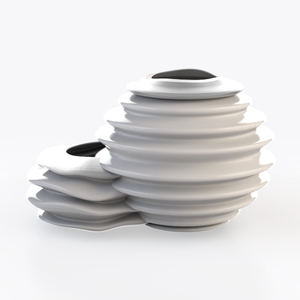
Minimalist White Ceramic Decorative Vases 3D Model

Minimalist Solid Wood Linen Upholstered Armchair 3D Model
Homestyler offers an easy-to-use online design tool packed with 3D rendering, inspiring interior projects, and helpful DIY video tutorials—making it simple and fun to create your dream home, no matter your experience level.
Desain sekarang Gratis
































