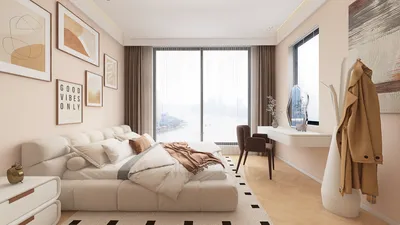


In today's smart homes, seamless integration of technology like the Nest app is key to managing comfort and security effortlessly. When the Nest app faces interruptions, it reminds us how crucial a reliable tech setup is in our living spaces. Designing furniture that accommodates smart devices while maintaining aesthetic harmony can enhance the overall functionality and atmosphere of any room, making technology a natural part of our home environment.
Executive Summary
AI-powered home design solutions are revolutionizing the way homeowners, renters, and design experts visualize layouts, styles, and remodeling projects. Yet, as these technologies evolve, several practical concerns arise: How precise are AI-generated floor plans? Can AI visualizations supplant traditional professional renderings? Is my uploaded data safeguarded? This FAQ addresses common inquiries about AI-driven design platforms, emphasizing that AI excels at rapid brainstorming, style exploration, and early project stages, but human oversight remains vital for final validation. Using tools like Homestyler in your design process can streamline visualization and planning, ensuring more informed decisions and better outcomes.
How Accurate Are AI-Generated Floor Plans?
AI floor plan creators utilize input data such as photos, sketches, PDFs, or manual measurements. They apply computer vision combined with constraint-based algorithms to generate proposed layouts. The accuracy depends on several factors: input quality, algorithm sophistication, and calibration with real-world measurements.
Ultimately, AI-generated floor plans should be considered conceptual aids rather than definitive construction documents. They are excellent for speeding up early ideation and facilitating communication of spatial concepts but must be reviewed by professionals before any actual building begins.
Can AI Generate Realistic Interior Renders?
Indeed, render quality produced by AI has improved markedly. Contemporary AI can transform a room photo or layout into photorealistic imagery spanning styles like minimalist, Scandinavian, industrial, and mid-century modern. It is important to differentiate between two rendering methods:
Platforms that integrate both real 3D modeling and AI-accelerated scene setup yield optimal outcomes—combining efficiency with spatial accuracy. Using tools such as Homestyler facilitates this hybrid approach, enabling users to achieve high-quality visualization rapidly.
However, common render limitations include occasional inaccuracies in lighting, texture fidelity, and minor spatial distortions, which users should be mindful of when evaluating results.
What Can I Actually Edit After AI Generates a Design?
Editing options vary widely among platforms. Key editable aspects usually include:
Adjusting walls, modifying room dimensions, and repositioning doors or windows are standard. Some interfaces even support natural language commands, like "enlarge the kitchen island," which instructs the system to make precise changes.
Furniture swapping, resizing, or removal is typically possible. The most reputable platforms maintain authentic furniture catalogs, where each item reflects real-world dimensions rather than generic visuals, enhancing design feasibility.
Customization of materials—such as flooring, paint colors, countertops, and cabinetry finishes—is commonplace. Many tools allow users to upload reference photos, prompting AI to find matching materials within their libraries, enriching personalization.
Lighting adjustments—altering time-of-day effects, fixture styles, and color temperatures—are generally better supported in 3D engine-based renderers compared to pure generative AI models.
Notably, most AI tools cannot restructure load-bearing walls, reroute plumbing, or change ceiling heights in ways that meet structural requirements; these changes require professional architectural or engineering input.
How Do Prompts Affect AI Design Output?
The detail and specificity of your input prompt heavily influence the resulting design. Broad prompts like "modern living room" typically yield generic outputs, whereas precise, well-structured prompts produce targeted, relevant results.
An effective prompt often includes style, room function, preferred materials, and constraints. The more detailed the input, the less the AI must infer, reducing guesswork. This is crucial when comparing outcomes across various AI design tools, including Homestyler, as different engines interpret prompts uniquely.
Is My Data Private When Using AI Design Tools?
Privacy policies differ significantly among platforms, so reviewing terms carefully is essential. Critical considerations include data storage, usage rights, and training data inclusion.
For sensitive or proprietary projects, anonymizing inputs before upload or selecting services with clear opt-out options for data training is advisable to protect your privacy.
What Are the Biggest Limitations of AI Home Design?
Users must understand several inherent constraints of AI design tools:
Lack of structural understanding: AI cannot interpret building codes, load-bearing necessities, plumbing requirements, or ventilation standards. While a layout may appear flawless digitally, it might not be constructible.
Risk of "hallucinations": Generative models occasionally produce architectural inconsistencies such as staircases without rails or windows misplaced in walls. Hence, visual appeal should not be mistaken for structural viability.
Creativity limits: AI recombines existing design elements rather than pioneering novel concepts, unlike seasoned human designers who bring material expertise and cultural context.
Scale inaccuracies: Without exact calibration, AI may misjudge measurements, leading to impractical furniture sizes or obstructed pathways.
Context insensitivity: AI lacks knowledge about your local environment, such as climate, sunlight orientation, or available materials, which are critical for successful design.
Do I Still Need a Professional Designer?
While AI can assist with exploration and visualization, professional involvement remains essential for construction, permitting, and ensuring compliance. A practical approach includes:
Relying solely on AI tools like Homestyler may suffice for ideation and minor aesthetic changes but bringing in licensed professionals for feasibility, code adherence, and detailed specifications is crucial.
Combining AI-generated concepts with expert review optimizes creativity, speed, and safety, creating a hybrid workflow that many successful projects embrace.
How Do I Evaluate Which AI Design Tool to Use?
Rather than focusing on feature quantity, prioritize how well a platform fits your specific needs by considering:
Early-stage comparisons between different AI solutions, including Homestyler, help identify which platform aligns best with your project scope, technical requirements, and privacy expectations.
FAQ
No — AI design tools serve as aides for planning and visualization. Licensed architects manage code compliance, structural planning, permitting, and construction administration tasks beyond AI capabilities. Use AI early on, then consult professionals for execution phases.
Given clear inputs, most AI platforms generate usable layouts in seconds or minutes, but refinement may require 15 to 60 minutes depending on complexity.
Many consumer AI design systems are user-friendly, featuring guided prompts and style presets, requiring no specialized training. Still, understanding spatial relationships enhances outcomes significantly.
For initial concept presentations and ambiance setting, AI renders are often sufficient. However, for final approvals on materials, lighting, and finishes, professionally produced 3D renders remain more reliable due to calibrated materials and accurate lighting.
AI models are constantly improving, with anticipated advances in structural reasoning, measurement precision, and editing capabilities. Yet the fundamental gap in understanding real-world construction persists, ensuring professional involvement remains necessary.
Pricing models vary from free tiers with limitations to subscription-based services offering higher export quality and rights. Choosing based on project needs, not price alone, is recommended.
Most AI design tools require cloud access due to computational demands, though a few offer downloadable versions for basic tasks. Ensure your chosen platform supports required export formats like JPG, PNG, PDF, or 3D models compatible with your workflow.
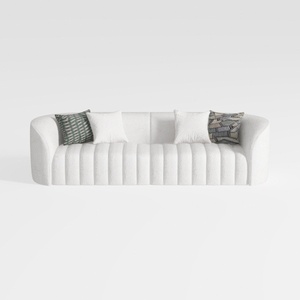
Minimalist Boucle Fabric Channel Tufted Sofa 3D Model


Modern Minimalist Walnut White TV Stand Console Cabinet 3D Model
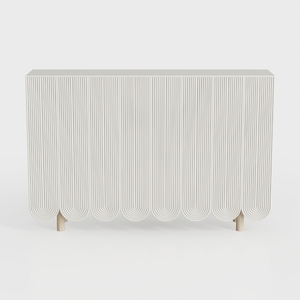
Minimalist Fluted White Wood Console Table 3D Model
Homestyler is an easy-to-use online home design platform offering powerful 3D rendering, a vast collection of interior design projects, and helpful DIY video tutorials. It’s perfect for bringing your creative ideas to life with professional results.
立即免费设计
































