


As streaming services like Apple TV become central to our entertainment habits, designing living rooms that enhance the viewing experience is increasingly important. Comfortable seating arrangements, ambient lighting, and optimized acoustic setups contribute to a home theater atmosphere. Thoughtful space planning can turn any room into a cozy retreat for enjoying your favorite shows and movies with family and friends.
Executive Summary
The rapid development of AI-powered home design software prompts an important question among homeowners: can AI-generated designs be trusted for actual layout planning and renovations? In brief, AI tools are dependable for initial design concepts and layout visualization but should not replace expert evaluation or be used as final construction documents. This article delves into the strengths of AI design accuracy, highlights the areas where manual oversight is vital, and provides guidance on reviewing AI proposals before making renovation or purchasing commitments.
Areas Where AI Home Design Exhibits High Accuracy
AI-enhanced design platforms excel in specific, well-defined aspects of interior planning. Recognizing these strengths helps users know when the AI’s output can be trusted and when human intervention is necessary.
Contemporary AI floor plan generators analyze spatial dimensions, the relationships between rooms, and adjacency requirements to create layouts that are geometrically consistent. Provided with detailed inputs such as room measurements, door placements, and window positions, these AI systems usually position walls and openings appropriately to meet basic spatial constraints. This represents the peak of AI accuracy in floor plan generation.
For straightforward, regularly shaped residential areas, AI-generated layouts often resemble early-stage concepts a professional designer would deliver. The AI accounts for floor area distribution, circulation pathways, and typical room proportions effectively.
AI room planners also offer impressive suggestions for furniture placement, respecting clearance requirements and traffic flow patterns. By learning from vast datasets of real-world interiors, they propose arrangements that avoid functional issues—like positioning sofas flush against walls, providing sufficient walkways around dining tables, or aligning beds with wall spaces.
Such AI platforms become especially valuable during brainstorming, enabling users to swiftly explore if a particular furniture setup suits a space.
A distinct benefit of AI is its speed: while manual designers may create a few layout options daily, AI can produce many diverse configurations within minutes. This rapid generation facilitates evaluation of alternatives, such as open versus closed kitchens, bedroom grouping versus separation, or various hallway designs.
Overview: Where AI Design Accuracy Excels Versus Areas Requiring Caution
Where AI Home Design Falls Short: Critical Limitations to Keep in Mind
The difference between a layout looking correct and functioning well is where many AI designs reveal shortcomings. Several recurring pitfalls need careful consideration before finalizing any plan.
While AI understands geometric parameters, it lacks awareness of everyday living experiences. For instance, a layout might technically satisfy room sizes and door widths but result in discomfort, such as placing a noisy laundry area between bedrooms that disrupt sleep, locating kitchen islands that block natural paths, or designing oversized hallways that sacrifice usable space without purpose.
These are not computational mistakes AI can self-correct, as they depend on human lifestyle judgments and require personal review and adjustment.
AI tools also lack insight into structural engineering aspects; they cannot differentiate load-bearing walls from partitions or evaluate whether wall removal demands additional support beams. Essential elements such as foundation limitations, plumbing stacks, HVAC ductwork, and electrical panel placements remain beyond AI’s current scope.
It is crucial to understand that AI-generated renovation layouts address spatial and visual design but do not guarantee structural feasibility. Any plan created with AI should always undergo review by licensed contractors, architects, or structural engineers before demolition or construction.
AI's precision is directly influenced by input quality. Poor-quality floor plans, blurry scans, hand sketches with inconsistent lines, or cluttered drawings reduce AI recognition effectiveness. Studies indicate that even professional-grade spatial scans may have minor measurement variations in imperfect conditions, with consumer inputs faring worse.
To maximize accuracy, start AI renovation planning with the clearest inputs possible: high-resolution images, distinct walls and openings, and verified room dimensions. This step considerably enhances the reliability of AI-generated results.
Be wary that AI-produced 3D renderings and floor plans might appear polished and professional despite errors. Photorealistic textures and well-placed annotations can give an illusion of accuracy, so treat these outputs as conceptual guides rather than definitive technical documents.
Checklist for Reviewing AI Floor Plans: Validating Generated Layouts
Before employing AI designs for renovation, furniture purchase, or contractor discussions, follow a systematic verification process. This approach transforms AI suggestions from uncertain outcomes into trustworthy design assets.
The goal of this review protocol is not to dismiss AI but to utilize it intelligently—allowing the AI to generate numerous options quickly, followed by applying human expertise to refine, filter, and validate the proposals.
Comparing AI Design Technologies: Accuracy Among Different Methods
Variations in AI home design platforms affect their accuracy. Understanding the distinctions between methodologies helps select the appropriate tool based on your needs. For a detailed overview, you can explore comprehensive comparisons of AI-powered design platforms.
Photo-centric AI applications modify existing room images by altering colors, furniture styles, or design themes. These operate on single 2D images without spatial modeling, yielding visually impressive before-and-after visuals but often compromising dimension accuracy and spatial realism.
Plan-based 3D platforms use measured floor plans to build structured spatial models. They enable iterative edits from multiple perspectives, ensuring dimension consistency, furniture scaling, and reliable layout validation from various angles.
Generative AI tools leverage machine learning on floor plan datasets to quickly propose inventive spatial arrangements. Meanwhile, rule-based parametric software adheres to architectural constraints to produce systematic, code-compliant results.
Most efficient workflows blend both approaches: using generative AI for brainstorming and diverse ideas, then switching to rule-based systems for detailed dimension verification, compliance, and construction document generation.
Frequently Asked Questions
AI home design tools provide sufficient accuracy for early-stage renovation exploration and furniture layout testing but are inadequate for final construction planning. While they handle room sizing and basic spatial distribution competently, they cannot evaluate structural soundness or infrastructure requirements. Always consult licensed professionals to review AI concepts before any structural work begins.
AI-generated floor plans serve as preliminary aids rather than construction blueprints. They lack necessary details like structural annotations, electrical and plumbing schematics, permit-ready markings, and compliance reviews. Licensed experts must convert them into buildable documents.
With precise inputs, AI floor plan generators may achieve measurement accuracies around 1–2% in simple, rectangular spaces. Accuracy diminishes with complex geometries, multiple floors, poor image quality, or missing data. Critical measurements should always be confirmed manually.
Typical AI failures include misclassifying wall types, misplacing doors/windows, incorrect stair orientations, ambiguous room boundaries, and creating designs that are geometrically sound but functionally impractical due to noise, privacy, or movement issues.
Starting with clean, high-resolution floor plans devoid of furniture overlays and clearly marking walls and openings improves AI output quality. Providing specific room criteria instead of vague descriptions is also essential. Use validation checklists to review dimensions, doors, and circulation paths after generation.
AI room planners reliably estimate furniture fit when fed accurate room sizes and real product dimensions. However, clearance requirements such as door swings and walkways still require manual checking before making substantial purchases.
Many professionals use AI tools during conceptual design phases to quickly explore layout alternatives. However, they view AI outputs as initial drafts requiring subsequent manual refinement, structural verification, code checks, and detailed documentation via traditional architectural programs.
While AI can produce multiple layout choices faster and with comparable geometric accuracy on simple designs, skilled manual drafting remains superior for intricate architectural details, engineering constraints, and nuanced lifestyle considerations that enhance livability. These methods complement rather than replace each other.
Final Summary
AI-powered home design software has evolved to effectively assist in early layout ideation, furniture placement, and renovation brainstorming. Their geometric precision suffices for planning when fed quality inputs and combined with thorough human review. Nevertheless, AI cannot replace professional assessments regarding structural integrity, code adherence, and user-centric design decisions that create comfortable living spaces.
The optimal approach embraces AI as a rapid brainstorming facilitator, generating diverse options and expediting initial phases. This is followed by diligent human verification—including dimension audits, circulation analysis, and consultation with structural professionals—before committing to any renovations or purchases. Using such balanced workflows, platforms like Homestyler can become invaluable tools in the home design process.

Rustic Solid Oak Wood Coffee Table Minimalist Living Room 3D Model


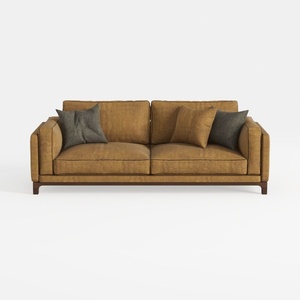
Minimalist Fabric Upholstered 2 Seater Sofa with Throw Pillows 3D Model
Homestyler is an easy-to-use online home design platform that offers powerful 3D rendering, inspiring design projects, and helpful DIY video tutorials. It’s perfect for visualizing and creating your dream space with confidence.
Concevez maintenant gratuitement
































