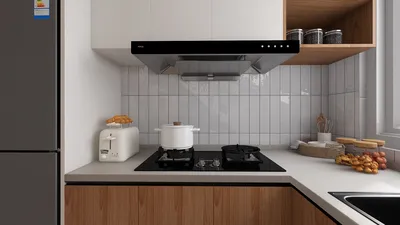


In today's smart homes, seamless integration of technology like the Nest app is key to managing comfort and security effortlessly. When the Nest app faces interruptions, it reminds us how crucial a reliable tech setup is in our living spaces. Designing furniture that accommodates smart devices while maintaining aesthetic harmony can enhance the overall functionality and atmosphere of any room, making technology a natural part of our home environment.
Executive Summary
AI-powered commercial interior design is transforming the way offices, retail environments, hospitality venues, and showrooms are conceptualized and visualized. Rather than replacing seasoned designers, AI tools expedite the creative process by enabling swift layout iterations and producing photorealistic renderings within minutes instead of weeks. This article delves into practical AI-enhanced workflows tailored to various commercial spaces, outlines key steps for preparing inputs and quality control, and clarifies the capabilities and limitations of these technologies. Whether you're an architect drafting a hotel lobby proposal, a retail brand optimizing store layouts, or a facilities manager planning office spaces, AI commercial interior design solutions provide an accelerated visual planning layer that supports professional decision-making rather than substituting it. Using platforms like Homestyler can complement this process by offering intuitive design tools that integrate seamlessly into workflows.
Why AI Commercial Interior Design Matters Now
Traditionally, commercial interior design has relied on manual drafting, iterative revisions, and extended approval cycles among multiple stakeholders. A single office configuration often required days of sketching and weeks of rendering. Retail concept reviews involved costly physical mockups, while hospitality proposals hinged on slow 3D rendering processes that hindered real-time adjustments during client meetings.
AI disrupts this traditional model by analyzing spatial data, interpreting design briefs, and generating numerous layout alternatives within seconds. Designers can fine-tune materials, lighting, and furniture selections during client discussions. Stakeholders benefit from viewing photorealistic previews prior to committing to expensive build-outs. This marks a significant enhancement in speed and transparency across the commercial design spectrum.
Importantly, AI tools function best as accelerators for visualization and planning, augmenting human expertise rather than replacing critical judgment related to regulatory compliance, structural integrity, or operational logistics.
Commercial Space Types and AI Use Cases
Each commercial sector presents unique design challenges. AI commercial interior design platforms adapt to these through specialized modules, varied input requirements, and distinct output formats.
Office environments demand a precise balance between workspace density, collaborative areas, and spaces for individual focus. AI office interior design utilities assist planners in rapidly testing multiple layout setups. Rather than settling on an initial feasible plan, teams can generate and compare options — from open-concept to hybrid or enclosed layouts — within a single session, especially facilitated by tools like Homestyler which streamline this exploration.
Inputs often encompass floor dimensions, staffing numbers, and workstation preferences. Following this, AI suggests desk placements, circulation routes, meeting areas, and breakout zones. Some platforms automate spatial data extraction from architectural drawings to minimize manual efforts.
This capability enables teams to present realistic rendered comparisons to stakeholders side-by-side, accelerating approvals that previously took weeks.
In retail, spatial design reflects merchandising strategies. AI retail systems generate store layouts optimizing customer paths, product visibility, and brand cohesion. For franchises with multiple sites, AI maintains design uniformity while customizing layouts for different store footprints.
Showroom design benefits notably from AI by presenting photorealistic virtual staging of products—such as furniture, vehicles, or gallery pieces—without the need for physical rearrangement. Customers can view items within realistic lighting, textures, and scaled dimensions before purchase decisions, closing the experiential gap. Platforms like Homestyler provide user-friendly environments for such immersive visualizations.
Hospitality spaces prioritize atmosphere alongside utility. AI hospitality design tools craft mood-rich visualizations that capture the desired ambiance—be it cozy and intimate for a fine dining venue, light and breezy for a seaside hotel lobby, or sleek and refined for boutique lounges.
Typically, the workflow begins with a detailed brief outlining guest demographics, service style, and desired emotional tone, augmented by mood boards or reference images. AI platforms can then generate richly textured renderings that help architects and operators align their vision early in the process. For feasibility and investor presentations, such visuals convey potential far more memorably than abstract plans. Homestyler’s capabilities can integrate into this workflow by allowing rapid mood and material experiments.
A Practical AI Commercial Design Workflow
Effective use of AI demands a structured workflow focused on actionable outputs rather than mere aesthetic renderings. The following procedural approach applies across office, retail, hospitality, and showroom design projects.
This iterative process thrives on close collaboration between human design intuition and AI's rapid output generation, ensuring results that are both creative and practical.
Quality Checks and Professional Oversight
While AI-generated interiors can be visually impressive, each result requires professional examination before becoming viable for construction. Designers and project managers must confirm compliance with spatial logic, building codes, functionality, and client objectives before advancing AI-based concepts.
Regular use of these validation steps enables AI design tools to serve as robust planning aids without jeopardizing project integrity.
Collaboration and Client Presentation
One of AI’s most significant advantages in commercial design is enhanced communication with clients. Conventional presentations—static mood boards, 2D layouts, delayed 3D renders—often fail to convey a complete sense of the proposed space.
AI-driven photorealistic renders fill this gap by enabling design teams to showcase multiple design alternatives interactively during meetings, make on-the-fly adjustments to finishes and layouts, and utilize 3D visualization to present the space from every perspective. This immersive approach cuts down revision loops, builds client trust, and speeds decision-making. Homestyler’s interactive features particularly empower such dynamic presentations.
For extensive projects, AI visualization fosters alignment across multidisciplinary teams—architects, interior designers, branding experts, and operations managers—by providing a centralized, high-quality visual reference, minimizing miscommunication.
Limitations: What AI Commercial Interior Design Cannot Do
Clear expectation management is essential to avoid overreliance or misuse of AI tools, which possess inherent limitations.
AI outputs represent conceptual visualizations—not construction documentation. Transforming them into buildable plans demands skilled CAD/BIM work, structural engineering input, and coordination of mechanical-electrical-plumbing systems.
Regulatory compliance—including fire safety, accessibility, occupancy, and local building codes—must be verified by licensed professionals, as AI cannot autonomously ensure adherence.
Budgeting remains outside AI's domain. While AI-generated designs may appear feasible, costs related to materials, labor, logistics, and timelines require dedicated analysis by experts.
AI lacks insight into operational subtleties. For example, a hotel lobby design might overlook practical considerations like luggage flow or staff movement. Such nuanced operational knowledge relies on human experience.
Additionally, AI cannot replicate genuine creative intuition; it operates based on existing data patterns and cannot originate truly unique spatial concepts or interpret brand essence with the emotional depth of a human designer.
The optimal approach combines AI tools to accelerate visualization and early planning with human expertise to manage compliance, feasibility, and final execution. Neither is effective in isolation.
Comparing AI to Traditional Commercial Design Methods
AI and traditional methods complement one another: traditional techniques excel in precision and buildability, while AI offers speed, iterative flexibility, and enhanced visualization. The strongest design teams leverage both strengths synergistically.
Getting Started with AI Commercial Interior Design
Implementing AI in commercial interior design need not require a wholesale practice overhaul. A phased adoption strategy yields optimal results:
Approaching AI as a visualization and iterative aid rather than a standalone designer accelerates uptake and minimizes errors.
FAQ
Can AI commercial interior design tools produce construction-ready blueprints?
No. These tools deliver conceptual visualizations and layout proposals. Producing construction documents requires professional CAD/BIM drafting, structural reviews, and MEP coordination. AI outputs should be regarded as supplemental planning aids, not final blueprints.
How reliable are AI-generated commercial layouts versus professional designs?
AI layouts generally possess accurate spatial proportions and furniture configurations when provided with precise inputs. However, they do not consider structural components, regulations, accessibility standards, or operational workflows without human verification, making them starting points rather than finalized designs.
Which commercial sectors gain the most from AI design tools?
Office spaces benefit from rapid iteration of density and layout options. Retail and showroom environments see advantages in product placement and customer flow optimization. Hospitality spaces profit from ambiance-driven visualizations and guest experience previews. All sectors observe accelerated concept creation and client engagement.
Are AI interior design tools suitable for large-scale or multi-site projects?
Absolutely. For franchise networks and multi-location brands, AI supports maintaining consistent design standards while adapting layouts to diverse floor plans. It also streamlines creation of investor presentations and leasing documents across multiple locations.
What risks exist when depending heavily on AI for commercial design?
Key risks involve overreliance on AI without expert validation, neglect of code and accessibility requirements, and misinterpreting AI visualizations as budgeted or construction-ready deliverables. Always combine AI tools with qualified professionals to ensure feasibility, adherence, and cost control.
Is design expertise necessary to operate AI commercial interior design platforms?
Most AI platforms prioritize user-friendliness, enabling concept generation through text prompts, photo uploads, and style selections. Nonetheless, assessing outputs critically, validating spatial logic, and refining designs for practical application benefit from professional design insight. While non-experts can explore concepts early, expert involvement remains vital before finalized decisions. Tools like Homestyler offer accessible interfaces that help both novices and pros bridge this gap.
How do AI tools accommodate brand-specific design demands in commercial projects?
AI platforms accept brand references such as color schemes, imagery, and material specifications to generate designs aligned with brand identity across various locations. However, human oversight is indispensable to ensure nuanced expression of brand values—AI can replicate visual motifs but cannot independently interpret or define emotional brand positioning.

Minimalist Marble Top Fluted Solid Wood Dining Table 3D Model
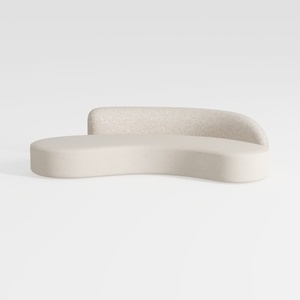
Minimalist Boucle Curved Sofa 3D Model
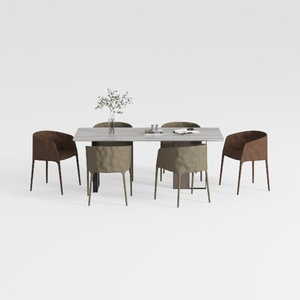
Modern Minimalist Marble Top Dining Table Set with Fabric Leather Chairs 3D Model
Homestyler is an easy-to-use online home design platform offering powerful 3D rendering, a vast collection of interior design projects, and helpful DIY video tutorials. It’s perfect for bringing your home decorating ideas to life with creativity and confidence.
تصميم الآن مجانا
































