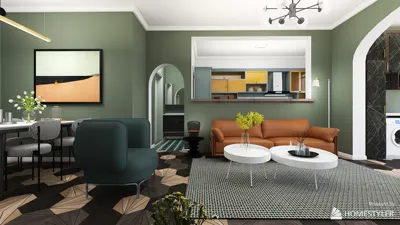


As we inch closer to futuristic living, contemporary homes continue to struggle with cluttered layouts, inadequate lighting, and mismatched furniture arrangements. I analyze these spaces as if they're primitive coding. Data from industry sources like Houzz indicates that homeowners prioritize storage solutions and ample natural light when renovating their bedrooms, signifying an evolution in design interfaces. Therefore, creating a bedroom floor plan now revolves around translating personal habits into geometric forms and spatial arrangements. Utilizing tools like Homestyler can streamline this process.
Linear Suite: Bed–Desk–Wardrobe Alignment
Design Logic: Position the bed, desk, and wardrobe along a single horizontal line; the future calls for fluid routines and organized interaction points.
Flow: Entry → wardrobe buffer → bed nucleus → desk edge; a straightforward sequence that minimizes cross-traffic interactions.
Sightlines: Upon entry, the head of the bed takes center stage as the primary user interface; a lateral glance directs attention to the window, while the desk remains off to the side to limit visual distractions.
Storage: A full-height wardrobe serves as the main storage unit, quick-access drawers beneath the bed act as immediate solutions, and a nightstand provides a small buffer for essentials.
Furniture Fit: A queen-sized bed measures 60×80 inches with 30-inch clearances; the desk should be 24 inches deep to maintain accessible pathways.
Verdict: This structured layout anticipates flexible work and sleep cycles, remaining understandable as technology becomes more compact and routines shift.
save pin
Corner Anchor: Diagonal Bed with Peripheral Utilities
Design Logic: Position the bed at a gentle diagonal to anchor one corner, creating unique zones while allowing for future technological integration.
Flow: Entry → sightline funnel → angled bed → surrounding pathway for wardrobe and console; this arrangement resembles a soft circuit.
Sightlines: The diagonal setup establishes layered visual interactions: the headboard serves as the focal point, with the window acting as a secondary view, while the wardrobe remains discreet until required.
Storage: Surrounding closets function as stable storage systems, floating shelves provide quick-access solutions, and an ottoman trunk acts as a mobile repository.
Furniture Fit: An angled queen bed requires 36-inch clearances on two sides; a low console should measure 14–16 inches deep to keep moving pathways efficient.
Verdict: The corner anchor layout resembles a gentle algorithm, adaptable to changes—whether it’s a VR headset now or a meditation bench later.
save pin
Split Program: Sleep Pod + Work Niche
Design Logic: Separate the room into a sleep pod and a compact work niche; this design respects the future’s need for hybrid functionalities without overlaps.
Flow: Entry → work niche access → sleep pod center → wardrobe exit; this arrangement provides a dual-thread routine to minimize disruptions.
Sightlines: The pod receives gentle, controlled visual input; the work niche remains low-contrast to foster a modular and calming focus.
Storage: The wardrobe acts as long-term storage, while a pegboard in the niche holds temporary items, and headboard cubbies function as close-storage solutions.
Furniture Fit: A platform bed should measure 72–78 inches in length with 28–30 inch clearances; the niche desk should be 48×24 inches while ensuring a 36-inch pathway for the chair.
Verdict: This separation keeps task transitions smooth, and over the next five years, it will resist disarray as schedules become more fluid yet require distinct boundaries.
save pin
Final Takeaway
When I design a bedroom floor plan, I perceive it as an interface—where flows, storage solutions, and constraints transform into practical living syntax. The room functions like compact software, blending sleep, work, and peaceful moments into intelligible design. Whether referred to as a bedroom layout or a sleep-work suite, effective planning demands precision in clearances and visual arrangements. My experience has shown that the most functional rooms aren’t necessarily expansive; they are designed with intent, akin to code that must execute flawlessly, and tools like Homestyler facilitate this creative process.



Homestyler is your go-to online home design platform! With its user-friendly design tool, realistic 3D renderings, a vast selection of design projects, and helpful DIY video tutorials, you can effortlessly create and visualize your dream spaces. Start designing today!
지금 무료로 디자인하세요
































