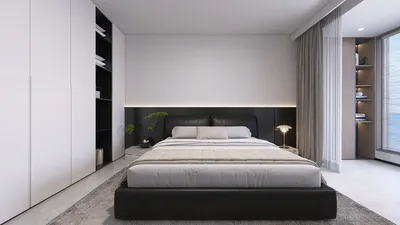


Throughout my decade-long career as an interior designer, I have witnessed the evolution of grey flooring, transitioning from a budding trend to a classic preference. Currently, neutral and adaptable design schemes are at the forefront of interior design, and grey floors serve as a superb foundation. They are particularly advantageous in compact spaces, where grey's muted hue allows other design features to take center stage. In this article, I will present ten creative living room concepts utilizing grey flooring, merging my personal design insights with expert advice, all while showcasing the benefits of using tools like Homestyler to visualize your ideas.
1. Minimalist Elegance with Grey Oak
My Perspective: I find that starting with grey oak creates a serene ambiance, enabling me to introduce textures without overwhelming the room. During a small apartment renovation, the neutral flooring was the perfect backdrop for vibrant art and textiles.
Advantages: Grey oak strikes a harmonious balance between warmth and coolness, making it easy to coordinate with various soft furnishings. As highlighted in Elle Decor’s 2023 trend report, light grey wood amplifies natural light in living spaces.
Disadvantages: If the surrounding palette lacks variation, it might appear flat. I always advise incorporating a few bold accents to combat this.
2. Glass Coffee Table for Spaciousness
My Insight: In smaller living areas, a glass coffee table set atop grey flooring creates a sensation of lightness. I experienced this effect firsthand when designing a 20m² studio last year; the translucent surfaces allowed the light grey wood to keep the space feeling airy.
Advantages: It reflects light, making the room appear larger, and is very easy to maintain. A glass table complements minimalist designs beautifully by avoiding visual obstructions.
Disadvantages: Fingerprints and smudges are noticeable, especially with kids or pets around.
3. L-Shaped Sofa for Social Interaction
My View: An L-shaped sofa fits beautifully against grey floors, effectively anchoring the space. It’s one of my preferred methods for establishing cozy conversation zones in open-plan living configurations.
Advantages: It defines the living area without the need for walls and optimizes seating in limited spaces.
Disadvantages: If measurements aren’t accurate, it can dominate smaller rooms.
Tip: Always ensure at least 60 cm of walkway space around the sofa to prevent crowding.
4. Layered Rugs for Added Depth
My Experience: Employing layered rugs over grey floors adds both depth and character. In one instance, I used a neutral jute rug as a base topped by a smaller vintage Persian piece—this combination instantly elevated the room's aesthetic.
Advantages: It boosts warmth and allows for easy seasonal updates.
Disadvantages: If not laid flat, layered rugs can pose a tripping risk.
5. Warm Wood Touches
My Approach: Introducing walnut shelves or oak side tables against a grey floor effectively counterbalances the cool tones with natural warmth. This strategy is my go-to for transforming minimalist interiors into more inviting spaces.
Advantages: It offers visual warmth and timeless elegance, pairing seamlessly with both modern and rustic decor.
Disadvantages: Excessive wood accents can compete with other design elements, so moderation is essential.
Planning your wood accents in conjunction with grey flooring can prevent costly design missteps.
6. Monochrome Gallery Wall
My Thoughts: A collection of black-and-white photographs on grey floors makes for a bold yet uncomplicated aesthetic. This design element complements both modern lofts and classic apartments alike.
Advantages: It fosters a cohesive look that minimizes visual clutter and harmonizes with the flooring's charcoal tones.
Disadvantages: This approach may feel a bit too constricted if you prefer a more colorful atmosphere.
7. Metallic Accents for Elegance
My Experience: In a recent penthouse project, adding brass lamps and a gold-framed mirror infused luxury into an otherwise cool-toned grey floor.
Advantages: Metallic elements reflect light and add sophistication without the need for paint or new flooring.
Disadvantages: An abundance of metallics can come off as excessive.
8. Integrated Storage Solutions
My Perspective: Incorporating built-in shelving along a wall optimizes both storage and display capability without compromising style. It looks sharp and modern atop grey floors.
Advantages: It eliminates the need for bulky furniture, keeping compact living rooms neat and organized.
Disadvantages: Permanent installations do require a commitment and a larger financial investment.
9. Soft Pastel Highlights
My Take: In a luminous living area, creating a serene atmosphere can be achieved with pastel throw pillows on a grey sofa, especially with light grey flooring. Shades like blush pink, mint, or powder blue work wonderfully.
Advantages: They introduce subtle color without creating overwhelm, making them ideal for a spring/summer refresh.
Disadvantages: Lighter shades may necessitate more frequent cleaning.
Implementing soft pastels alongside cool-toned flooring is another trick I’ve successfully employed in open-plan living-dining spaces to create flow.
10. Eye-Catching Light Fixtures
My Thoughts: A sculptural chandelier or an oversized pendant light above grey floors can drastically shift the room's overall vibe. I love hunting for unique vintage pieces for such installations.
Advantages: It serves as a focal point and enhances the ambient atmosphere.
Disadvantages: Installation can be challenging, particularly in older homes with different ceiling structures.
In Conclusion
Grey flooring is not just a limitation; it offers a fantastic opportunity to experiment with colors, textures, and layout. As noted by the National Association of Realtors, neutral flooring often enhances home appeal for potential buyers. Which of these design inspirations would you like to explore first?
FAQ
Q1: Are grey floors ideal for compact living spaces?
Definitely! Grey floors reflect light and create a neutral base, enhancing the perception of space in smaller areas.
Q2: What shades coordinate well with grey flooring?
Warm woods, whites, blues, and pastel tones complement grey beautifully. Deep jewel tones can also create a striking contrast.
Q3: Do grey floors show dirt easily?
Mid-tone greys are quite forgiving; however, very light or dark shades might reveal dust more prominently.
Q4: Can grey floors pair with warm wall colors?
Absolutely! Warm shades like beige or taupe can counterbalance the cooler tones of grey flooring effectively.
Q5: How can I infuse warmth into a living room with grey floors?
Incorporate natural textures such as wood, wool, or rattan, and opt for warm lighting temperatures (2700–3000K).
Q6: Are grey floors likely to fall out of fashion?
Grey floors have demonstrated remarkable durability, especially those made of wood or large-format tiles, according to Houzz's 2023 style survey.
Q7: Is grey flooring beneficial for resale value?
Yes, as highlighted by the National Association of Realtors, neutral floors are widely appealing to buyers.
Q8: Can rugs be used on grey floors?
Certainly! Rugs can add color, texture, and help define spaces. Look for patterns that complement the undertones in grey flooring.
Looking to transform your space? Homestyler is your go-to online home design platform! With its user-friendly design tool, stunning 3D renderings, diverse design projects, and helpful video tutorials, you can effortlessly create your dream home. Start designing today!
Design Now for FREE
































