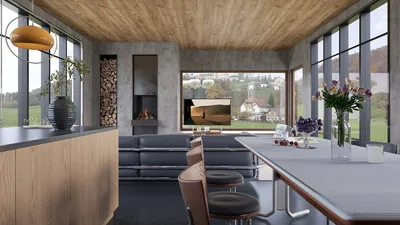


I once worked with a client who was adamant about fitting a full dining table for six in their cozy studio, not to mention three adorable succulents. My first attempt was a complete flop (we almost suspended a table from the ceiling), but that mishap enlightened me about the transformative power of a simple table within a small space. In compact homes, I typically explore multiple designs using layouts that save space, often leveraging tools like Homestyler to visualize my ideas before finalizing anything.
Tackling small spaces can ignite immense creativity — the more limited the area, the more inventive the solutions become. Here are five practical table ideas I've implemented successfully in various apartments and tiny homes, complete with trade-offs and budget-friendly insights derived from actual projects.
1. Wall-mounted foldable table
This is my top choice when floor area is scarce: a robust wall-mounted drop-leaf or fold-down table that stores flat when not in use. It’s budget-friendly, straightforward to install, and allows for clear movement, although you'll have to compromise on table size and ensure secure wall anchoring.
save pin
2. Extendable two-in-one table
I prefer an extendable table that remains compact for everyday use and can be expanded for gatherings. This design offers daily neatness while allowing for flexibility; however, attention must be paid to the durability of the extension mechanism and ensuring the materials feel solid when enlarged.
save pin
3. Corner banquette with integrated table
Incorporating built-in benches alongside a corner table optimizes seating and opens up visual space — perfect for cozy breakfasts while providing hidden storage beneath the seats. For compact kitchens, I often combine this strategy with smart kitchen layouts to maintain comfortable walkways and efficient work triangles.
save pin
4. Console-to-dining convertible table
Wide console tables that can convert to dining height are ideal for slender entryways or positioned behind sofas. They serve various purposes like a desk, buffet, or dining table, providing style and functionality, although larger ones may require an extra pair of hands for conversion.
save pin
5. Nested and stackable tables for versatile areas
Using nested or stackable tables allows for the creation of diverse settings: a coffee table by day and dining surfaces by night. They are budget-friendly and easy to store. If you wish to visualize different arrangements before making a purchase, tools like Homestyler can generate realistic 3D renders to evaluate scale and flow.
save pin
Tips 1:
For those being mindful of budget, focus on the structural integrity over aesthetic finishes — a solid fold-down mechanism is preferable to an extravagant veneer that may peel over time. Always measure twice and allow for a clearance of at least 30–36 inches around the dining area to facilitate movement behind seated diners. Additionally, lighting and a well-placed rug can enhance a small table’s appeal, making it feel more purposely designed rather than cramped.
save pin
FAQ
Q: What size table is best for a studio apartment?
A: For studios, choose a table that seats two to four when compact — typically 24–36 inches wide for regular use, with an option to extend for occasional hosting.
Q: Are wall-mounted tables sturdy enough for everyday dining?
A: Absolutely, as long as they are anchored to the studs or a solid blocking. Opt for heavy-duty brackets and consider professional help for installation if necessary.
Q: How can I elevate a small table's appearance on a tight budget?
A: Focus on one high-impact feature such as a quality tabletop or distinctive lamp, while keeping other elements minimalist. Paint, hardware updates, and strategic placement can effectively enhance an affordable table’s look.
Q: Is built-in seating worth the investment?
A: Built-ins not only add storage but also provide a polished appearance, increasing usability and perceived value. Although they require more initial effort, they often lead to better comfort and decreased clutter.
Q: What is the ideal clearance around a dining table?
A: A good guideline is to allow 30–36 inches for passage around the table; for optimal comfort when chairs are pulled out, 42–48 inches is recommended. The National Kitchen & Bath Association (NKBA) suggests that 36 inches is the common minimum for main circulation pathways.
Q: Can a console table serve as a dining table on a daily basis?
A: Smaller consoles are suitable for everyday solo dining or as a workspace, but for regular meals with multiple guests, it's best to use a sturdier, dedicated convertible table to prevent wear and tear.
Q: Which materials are best for convertible or folding tables?
A: Solid hardwood or quality plywood with edge banding provide the most durability and ability for repairs; while veneers may look appealing, they can delaminate with frequent use over time.
Q: How do I select seating for a compact table?
A: Combine benches and slim chairs — benches can be tucked under the table to save space, while narrow chairs offer comfort. Always test the arrangement through mock-ups or using tape on the floor to ensure suitability.
save pin
Discover the world of home design with Homestyler! This user-friendly platform offers a powerful online design tool, stunning 3D renderings, a wealth of inspiring design projects, and helpful DIY video tutorials. Transform your space effortlessly and unleash your creativity today!
Concevez maintenant gratuitement
































