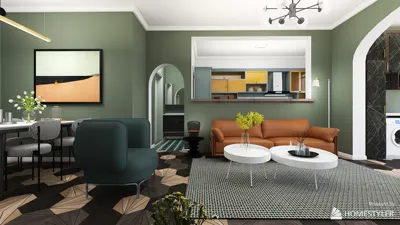


I once transformed a client's compact home office with a bold navy blue, only to receive a late-night text saying, "It feels like a cave." Embarrassed, I returned at midnight with a paint roller and a lighter gray sample. This taught me that colors can appear drastically different in small rooms and under desk lighting. Consequently, I now always test paint swatches at various times of the day and consider more than just the name of the color when brainstorming room layout ideas, especially for a functional home office.
In small spaces, impactful design decisions can make a considerable difference, and paint is the quickest way to alter both ambiance and room perception. Drawing from over a decade of home design experience and numerous home office transformations, I’m excited to share five color inspirations that harmonize focus, comfort, and personal flair, all of which can be effortlessly managed using tools like Homestyler.
1. Tranquil Neutral Base
Soft greige or warm off-white serves as a calming backdrop that minimizes visual distractions and enhances the clarity of video calls. I prefer using this palette when clients seek a timeless, multifunctional area—its advantages include compatibility with various furniture styles and ease in mood lighting; however, it may feel unexciting if textures or meaningful accents aren’t incorporated.
Tip: Utilize a matte finish to conceal wall imperfections, and consider a singular framed print to anchor the workspace.
save pin
2. Subdued Green for Gentle Concentration
Greens drawn from nature offer subtle cognitive perks—clients often report increased calmness and concentration levels, particularly in rooms where natural light flourishes. Green complements wood tones beautifully, although in dimly lit areas, a lighter, grayed version is recommended to avoid a muddy appearance.
In one renovation, I suggested a sage green for a north-facing nook; this immediately invigorated the room without being distracting.
save pin
3. Vibrant Accent Wall for Stimulating Creativity
If a burst of energy is what you seek, adding an accent wall in shades like teal, mustard, or coral can invigorate quick tasks and brainstorming sessions. This option is budget-friendly as it requires painting only a single wall, but ensure that you choose wisely—the wall behind your desk should not be overly bright, as this could create contrast issues during video calls.
For testing, use a 2x2-foot sample and live with it for a week before making a commitment.
save pin
4. Rich Moody Tones for Focused Tasks
Charcoal, deep navy, or forest green engender a cocoon-like ambiance, perfect for writing or concentrated work sessions. For a novelist client, I implemented a dark blue wall; she adored the concentration boost but required additional task lighting—be prepared to supplement with lamps.
Budget consideration: darker colors may necessitate more coats for complete coverage, so adjust your budget accordingly for paint expenses.
save pin
5. High-Contrast Two-Tone for Compact Spaces
Painting the lower third of walls a darker shade while keeping the upper portion light can create an illusion of taller ceilings and add character without overwhelming a small room. I applied this technique in a 7-foot-wide office, and it immediately felt larger and more purposeful; however, this approach requires careful taping and extra painting time.
Opt for a washable eggshell on the lower section for durability, particularly near desks and doors.
If you want to visualize how color and layout interact in your space, consider using a 3D floor planner, like Homestyler, to avoid any surprises before applying the first coat.
save pin
Practical Advice from My Toolkit
Always test at least three swatches: the chosen color, a lighter variation, and a darker counterpart. Swatches can appear differently under midday and artificial lighting, and the finish (matte vs satin) significantly affects their reflectiveness.
If you're unsure, start with neutral colors and introduce vibrancy through textiles or removable accent wallpaper—this strategy offers low risk with high potential return. For clients on tight budgets, I often recommend painting just one feature wall while enhancing lighting instead of a complete repaint.
For tech-savvy projects that required quick mockups, I explored using AI home design tools, such as Homestyler, to visualize color options without high sampling costs—effective, yet don't dismiss the importance of physical swatches.
save pin
FAQ
Q1: Which paint colors are effective for maintaining concentration in a home office?
A1: Muted greens, soft blues, and warm neutrals are often associated with enhanced focus. These shades help minimize visual distractions and blend seamlessly with various furniture styles.
Q2: Should I go for matte or satin finishes in my home office?
A2: Matte finishes conceal wall imperfections and appear softer on camera, while satin finishes are easier to clean and reflect more light. I generally prefer matte for walls and satin for trims and doors for added durability.
Q3: How can I effectively test paint colors before finalization?
A3: Apply 2x2-foot samples on at least two walls, monitor their appearance at different times of the day, and assess them under your actual lighting and computer setup. Ideally, live with the samples for about a week.
Q4: Are dark colors unsuitable for compact home offices?
A4: Not at all—dark shades can foster concentration and intimacy, but they might require extra task lighting and can visually shrink spaces if overused. Consider applying just a feature wall instead of full-room saturation.
Q5: Which color works best for video conferencing?
A5: Neutral and mid-tone backgrounds (such as soft gray, warm beige, or muted green) are generally flattering and mitigate camera exposure problems. Avoid very bright or reflective finishes right behind you.
Q6: What will it typically cost to repaint a small home office?
A6: Costs can vary based on location and paint quality, so budget for the paint, tape, and potentially additional coats for dark-to-light transitions. Opting for a single accent wall is the most economical refresh option.
Q7: Do paint colors have an impact on productivity? Is there any research to support this?
A7: Color psychology indicates that certain hues may influence mood; for practical tips, manufacturers such as Sherwin-Williams suggest that lighter, cooler tones can enhance the perception of space and induce calmness (see https://www.sherwin-williams.com for studies and recommendations).
Q8: Is it feasible to utilize virtual tools for selecting paint colors?
A8: Absolutely—virtual mockups and 3D planners like Homestyler are excellent for quick experiments; however, always verify with actual swatches, as screens can alter color and finish representation.
save pin
Homestyler is your go-to online home design platform! With its easy-to-use design tool, stunning 3D renderings, and a wealth of design projects and DIY video tutorials, you can effortlessly create and visualize your dream space. Perfect for both beginners and seasoned designers!
Design Now for FREE
































