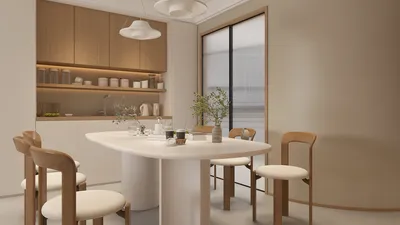


On one occasion, I found myself painting a small studio for a client with three different color shades before we discovered the one that truly allowed the room to breathe. The initial two choices appeared fantastic on the swatch but fell flat under the solitary north-facing window. This experience taught me a valuable and costly lesson: color swatches can mislead you until they're viewed in the right lighting. Nowadays, I trust real-world illustrations and employ AI tools like Homestyler for mood boards to sidestep unexpected outcomes.
1. Soft Warm Whites
For brightening spaces, my top choice is a soft, warm white that boasts a light reflectance value (LRV) of about 70–85. This hue effectively bounces both natural and artificial light, creates an illusion of taller ceilings, and harmonizes with any furniture color. The only downside involves upkeep—scuffs can be noticeable—but utilizing a washable eggshell finish along with well-placed rugs aids in mitigating the issue.
save pin
2. Pale Pastel Green
If you're dealing with a north-facing room in need of a boost, pale pastel green is a tremendous alternative. It feels fresher than stark white and brings a soothing ambiance. This shade complements wood tones and greenery effectively while concealing minor flaws better than harsh white. However, in low-light settings, it can appear a bit cool, so I often warm it with amber lighting or cozy textiles.
save pin
3. Muted Sunny Yellow
Using a muted, buttery yellow can transform a small room to feel sunlit, even on gray days. I implemented this in a windowless hallway with immediate and striking results. Caution is advised though: overly vibrant yellows can be overwhelming, so I prefer softer tones and typically apply them on just one wall or the ceiling for a delightful pop that prevents visual fatigue. To visualize my choices better, I often generate 3D renderings via tools like Homestyler to check how the paint appears in various lighting conditions.
save pin
4. Greige for Kitchens and Open Plans
Greige—a mix of gray and beige—has become my secret weapon when seeking a neutral tone that still reflects light while adding warmth, making it ideal for kitchens and open-plan designs. It conceals cooking splashes more effectively than bright white and unites appliances and cabinetry in an aesthetically pleasing manner. For kitchen remodels, I pair greige with vibrant trims and consult layout inspirations to ensure the choice aligns with overall flow.
save pin
5. Light Blue-Grey for Calm Brightness
A light blue-grey hue creates an airy, coastal atmosphere without the coldness, provided one opts for a slightly warmer LRV and incorporates warm metallics or wooden accents. This color visibly expands walls and complements crisp white trim beautifully. A caveat: in very warm lighting, it may appear almost silver, so I always test samples at different times before finalizing my selection.
save pin
Tips 1:
For practical advice, I recommend testing large painted boards on all walls, observing them in both morning and evening light, and selecting trim or ceiling colors one or two shades lighter than the walls to enhance perceived brightness. If you're mindful of your budget, repainting trims and ceilings in a brighter white can significantly uplift the ambiance without incurring hefty costs.
save pin
FAQ
1. What’s the most effective paint color for brightening a room?
Typically, I suggest a soft warm white with a high LRV since it reflects the maximum amount of light and coordinates with nearly everything. If you're looking for color, a pale pastel with an LRV above 60 is a solid secondary choice.
2. How do I choose a color for a north-facing room?
Opt for warmer shades or colors with slightly higher LRVs to balance the cooler natural light. Good options include pale greens, warm whites, or muted yellows.
3. Should I paint ceilings a different color to make rooms feel brighter?
Absolutely—painting the ceiling a brighter white than that of the walls visually recedes it and enhances the perception of height and brightness. I tend to go one or two shades lighter for optimal results.
4. Do glossy paints enhance a room’s brightness?
Satin or eggshell finishes reflect more light than flat paint, but high-gloss can reveal imperfections. I typically choose satin for a balance of reflectivity without the overly shiny appearance.
5. How much does lighting affect paint color?
It has a massive impact. I always advise reviewing samples under your regular bulbs and natural light throughout different times of the day. The color temperature of a bulb (warm versus cool) significantly alters the perception of paint colors.
6. Is it possible to brighten dark rooms without repainting?
Yes! You can enhance brightness by layering different types of lighting (ambient, task, and accent), incorporating mirrors, and replacing heavy curtains with sheer ones. If repainting is feasible, go for higher-LRV shades to amplify these efforts.
7. How crucial is LRV when choosing brightening colors?
LRV serves as a valuable objective metric: higher numbers lead to increased light reflection. According to Sherwin-Williams guidelines, aiming for an LRV of 60 and above is a practical approach when you desire a noticeably brighter space (per Sherwin-Williams paint resources).
8. Any wallet-friendly tips for brightening?
Repainting ceilings and trim in bright white, swapping to brighter light bulbs, and incorporating reflective accessories such as mirrors or metallic lamps are some simple strategies that yield significant results without necessitating a full repaint.
save pin
What began as an Autodesk innovation has evolved into a design platform used by more than 18 million people around the globe. Homestyler combines powerful rendering, an intuitive editor, and a vast furniture library to help you turn inspiration into photorealistic designs — whether you're redesigning a single room or planning an entire home.
Homestyler is your go-to online home design platform! With its user-friendly design tool, stunning 3D renderings, and a plethora of design projects and DIY video tutorials, you can effortlessly create and visualize your ideal space. Start transforming your home today!
Design Now for FREE
































