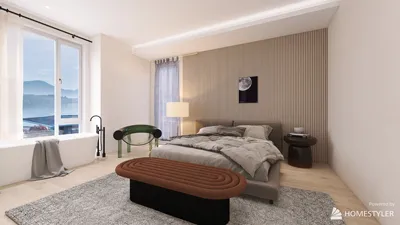


I once undertook the challenge of painting an entire one-bedroom apartment in what I believed was a "warm white." However, I received a distressed call from a client who felt the living room resembled a dental office under the evening glow — a classic rookie blunder. This experience taught me the importance of testing paint colors at various times throughout the day and paying attention to subtle undertones instead of relying solely on pure whites. For complex color schemes, I often consult AI-assisted design resources like Homestyler, which allow me to visualize how a neutral color performs in 3D spaces before making the first stroke of the brush.
1. Warm Greige for Cozy Layers
Greige is one of my favorite choices because it maintains a warm hue in low light while appearing neutral during daylight; this makes it an excellent option for small living rooms that need a touch of warmth rather than a glaring spotlight. The advantage of greige is its ability to harmonize beautifully with wood finishes and brass accents. However, choosing the wrong undertone can lead to a muddy appearance, so it's advisable to test swatches against different wall surfaces before finalizing the color.
save pin
2. Soft Grey with a Hint of Blue
A gentle grey that carries a hint of blue keeps a space feeling contemporary and serene without falling into a cold atmosphere. This color is particularly suitable for bedrooms and smaller kitchens, although pairing it with warm textiles can prevent it from feeling overly clinical.
save pin
3. Off-White with Depth
Off-white is my go-to choice when I desire brightness without the harshness of stark white; think of it as eggshells with more character. I often use this shade to create subtle contrasts with trims, enhancing artwork in the process. If you seek inspiration for coordinating wall colors and cabinetry, consider exploring practical kitchen layout ideas that demonstrate how off-whites can complement various cabinet tones.
save pin
4. Muted Pastels as Neutrals
Muted tones like sage, dusty mauve, or soft blush can function effectively as neutrals while adding a touch of personality. These shades are forgiving in compact spaces and blend well with other neutral colors. The trade-off, however, is that you might need to update accessories more regularly to keep up with shifting trends.
save pin
5. Two-Tone Neutrals for Dimension
Applying a darker neutral on an accent wall or the lower half of a room can significantly enhance depth without overpowering the overall decor. This approach is budget-friendly and perfect for a DIY project. For clients eager to visualize the outcome, I often leverage 3D renderings from my Homestyler portfolio, allowing them to envision the final look and avoid any surprises.
save pin
FAQ
Q1: What qualifies as a neutral interior paint color?
Generally, neutral colors include whites, greiges, beiges, and muted shades with low saturation. They serve as a backdrop, complementing bolder accents beautifully.
Q2: How do I select the right neutral for a small room?
It's crucial to test samples on multiple walls and observe them at various times of day. Take into account the light sources in the room as well as the tones of your furnishings before making a decision.
Q3: Are warm or cool neutrals preferable for tiny spaces?
Warm neutrals can create a cozy ambiance in small rooms, whereas cool neutrals tend to appear brighter and more spacious. Choose based on the desired mood and the materials already present.
Q4: How many neutral shades should I incorporate in one room?
Typically, I recommend using two to three shades: a primary wall color, a trim or ceiling hue, and an accent tone. This variety offers subtle contrast without overwhelming the color scheme.
Q5: Can neutrals disguise imperfections?
Certain neutrals, particularly mid-toned greiges, can be forgiving regarding surface flaws, but any extreme textures or damages should ideally be addressed beforehand.
Q6: Are undertones truly significant?
Absolutely—undertones influence how a neutral color appears. According to Sherwin-Williams, the undertones play a pivotal role in selecting neutrals, as they affect how well colors harmonize with furniture (sherwin-williams.com).
Q7: What finish is optimal for neutral walls?
Eggshell or satin finishes are commonly preferred as they conceal imperfections better than high-gloss options, while also being easier to clean compared to flat paints.
Q8: Any cost-effective strategies for repainting?
Begin by painting the largest surfaces first, then refresh the trim later to maximize your budget. Additionally, purchasing sample sizes allows you to test colors before committing to larger quantities.
save pin
Discover the ease of home design with Homestyler! This user-friendly platform offers a powerful online design tool, stunning 3D renderings, and a wealth of DIY video tutorials. Perfect for anyone looking to transform their space, Homestyler makes your design dreams a reality!
تصميم الآن مجانا
































