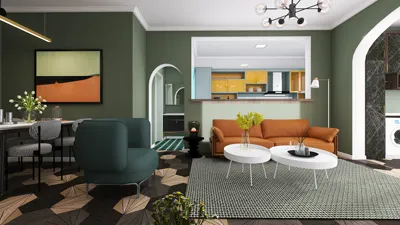


Once, a client requested a dining room hue that mirrored their cat’s eye color — no joke! This led us to a unique shade of green that turned out beautifully. That project reiterated to me how even small spaces, particularly dining rooms, can ignite the most creative ideas. Today, I’m excited to share 10 of my top color inspirations for dining rooms, all derived from my hands-on experiences, each accompanied by its own tale.
1. Deep Navy with Brass Accents
I implemented this combination in a compact downtown apartment where every inch mattered, yet personality was abundant. The deep navy created an inviting dining nook, complemented by brass elements that added a touch of elegance. This design turned out to be visually stunning for the room planner project, earning the client numerous digital praises from random admirers.
2. Soft Sage Green
Sage green delivers a soothing ambiance and shines in transitional dining spaces. I utilized it in a small open-concept area to subtly define the dining section without the need for barriers. It harmonizes wonderfully with natural wooden furnishings, enhancing a holistic look.
3. Warm Terracotta
This earthy shade can evoke a sense of comfort and stability in a dining space. The challenge lies in preventing it from being overly dark; hence, I counterbalance it with bright white trim and a large mirror to reflect light throughout the room.
4. Crisp White with Black Trim
This classic palette is one I frequently revisit. It’s ideal for accentuating distinctive furniture pieces. The black trim outlines the area artistically, providing a gallery-like feel.
5. Moody Charcoal
I once incorporated charcoal in a loft dining area, paired with oversized artwork, and it immediately created an impactful atmosphere. If you venture down this route, make sure you have ample lighting or reflective surfaces. Use a free floor plan creator like Homestyler to visualize how dark colors will appear in varied lights before finalizing your choice.
6. Blush Pink
At first glance, soft pink may appear daring for a dining area, yet it infused warmth and a glowing ambiance in a small city apartment, especially with navy chairs as an unexpected pairing.
7. Olive Green
Deeper and more sophisticated than sage, olive green brings a level of refinement. I used this shade in a farmhouse project adorned with reclaimed wood beams, creating a charmingly rustic yet polished vibe.
8. Classic Beige
At times, the most conservative choices yield the most effective results. Beige serves as a neutral canvas, allowing art pieces, furniture, or lighting to shine. I prefer layering various shades to prevent a flat appearance.
9. Dusty Blue
This color can enchant coastal-themed areas. In one renovation, it transformed a limited dining nook into a light, airy space, especially when styled with striped textiles. I explored several tones using a kitchen layout planner like Homestyler to ensure cohesion with the adjacent cooking zone.
10. Bold Mustard Yellow
Bright yet classy, mustard yellow draws attention and pairs surprisingly well with darker woods. It's the ideal choice for invigorating breakfast setups or vibrant dinner gatherings — perhaps not for those who prefer subtle tones.
FAQ
Q: Do dining room colors need to match the kitchen?
A: Not necessarily — they should have a coordinated look, but contrasting colors can add visual intrigue.
Q: What is the best paint finish for dining rooms?
A: I suggest an eggshell finish; it offers a mild sheen and is easier to clean after any food spills.
Discover your creative potential with Homestyler! This user-friendly online home design platform offers a powerful design tool, stunning 3D renderings, a vast array of design projects, and helpful DIY video tutorials. Transform your living space effortlessly and enjoy designing like a pro!
Zaprojektuj teraz za darmo
































