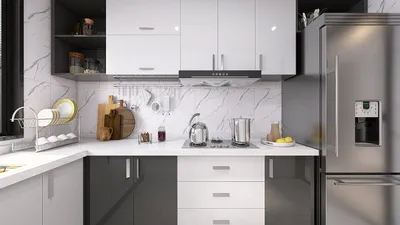


I once installed a sconce upside down — definitely a learning experience! The wiring diagram resembled abstract art in the dim light of night. A client had a good laugh, I rewired everything at sunrise, and we both discovered an essential insight: the choice of kitchen wall lights can significantly impact both functionality and ambiance. Particularly in smaller kitchens, innovative lighting solutions are crucial; opting for a sleek wall fixture instead of a bulky pendant can elegantly enhance the visual space.
1. Slim LED Task Sconces
For my projects, I often choose slim LED task sconces to position above countertops when clients are looking for bright, shadow-free lighting without taking up essential overhead space. These fixtures provide bright, efficient illumination that’s perfect for food prep, while their low-profile design maintains clean lines. However, if the color temperature isn’t warm enough, they might come off as too clinical, so I typically suggest pairing them with warmer under-cabinet strips or adjustable dimmers.
save pin
2. Swing-Arm Wall Lamps
Swing-arm wall lamps offer adjustable directional lighting, making them ideal for cozy breakfast corners or late-night cooking sessions. I often place them next to small dining areas to create an inviting, flexible light; you can rotate the arm for recipe reading or dim it for a relaxing atmosphere. Although they require a bit more planning for mounting and cord placement, the versatility they bring is worth the effort.
save pin
3. Integrated Mirror/Light Panels
In galley kitchens, where reflective materials can enhance the sense of space, I recommend integrated light panels above backsplashes or mirrored sections. These panels reflect light, effectively broadening the visual perception of the area while ensuring even illumination. The key is to choose fixtures that are easy to clean—opting for sealed designs or anti-fingerprint finishes will lessen maintenance woes.
save pin
4. Vintage Edison Wall Sconces
For those who appreciate a touch of character, vintage Edison-style wall sconces bring warmth and texture without overwhelming a small kitchen. I recently incorporated them in a rustic renovation, where they softened the starkness of modern cabinetry and became a striking focal point. Although they aren’t the brightest option available, pairing them with ample task lighting creates a lovely layered effect.
save pin
5. Recessed Wall Washers
Recessed wall washers emanate gentle ambient light that accentuates tile work or open shelving, all while maintaining minimal sightlines. In compact kitchens, I utilize these fixtures to highlight vertical surfaces and avoid harsh glare. Although the installation is more invasive compared to surface-mounted alternatives, the seamless appearance is a significant benefit for small spaces.
save pin
Tips:
To aid in drafting and visualizing the layout of lighting fixtures, I frequently recommend using a 3D mockup which can address many scaling issues prior to installation. For an effective virtual mockup, be sure to check out the Homestyler 3D floor planner for realistic visualizations.
save pin
FAQ
1. What color temperature is optimal for kitchen wall lights? I typically select a range of 2700K to 3000K for a warm and inviting ambiance; 3500K can provide a crisper task light when needed. Cooler temperatures often feel more sterile.
2. Can wall lights serve as the primary source of kitchen lighting? In smaller kitchens, they can effectively be the main lighting solution when layered with under-cabinet and ambient sources. Relying solely on decorative sconces might leave task areas inadequately lit.
3. At what height should kitchen wall lights be installed? Generally, around 60 to 66 inches from the floor to the center of the fixture is recommended, but aligning them with countertops and sightlines ensures optimal results.
4. Is it feasible to install wall lights myself? Basic plug-in sconces are user-friendly for DIY projects, but hardwired recessed or swing-arm installations typically require an electrician to adhere to safety standards and code compliance.
5. What should I consider regarding moisture near sinks? It’s essential to use fixtures designed for damp locations and to maintain electrical clearances according to local regulations.
6. How can I reduce glare from wall lights? Positioning fixtures above eye level, or utilizing frosted shades and dimmers, can help manage glare effectively.
7. Where can I visualize different fixture placements in my kitchen? I often create quick floor plans and advise the use of a room planner, like Homestyler, to experiment with fixture positioning before making any permanent installations.
8. Are there established standards for kitchen lighting? Absolutely — the Illuminating Engineering Society (IES) publishes guidelines on recommended illuminance levels for both task and ambient lighting (sources: IES Lighting Handbook).
save pin
Homestyler is your go-to online home design platform! With its user-friendly design tool, stunning 3D renderings, and a wealth of design projects and DIY video tutorials, you can effortlessly create and visualize your dream space—perfect for both beginners and seasoned designers!
Diseño ahora GRATIS
































