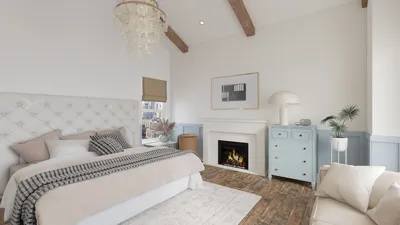


I once tackled the task of painting an entire coastal condo in what I believed was the ideal shade of sea-glass green. However, I quickly discovered that by sunset, the walls transformed into an unusual chartreuse hue. This experience taught me two crucial lessons: firstly, testing paint under various lighting conditions is essential, and secondly, utilizing mockups rather than relying solely on imagination is far superior. That’s why I frequently begin with coastal 3D renderings using Homestyler before making a purchase decision on paint.
1. Soft Sea Glass Greens
Soft sea glass greens resonate with me due to their refreshing yet cozy essence; they reflect natural light beautifully and can conceal minor blemishes. The benefit lies in creating a calming coastal atmosphere; however, it’s important to avoid hues that appear overly blue or yellow when evening light casts shadows. Be sure to sample large wall swatches when considering these tones.
save pin
2. Driftwood Neutrals with Blue Accents
Combining warm driftwood neutrals with dusty blue accents conveys a cozy beach cottage vibe and pairs beautifully with existing furniture. As a budget-friendly tip, opt for neutral walls and introduce color through decorative pillows, art pieces, or a single accent wall, effectively minimizing costs.
save pin
3. Crisp Navy Anchors
Navy is my favorite choice for establishing a grounded aesthetic within a space—consider applying it to a feature wall, cabinetry, or even the ceiling to add depth without making the area feel smaller. In designs for open-plan kitchens near the sea, pairing navy with light countertops and ample texture tends to align with practical layouts, similar to the open kitchen configurations I often incorporate in projects. Just remember, navy requires well-planned lighting to prevent a dark, cave-like ambiance.
save pin
4. Sun-Bleached Pastels
Imagining pale corals, faded yellows, and soft aquas encapsulates the look of sun-kissed beach strolls, making it perfect for areas flooded with natural light. These lighter shades might show wear more quickly than vivid colors, so I suggest opting for a satin or semi-gloss finish, particularly in high-traffic coastal corridors.
save pin
5. High-Contrast Coastal Chic
To create a contemporary seaside statement, combine bright white tones with charcoal trims and a single vivid accent—like turquoise—where the striking contrast conveys a fresh and stylish atmosphere. This design strategy works particularly well for smaller spaces, especially when considering furniture layout and flow around ingenious small-space designs, although it does require disciplined accessory choices to prevent visual clutter.
save pin
FAQ
Q1: What are the best paint finishes for coastal homes?
A: I typically recommend eggshell or satin finishes for walls, as they are easy to clean without being overly shiny. Semi-gloss is suitable for trims and bathrooms where moisture is a consideration, balancing aesthetics with practicality.
Q2: How do I prevent paint colors from changing under different lighting?
A: It's advisable to test 12"x12" swatches at both morning and evening times and observe them over at least two days; factors like light conditions, surroundings, and reflections can influence how colors are perceived.
Q3: Should I use cool or warm tones for my beach house?
A: Both options can be effective—cool tones highlight the beauty of the water and sky, while warm tones reflect the ambiance of sand and sunlight. My choice usually depends on the view and the mood that the client wishes to achieve.
Q4: What budget should I earmark for painting a coastal living room?
A: While estimates for materials and labor can vary by region, a reasonable range would be between $800 and $2,500, based on preparation, the quality of finishes, and details like trim work.
Q5: Can using white paint make a coastal home appear too sterile?
A: Absolutely—pure white can come off as clinical. I prefer warm whites with subtle hints of gray or beige to evoke a more inviting, beachy ambiance.
Q6: How do I choose accent colors that remain stylish over time?
A: Opt for accents inspired by natural elements such as sea glass, driftwood, and sand, incorporating them through textiles or smaller decor items for easy updates.
Q7: Where can I find information on light reflectance and choosing whites?
A: Paint manufacturers provide resources on Light Reflectance Value (LRV); Sherwin-Williams offers a helpful LRV and color selection guide (https://www.sherwin-williams.com) for precise technical details.
Q8: Is hiring a designer for coastal paint selection worth it?
A: If you aim for cohesive results and want to avoid costly missteps, working with a designer can be an excellent investment of time and resources. Even a brief consultation can help clarify color palettes and finishes that fit your lighting and lifestyle.
save pin
Homestyler is your go-to online home design platform! With its user-friendly design tool, stunning 3D renderings, and a wealth of design projects and DIY video tutorials, you can effortlessly create and visualize your dream space. Transform your home design ideas into reality today!
Design Now for FREE
































