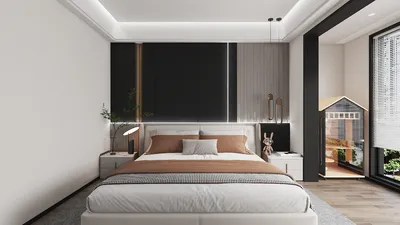


The lifestyle of tomorrow is steering us towards more vertical, densely populated, and communal living environments. At present, we encounter challenges such as noise disturbances, compromised privacy, and inefficient movement within high-rise residential complexes. As indicated by the NAHB, the number of multi-family building permits has climbed over the last ten years, reflecting the transformative nature of vertical co-living on our daily lives. Within this context, a high-floor plan group residence of 3000 sq ft is evolving into a hub of interaction rather than mere corridors. The future is approaching, and its form is already becoming visible.
spatial reasoning toolkit
Split-Core Commons with Peripheral Suites
Design Logic: A central communal core functions like a digital server, providing light, fresh air, and social connections, while private suites orbit around it for undisturbed retreat.
Flow: Entry leads to a shared kitchen and lounge, branching into four suites; a service spine connects laundry, pantry, and mechanical areas like a seamless thread.
Sightlines: The hub offers diagonal views towards balcony edges; privacy gradients become more pronounced as one enters the suites, which feature controlled thresholds.
Storage: A central pantry and utility wall serve as storage; each suite contains 10–12 linear feet of wardrobe space, plus overhead bins for out-of-season items.
Furniture Fit: Modular sofas create islands of comfort, with 36-inch pathways for circulation and queen beds maintaining 24-inch side clearances; tables accommodate 8–10 guests without hindrance.
Verdict: This design anticipates the needs of flexible co-living for the next five years, ensuring social interaction remains centralized while personal privacy is preserved.
save pin
Dual-Axis Living: Quiet/Active Split
Design Logic: Two parallel zones—a quiet area for study and sleep, and an active space for cooking and dining—function independently yet synchronize at points of shared activity.
Flow: The west zone houses studios and restful spaces; the east zone is designated for meal preparation and socializing; connection links every 20–25 feet act as seamless transitions.
Sightlines: Long axial vistas enhance navigation; large windows frame distant city views while cross-cut openings prevent a tunnel effect.
Storage: The active zone features extensive shelving, while the quiet zone includes deep drawers; a centralized tech locker provides shared storage.
Furniture Fit: The design includes 30-inch deep worktops, acoustic panels for sound insulation, and adjustable height tables; the alcoves accommodate snug spaces for restful sleep.
Verdict: The overall layout is structured effectively—it minimizes conflicts, ensuring daily routines flow smoothly with fewer interruptions.
save pin
Ring of Rooms with Light Wells
Design Logic: A circular arrangement of rooms surrounds two light wells, allowing daylight to flow like data packets to each space, enhancing mood and scheduling.
Flow: Enter through a corridor that leads to rooms and shared micro-lounges; the light wells serve as rejuvenation points, refreshing movement patterns.
Sightlines: Subtle reveals to the light wells create controlled privacy for bedrooms; views unfold in layers, resembling a user interface that transitions from public to private.
Storage: Integrated millwork along the corridor provides constant storage; each room includes wardrobes plus vertical spaces for gadgets and cleaning supplies.
Furniture Fit: Slim-profile sofas, a 42-inch dining clearance, and sliding doors enhance space efficiency; stackable chairs are available for larger gatherings.
Verdict: This circular configuration maintains coherence within group housing, with light serving as the central operating system, allowing rooms to connect without excess noise.
save pin
Final Takeaway
In a high-floor 3000 sq ft group housing plan, the layout serves as an interface where privacy, communal energy, and maintenance efficiently converge. As communal living models and multi-family housing trends progress, these designs leverage height and density to become assets rather than drawbacks. Successful group housing operates when flow, storage, and furniture tolerances function like reliable APIs, effectively organizing daily life with minimal disruption. In my view, the most intelligent homes of the future won't necessarily be bigger—they'll be more thoughtfully designed, showcasing tools like Homestyler to maximize efficiency.


Homestyler is your go-to online platform for home design! Enjoy an easy-to-use design tool, stunning 3D renderings, and a wealth of design projects and DIY video tutorials. Transform your space effortlessly, whether you're a beginner or an experienced designer. Start creating today!
Concevez maintenant gratuitement
































