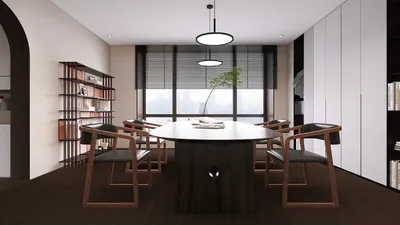


In my decade-long experience in designing apartments and compact homes, a notable trend has emerged: while open-plan living continues to hold appeal, clients are increasingly seeking subtle divisions between their living rooms and kitchens. Small spaces often ignite creativity, and it's here that innovative room dividers become essential. This article will explore 10 effective and stylish methods to distinguish these areas, drawing from my own insights along with reputable design sources. One memorable project involved integrating a minimalist kitchen storage solution that seamlessly transitioned between spaces while allowing natural light to flow freely.
1. Open Shelving as a Visual Divider
My Perspective: During a recent studio project, I utilized open shelves adorned with greenery to form a 'soft wall' separating the cooking area from the lounge. This approach preserved an airy ambiance while imparting distinct character to each side.
Advantages: Promotes daylight circulation; serves as both display and storage; ideal for small apartments desiring a semi-open concept kitchen and living space.
Drawbacks: Requires frequent dusting; can appear cluttered if not organized.
Tip: Maintain a uniform color scheme for displayed items to minimize visual clutter.
2. Glass Partitions with Black Frames
My Perspective: Taking design cues from Parisian apartments, I’ve found that framed glass walls enhance light intake while containing cooking odors. I incorporated this solution in a 45㎡ loft, and the client is still grateful.
Advantages: Preserves open sightlines; offers an industrial-chic look; assists in sound management between the kitchen and living area.
Drawbacks: Generally more expensive than lighter dividers; requires maintenance to keep fingerprints at bay.
3. Sliding Barn Doors
My Perspective: In the renovation of a compact cottage, sliding barn doors introduced charm and adaptability. They can be fully opened for gatherings or closed for cozy movie nights.
Advantages: Saves space typically needed for door swing; can act as an eye-catching feature; suitable for both rustic and contemporary aesthetics.
Drawbacks: Hardware can be costly; may not provide significant sound insulation.
4. Kitchen Island with Overhead Rack
My Perspective: One client who adored cooking shows inspired me to create a kitchen island that served as a subtle separator, equipped with an overhead rack for pots and pans. This not only provided visual distinction but also enhanced the culinary atmosphere.
Advantages: Increases counter and storage capacity; acts as a natural gathering spot; complements open-plan kitchen designs well.
Drawbacks: Requires adequate floor space; may feel cumbersome in smaller areas.
5. Half-Wall with Built-in Storage
My Perspective: When a client expressed the need for storage without wanting to completely enclose the space, a half-wall featuring shelves became the perfect solution. It's a strategy I've frequently employed in apartments under 60㎡.
Advantages: Offers storage for books, ceramics, or plants; maintains spatial connectivity; more budget-friendly than full walls.
Drawbacks: Doesn’t provide complete sound or odor containment.
6. Different Ceiling Treatments
My Perspective: In a duplex loft, I utilized wooden slats over the kitchen and smooth white ceilings in the living area, which effectively delineated the zones. Pairing this with a glass backsplash enhances the feeling of an open kitchen environment.
Advantages: Visually distinguishes areas without sacrificing floor space; adds texture and warmth; relatively simple to retrofitting.
Drawbacks: May increase labor costs; lacks physical separation for smells and sounds.
7. Area Rugs to Define Zones
My Perspective: Affordable and easily removable, rugs serve as my quick-fix solution for zoning. This approach works wonders in rental properties, requiring no construction effort.
Advantages: Simple to replace; enhances comfort; available in countless designs and price ranges.
Drawbacks: No sound or odor separation; needs upkeep.
8. Floor Level Changes
My Perspective: By adding a single step down into the living room of a small residence, I instantly created defined and unique spaces.
Advantages: Naturally divides the area; can accommodate underfloor storage; offers visual interest.
Drawbacks: Must prioritize safety; might not suit all inhabitants.
9. Statement Furniture Arrangement
My Perspective: Arranging the back of a sofa to face the kitchen can indicate a shift in purpose. In one instance, this arrangement successfully concealed kitchen messes from guests.
Advantages: Requires no construction; allows for flexible rearrangement; furniture serves multiple functions.
Drawbacks: Best suited for larger small spaces; may obstruct natural pathways.
10. Decorative Screens or Folding Panels
My Perspective: I’ve employed lightweight rattan screens that can be repositioned for open flow, enabling a client to host both intimate dinners and larger gatherings seamlessly.
Advantages: Easily transferable between residences; adds visual interest with patterns or textures; adjustable openness.
Drawbacks: May not effectively block sound or odors; can be unstable if overly lightweight.
Tip: For a unified appearance, coordinate screen colors with flooring or major furniture tones – similar to a project I worked on where an L-shaped layout maximized counter space in a compact condo.
Conclusion
A combined living room and kitchen invites innovative design solutions rather than presenting limitations. The right divider can enhance both functionality and style, sometimes achieving a trifecta of ambiance. A 2023 Houzz report revealed that 42% of homeowners renovating small spaces opted for partial separation, delivering improved comfort without sacrificing openness. Which of these 10 divider concepts are you most eager to implement?
FAQ
1. What is the most cost-effective way to separate a living room and kitchen?
Using area rugs and strategically placing furniture are excellent low-cost methods that require no construction work.
2. How can I divide my kitchen without obstructing light?
Glass partitions and open shelving are ideal choices, as they facilitate light passage while creating distinct areas.
3. What options are best suited for rental spaces?
Freestanding screens, folding panels, or rugs are perfect as they do not require structural modifications.
4. Is an island a sufficient divider for an open-plan area?
Absolutely, particularly when paired with overhead lighting or racks for enhanced visual distinction.
5. Do partition solutions help contain cooking odors?
Solid barriers or glass partitions designed for sealing offer the best odor control; open solutions may not effectively contain them.
6. Can I DIY a half-wall?
Yes, but you should verify building codes and ensure structural integrity before proceeding.
7. Are ceiling treatments a worthwhile investment?
They can significantly transform the atmosphere without sacrificing space; Architectural Digest refers to it as a "zoning superpower" for compact apartments.
8. Where can I find layout inspiration for my own home?
Real-world examples showcased in a project gallery can provide a wealth of ideas to inspire your design.
Originally incubated at Autodesk, Homestyler has grown into one of the most widely adopted home design platforms in the world, now trusted by over 18 million users. Whether you're a homeowner exploring ideas or a professional designer delivering client-ready renders, Homestyler brings industry-leading 3D technology to your fingertips — no experience required.
Looking to transform your home? Homestyler offers an intuitive online design tool that makes it easy to create stunning interiors. With impressive 3D renderings, a wealth of design projects, and helpful video tutorials, you can unleash your creativity and design your dream space effortlessly!
Diseño ahora GRATIS
































