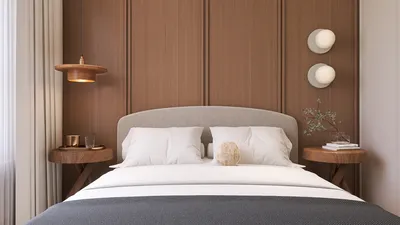


In my experience, installing a marble-topped accent table in a studio led to a humorous yet insightful comment from a tenant who felt the space looked both "rich and trapped." This situation quickly taught me the importance of scale over extravagance in compact living areas. Small spaces often inspire significant creativity, prompting me to share five effective accent table options along with tips to avoid common pitfalls that I learned through trial and error. To quickly gauge proportions, I frequently create a 3D mockup prior to making any purchases, especially with tools like Homestyler that simplify this process.
Tall pedestal or tripod table
I have a strong preference for tall and slender pedestal or tripod accent tables, as they present a lightweight visual appeal while still providing adequate surface area for items like lamps or plants. The advantage lies in their minimal visual footprint; however, there is a risk of limited tabletop space and instability, especially if a less sturdy model is chosen. My advice is to opt for a table with a weighted base and consider it as a decorative piece—think of it as jewelry rather than primary storage.
Versatile nesting tables
Nesting tables are my go-to suggestion for clients who don't host gatherings frequently but require flexibility. These tables can easily stack away when not in use and can be pulled out as side tables for beverages or as a temporary workspace. This means you're exchanging a single standalone item for various functionalities; just ensure the finishes don’t scuff against one another when nested.
save pin
Foldaway wall-mounted surface
For ultra-compact studios, I sometimes recommend a wall-mounted foldaway accent table that can serve as a console or dining edge. This helps maintain an uncluttered floor while maximizing wall utility. Although installation requires precision and sturdy brackets, once completed, it offers a sleek, hotel-style solution that remains out of sight when not in use.
save pin
Accent tables with storage solutions
A combination of surface area and storage is always a smart choice: a slender table with a drawer or lower shelf can keep clutter concealed while still providing display space. For instance, I designed one for a client looking for a drop zone by the entrance—keys, mail, and a small lamp fit perfectly. Just be cautious about the depth to avoid blocking pathways; a shallower top can be surprisingly effective.
save pin
Round or oval tables for improved flow
When it comes to furniture, rounded shapes tend to navigate traffic more smoothly than sharp corners, making small round or oval accent tables ideal for creating a fluid space. Such designs are particularly beneficial next to sofas or in awkward corners where square edges might seem harsh. If additional functionality is desired, consider a model with a lower shelf for holding baskets.
save pin
Tip 1:
Always measure twice and buy once: be sure to mark the table’s footprint on the floor and observe the taped outlines for a day. For those cooking in limited areas, it’s worth considering a compact kitchen layout analysis to see how an accent table can serve dual purposes for preparation or serving.
save pin
FAQ
Q1: What size accent table is ideal for a small living room?
A1: Look for a table that is between 14 and 18 inches in depth to ensure narrow walkways remain accessible, and always maintain at least 30 inches of clearance for main pathways.
Q2: Are round tables preferable to square ones in tight areas?
A2: Generally, yes—round or oval tables minimize collision points and enhance flow, particularly in frequently visited areas.
Q3: Can an accent table also function as storage?
A3: Definitely. Seek out tables with drawers, lower shelves, or hollow bases for the greatest utility in small spaces.
Q4: Which materials convey a lighter feel in compact rooms?
A4: Materials such as glass tops, slender metal legs, and open designs appear less cumbersome compared to solid wood options. Mixing materials can add texture while maintaining a light atmosphere.
Q5: How can I assess scale prior to purchase?
A5: Outline the table’s dimensions on your floor, use it interactively for a day, or create a 3D design mockup. I often sketch simple drafts to evaluate sight lines.
Q6: Is it difficult to install wall-mounted tables?
A6: Proper installation requires correct anchors and supports; if in doubt, consider hiring a professional. The benefit is a suspended surface that opens up floor space.
Q7: What clearance is necessary around an accent table?
A7: To ensure comfortable movement, aim for 30 to 36 inches around the table when feasible; narrower passages (24 to 28 inches) are manageable but can feel tighter. Adequate circulation is essential, according to the American Society of Interior Designers (ASID).
Q8: Where can I create simple room designs to explore different setups?
A8: Sketching manually is acceptable, but for quicker revisions, consider using a digital room planner. I advocate for creating layered plans to visualize traffic flows and placements—this approach often validates design choices effectively, making tools like Homestyler invaluable for experimentation.
save pin
Looking for an easy way to transform your home? Homestyler offers an intuitive online design tool, stunning 3D renderings, and a wealth of design projects and video tutorials. It's perfect for anyone wanting to unleash their creativity and bring their interior design dreams to life!
Design jetzt kostenlos
































