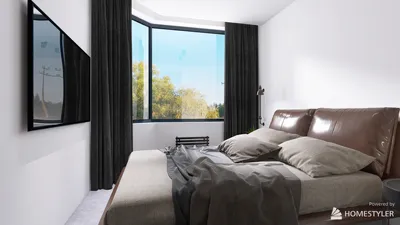


In the last decade, my journey as an interior designer has revealed a remarkable trend towards designs that prioritize natural light, with large living room windows playing a pivotal role. While compact spaces often challenge our creativity, expansive windows unlock a realm of possibilities for innovative design solutions. Today, I would like to present 10 of my beloved ideas for large living room windows, drawing from both personal insights and insights from leading design resources, including how tools like Homestyler can aid in visualizing these concepts.
1. Floor-to-Ceiling Panoramic Views
My Experience: One of my favorite projects involved a coastal residence featuring 10-foot floor-to-ceiling glass panels. For the homeowner, witnessing sunrises became a cherished part of their morning routine.
Advantages: This design maximizes the influx of natural light and fosters a fluid connection between indoor and outdoor spaces. Research from ArchDaily highlights that well-lit environments can elevate mood and enhance productivity.
Disadvantages: They may lead to increased heat absorption, necessitating quality glazing to regulate temperature effectively.
Suggestion: Combine these windows with glass-backed shelving to create an airy, floating effect.
2. Arched Window Frames
My Experience: The graceful elegance of arches has always captivated me — I once implemented them in a heritage home, and they instantly softened the room’s geometry.
Advantages: Arched frames add architectural character and can harmonize with both traditional and eclectic design styles.
Disadvantages: Custom framing can be costly and may limit your options for curtains.
3. Industrial-Style Gridded Windows
My Experience: During a loft conversion project, I introduced steel-framed grids that infused the space with a trendy New York vibe.
Advantages: These windows establish a visual structure and rhythm that works beautifully with modern and loft designs.
Disadvantages: They might reduce light ingress slightly compared to frameless options.
4. Corner Window Installations
My Experience: I applied this concept in a mountain retreat, granting a breathtaking 270° view of the surrounding landscape.
Advantages: This design merges multiple walls of views, enhancing the sense of spaciousness, particularly in compact living rooms.
Disadvantages: The need for structural reinforcement may elevate project costs.
5. Built-in Window Seats
My Experience: I transformed a wide window sill in my own home into a cozy reading nook that my cats immediately claimed as their territory.
Advantages: This feature provides functional seating and storage solutions while enhancing comfort.
Disadvantages: Window seats can gather dust and may obstruct radiators if positioned incorrectly.
6. Double-Height Windows
My Experience: While working on a duplex, I utilized two-story glass that utterly transformed the ambiance into a luminous well of light.
Advantages: This design creates a striking visual impact, offering a dramatic touch as noted by Houzz design studies.
Disadvantages: Cleaning can necessitate professional help; initial costs for glass and framing can be higher than standard designs.
7. Minimalist Slim-Frame Systems
My Experience: For a minimalist client, we sourced ultra-slim frames that almost disappeared, allowing the landscape to take center stage.
Advantages: This approach maximizes the visible glass area, flawlessly complementing contemporary aesthetics.
Disadvantages: There are limited colors and styles available, and these may be pricier than traditional frames.
Case: This approach perfectly aligned with an open-plan layout, providing unobstructed sightlines.
8. Window Walls with Sliding Panels
My Experience: An ideal solution for warmer climates, I created a retractable glass wall for a seamless indoor-outdoor lounge experience.
Advantages: This design enhances airflow and creates a direct connection to a patio or deck.
Disadvantages: Proper track maintenance is essential, as is consideration for drainage systems.
9. Stained Glass Accents
My Experience: I had the opportunity to restore a bay window from the 1920s, adorned with stained glass borders, illuminating the living room with colorful kaleidoscopic patterns every afternoon.
Advantages: This feature adds both vibrancy and historical value, particularly suited for period properties.
Disadvantages: Such designs may not fit well within minimalist or ultra-modern aesthetics.
Suggestion: Use stained glass sparingly to maintain a balance, complementing it with modern furniture for contrast.
10. Clerestory Windows
My Experience: These windows are excellent for maintaining privacy while flooding the room with natural light.
Advantages: They allow walls to remain unobstructed for art and storage, making them perfect for urban settings.
Disadvantages: Precise engineering is required to avoid issues with glare during certain times of the day.
Conclusion
Large living room windows transcend mere architectural details; they offer a rich experience. Architectural Digest suggests that intentional window design can fundamentally change how we engage with our spaces. To me, the right window layout can transform a room into a sanctuary filled with light. Which of these innovative ideas would you be excited to incorporate into your home using tools like Homestyler for visualization?
FAQ
Q1: What are the top ideas for large living room windows that maximize light?
A: Features like floor-to-ceiling panes, slim-frame systems, and corner installations are ideal as they capture the most daylight and provide breathtaking views.
Q2: Are large living room windows energy efficient?
A: With the implementation of low-E glass and double glazing, energy loss can be minimized; several options are available based on ENERGY STAR ratings for efficiency.
Q3: How can I ensure privacy with large windows?
A: Options like clerestory windows, frosted glass sections, or layered curtains effectively balance light and privacy needs.
Q4: Is it possible to retrofit large windows into an existing wall?
A: Yes, retrofitting is feasible, but it requires a structural evaluation to guarantee safe weight distribution.
Q5: Will large windows raise my heating bill?
A: Yes, if not insulated properly; consider installing thermal breaks and optimizing glass treatment to mitigate costs.
Q6: What design aesthetics align with large grid windows?
A: Industrial, loft, and modern farmhouse styles harmonize perfectly with steel-framed grids.
Q7: Are stained glass windows considered outdated?
A: Not at all — when integrated thoughtfully, stained glass can add a modern and unique twist; examples abound in restoration projects.
Q8: What is the cost range for installing floor-to-ceiling windows?
A: Prices fluctuate based on material and glazing choices; typically, budgeting between $1,200 and $3,000 per panel is a reasonable starting estimate.
Discover the magic of home design with Homestyler! This user-friendly platform offers an intuitive online design tool, stunning 3D renderings, and a wealth of inspiring design projects. Plus, with DIY video tutorials at your fingertips, transforming your space has never been easier or more enjoyable!
Concevez maintenant gratuitement
































