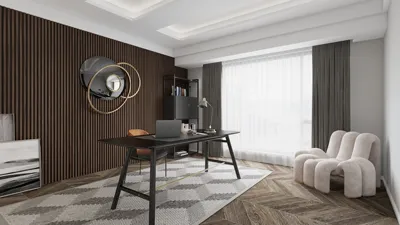


In my experience, I crafted an exquisite wall desk that ended up being 10 cm too elevated—my client ended up sitting on a cushion for a week while I refined the leg brackets. That instance of mild panic enlightened me that minor errors can feel monumental in compact spaces, and meticulous planning proves beneficial every time. If you're searching for effective inspiration, kick off with a real space planning case study I utilized to persuade a doubtful homeowner.
Tips 1: Fold-down floating desk
My go-to solution for studio apartments is a wall-mounted, foldable desk—when it's not in use, it vanishes, freeing up floor space for activities like yoga or accommodating guests. This option is budget-friendly and straightforward to install, although it sacrifices some storage and requires robust wall anchors.
Tips 2: Slim console desk with vertical storage
I am fond of narrow console desks complemented with tall shelving; they maintain a minimal footprint while maximizing vertical storage. A potential downside is that legroom can feel restricted, so I always account for knee space and opt for a compact task chair that fits neatly under the desk's surface.
save pin
Tips 3: Window-seat desk that doubles as a bench
Transforming a sunny windowsill into a workstation provides ample light and includes a built-in seat—ideal for apartments where every inch counts. I adapted this concept from a kitchen design to create a desk across a narrow alcove, incorporating a drawer for supplies and a hinged top for cable management, but be sure to check the radiator placement first.
save pin
Tips 4: Corner triangular desk
Corner desks make use of otherwise unusable areas while providing considerable workspace without obstructing foot traffic—perfect if you require monitors but do not need a full-fledged office setup. Fabrication can be custom-built or modular; just know that there might be limited reconfiguration options later on.
save pin
Tips 5: Mobile cart desk with visual mockup
For renters, a mobile cart or compact table on wheels is invaluable—easily roll it away when guests visit and reposition it by the window during work hours. I typically demonstrate a 3D render of how the cart will appear in various locations, ensuring the wheels are lockable and the surface is even for optimum functionality.
save pin
FAQ
Q: What dimensions should a desk have for small rooms?
A: For confined areas, a desk between 80–100 cm wide and 40–50 cm deep often fits perfectly while accommodating a laptop and lamp. Be sure to measure circulation areas and chair space before making a purchase.
Q: Are foldable desks sturdy enough for everyday use?
A: Certainly—when secured to wall studs or with appropriate rated hardware, fold-down desks can support daily laptop usage; heavier setups with multiple monitors may require additional support. I suggest verifying load ratings on hardware and reinforcing as necessary.
Q: How can I make a compact desk ergonomic?
A: Ensure the tabletop height keeps your elbows at a roughly 90-degree angle while typing, and use a monitor riser if needed; pairing a compact desk with an adjustable chair usually resolves most ergonomic concerns. Good posture and maintaining screen distance (about an arm's length) are more critical than desk width.
Q: Which materials are best for small desks?
A: Lightweight plywood or laminate reduces cost and visual bulk, whereas solid wood provides lasting quality and a premium look but can be cumbersome. I often mix materials for practicality: using a lightweight top paired with metal legs for an airy appearance.
Q: Is it possible to DIY a custom compact desk?
A: Absolutely—many of my clients have crafted simple floating surfaces or cart adaptations. It's important to plan exact measurements and consider cable management from the outset to sidestep surprises during construction.
Q: What budget should I allocate for a compact desk solution?
A: Budgeting varies from $80 for a basic pre-made desk to $600+ for custom solutions; fold-down or second-hand options can keep expenses in check while custom woodworking will elevate costs. I always incorporate installation and hardware into the initial budget planning.
Q: Any advice for lighting a tiny desk effectively?
A: Utilize a compact adjustable wall fixture or clamp light to save on desk space and decrease glare; natural light from a window-seat setup is excellent but consider adding layered task lighting for late-night work sessions. Dimmable LED lights can enhance contrast without adding bulk.
Q: Where can I find ergonomic height guidelines?
A: For trusted information, refer to OSHA's ergonomics resources, which include recommended seating work heights and posture advice (check out osha.gov). Their checklists are particularly useful for organizing small-home workspaces.
save pin
Discover your dream home design with Homestyler! This intuitive online platform offers a powerful design tool, stunning 3D renderings, and a wealth of design projects. Plus, its engaging video tutorials make it easy to bring your creative visions to life—perfect for both beginners and experienced designers!
Desain sekarang Gratis
































