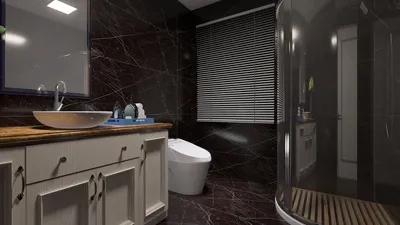


In my experience, installing a stylish chandelier in a small ensuite highlighted a crucial point: the homeowner believed it added a quirky touch. However, midway through the installation, we discovered that the light was too overpowering for the mirror and created unflattering shadows. This taught me that functionality and scale take precedence over novelty. Working with small bathrooms encourages smarter design choices, and that’s precisely why I appreciate them.
1. Layered Vanity Lighting with Wall Sconces
I typically begin by placing a pair of wall sconces on either side of the mirror. This setup delivers even, shadow-free lighting for tasks like shaving and applying makeup, while also achieving a balanced vanity appearance. The advantage lies in its excellent task lighting and stylistic adaptability; however, sufficient wall space and careful height adjustments are necessary to ensure the light illuminates the face rather than the forehead. In one project, I positioned the sconces 36 inches apart to fit a narrow mirror — a straightforward and cost-effective solution.
save pin
2. Damp-Rated Recessed Ceiling Lights
For low ceilings, I suggest utilizing recessed downlights equipped with dimmers. These fixtures provide clean, expansive ambient lighting without cluttering the visual space. Their moisture-safe trims make them ideal for bathrooms, and their unobtrusive positioning above showers or bathtubs is a significant perk. The downside involves potential shadowing at the vanity unless these lights are complemented by wall fixtures; during a recent compact renovation, I combined two recessed lights with vanity sconces, achieving a soft yet bright glow.
save pin
3. LED Mirrors or Integrated Mirror Lighting
Integrated LED mirrors are a great space-saving solution and offer consistent color temperatures directly at eye level, which is perfect for grooming. They are energy-efficient and frequently come with anti-fog features, making them ideal for humid bathrooms. The trade-off is that a fully integrated unit may be more expensive than separate fixtures, potentially limiting future mirror style changes. For instance, I replaced an outdated backlit mirror with a modern LED option, which instantly revitalized the entire bathroom.
save pin
Tips 1:
Pay attention to color temperature: aim for a range of 2700K to 3500K to achieve warm yet accurate skin tones. Consider installing a dimmer to adjust the atmosphere: bright settings for morning routines and softer lighting for relaxing baths. When designing layouts and visualizing fixture placements in confined bathrooms, the 3D floor planner proves invaluable — it has helped me avoid awkward shadows in various projects.
save pin
FAQ
Q: What color temperature is best for bathroom lighting?
A: I recommend a color temperature between 2700K and 3500K for warm, flattering light. For true color accuracy, choose fixtures with a CRI rating of 90 or higher.
Q: Can I use standard recessed lights in a shower area?
A: Only if they are specially rated for damp or wet conditions and installed with appropriate trims and seals in compliance with local codes.
Q: Are LED mirrors worth the investment?
A: Absolutely — LED mirrors are energy-efficient, produce even lighting, and often feature anti-fog capabilities, making them a valuable addition to small bathrooms.
Q: How many light fixtures does a small bathroom typically require?
A: Generally, a combination of ambient lighting (like recessed or ceiling fixtures) and task lighting (like sconces or mirror lights) suffices. One or two recessed lights along with some vanity lighting usually do the trick.
Q: Should bathroom lighting be connected to a GFCI or protected circuit?
A: Bathroom lighting circuits must adhere to local electrical codes; it’s common for outlets to need GFCI protection while lighting may require specific safeguards—consult with a licensed electrician for details.
Q: What can I do to minimize shadows when using my bathroom mirror?
A: Installing side-mounted sconces or using integrated mirror lighting at face level will help. Avoid relying solely on overhead lights as your only source.
Q: Is it safe to dim bathroom lights?
A: Yes, provided that both the fixtures and bulbs are dimmable and that the dimmer is compatible with the load and bulb type. Always check for compatibility before installation.
Q: Where can I access layout tools for planning bathroom lighting?
A: I often utilize professional design tools for layout planning; for a consistent visual planning method, try the 3D floor planner from Homestyler, which assists in accurately mapping light placements. For technical insights on electrical standards, refer to the National Electrical Code (NEC) for reliable guidelines.
save pin
Discover the ease of home design with Homestyler! This online platform offers a user-friendly design tool, stunning 3D renderings, and a wealth of DIY video tutorials. Whether you're a beginner or a pro, Homestyler helps you turn your creative ideas into reality effortlessly.
立即免费设计
































