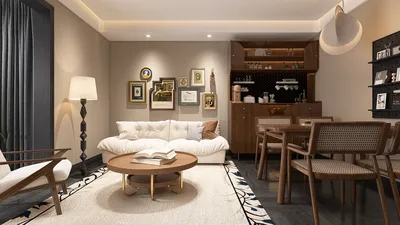


Once, I persuaded a client that a chunky lounge chair would effectively "open up" a shoebox-sized living room—only to discover that 'chunky' meant "I can’t get it through the door." After a week involving awkward disassembly and a daring moment of carrying it through the window, it became clear that considering three-dimensional space is crucial when selecting small seating. If you find yourself grappling with limited area, these small space layout concepts can help you avoid similar predicaments (and potential window damage).
1. Compact Wingback for Intimate Spaces
I adore the stunning impact of a petite wingback—you can anchor a corner without overwhelming it. The high back creates a sense of enclosure, which is perfect for studio corners, while the slender arms maintain open sightlines. However, vintage wingbacks can sometimes be deep, so it's wise to measure the seat depth and opt for a compact design to save floor space.
save pin
2. Low-Profile Tub Chairs for an Open Atmosphere
Tub chairs, positioned low, can visually reduce the room’s vertical weight, making a small living area feel more spacious. They pair beautifully with a slim side table and are often designed with removable covers, making them ideal for families. However, keep in mind the firmness—many prioritize aesthetics over long-term lumbar support, so be sure to test the cushions or opt for high-density foam.
save pin
3. Armless Slipper Chairs for Enhanced Flow
Armless slipper chairs are my go-to solution when circulation is just as essential as comfort—you can seamlessly slide them into compact areas, arrange two across a narrow console, or tuck one beneath a window. Their minimalistic design prevents the space from appearing cluttered, although you do sacrifice some arm support. For a touch of visual diversity without added bulk, consider mixing materials like boucle or leather.
save pin
4. Swivel Lounge Chairs for Versatile Arrangements
Swivel chairs are the ultimate tool for small spaces: one can easily converse with the sofa, face the TV, or even turn towards the balcony within seconds. I once installed a swivel chair for a client who entertained regularly for movie nights—truly the best choice! Just a note, consideration for weight and durability is important, so invest in a quality base and examine warranty options if you plan on frequent usage.
save pin
5. Compact Recliners and Convertible Seating Options
Absolutely, recliners crafted for compact areas do exist, especially those with space-saving extension systems or wall-hugging designs. Convertible lounge chairs that can transform into a guest bed or provide hidden storage are invaluable in studio apartments. While they might feel more functional than stylish, their multi-functionality is a significant advantage—budget accordingly for reliable mechanisms and durable upholstery.
For layout ideas and to visualize these chair types in a plan view, I frequently utilize small room planners, allowing clients to understand circulation and sightlines before making purchases. This contextual perspective helps prevent surprises and minimizes returns.
save pin
FAQ
Q1: What dimensions should a lounge chair have for a small living space?
A: Look for chairs with a seat width between 20–24 inches and a depth below 36 inches for most compact areas. Always measure doorways and pathways beforehand to guarantee a proper fit.
Q2: Which type of upholstery works best in tight areas with pets or children?
A: Performance fabrics that are tightly woven or leather are the easiest to maintain and show minimal wear. Removable covers are also beneficial for frequent washes.
Q3: Are swivel chairs noisy or difficult to manage?
A: High-quality swivel bases operate quietly and are built to last, while cheaper mechanisms may squeak over time. Whenever possible, prioritize options with sealed bearings and a solid warranty.
Q4: Can recliners be suitable for small spaces?
A: Yes—opt for wall-hugger or zero-clearance options that recline while staying close to the wall. These choices conserve space but may come at a higher price.
Q5: How can a lounge chair appear less bulky?
A: Choose legs that elevate the frame, go for lighter shades or slim arms, and avoid deep seat depths. Slightly floating the chair away from the wall can create an illusion of more space.
Q6: What about ergonomic support in compact chairs?
A: Focus on lumbar support and medium-firm cushions for lasting comfort; while deep sinking cushions may feel luxurious initially, they can strain your back after prolonged sitting. For ergonomic seating recommendations, consult resources from Harvard Health Publishing.
Q7: How do you select a chair that fits well in an open-plan area?
A: Use scale, color contrast, and orientation to define different zones. A swivel chair or one with a slim profile can subtly distinguish a lounge area without solid partitions. I often place a rug beneath the chair to define the space further.
Q8: Are multifunctional chairs worth the investment for small apartments?
A: Often, yes—features like hidden storage, fold-out beds, or compact reclining systems offer real value in limited spaces. The compromise may be in aesthetics, so select a model that aligns with both visual appeal and functionality based on your needs.
save pin
Homestyler's roots trace back to Autodesk, the global leader in design and engineering software. That heritage lives on in every feature we build. Today, with a community of more than 18 million users worldwide, Homestyler continues to make professional-quality interior design accessible to everyone — from first-time decorators to seasoned architects.
Homestyler is your go-to online home design platform, perfect for transforming your creative ideas into reality. With an easy-to-use design tool, stunning 3D renderings, a vast array of design projects, and helpful DIY video tutorials, you can effortlessly craft your dream space—no expertise needed!
Дизайн сейчас бесплатно
































