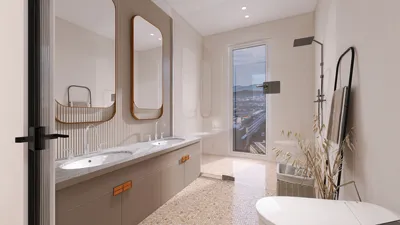


A client once approached me with an interesting request: a dishwasher, a wine fridge, and an herb garden in a kitchen the size of a walk-in closet. Instead of dismissing it, I embraced the challenge and learned to make the impossible possible. Designing in small spaces truly ignites my creativity—using inventive layouts, multifunctional elements, and a set of design secrets can transform modest rooms into stunning havens.
1. Pocket Pantry + Vertical Storage
I suggest incorporating a narrow pocket pantry into an unused wall or adjacent to the refrigerator. This smart solution conceals clutter, boosts storage capabilities, and keeps your counter tops organized. The major advantage is that you gain significant storage without sacrificing floor space; however, it requires meticulous planning and either a deeper wall cavity or slightly narrower cabinets. In one of my projects, I creatively nestled spice shelves and pull-out trays into a mere 10 cm gap— it was a small miracle with significant rewards. Pair vertical racks with a compact kitchen layout and utilize a room planner, such as Homestyler, to visualize the fitting.
save pin
2. Compact L-Shape with Floating Shelves
L-shaped kitchens optimize corner spaces and, when paired with floating shelves, maintain an airy ambiance. I particularly favor this setup for rentals or modern studios as it is space-efficient, appears open, and keeps essential cooking zones interconnected. The drawback is limited upper cabinet space for discreet storage, so I recommend combining a few closed cabinets with open shelving to achieve a balance of aesthetics and utility. Using a kitchen layout planner early on helps refine clearances and workflow.
save pin
3. Wet Room Bathroom with Linear Drain
Creating a wet room by merging the shower and floor space can give tiny bathrooms a luxurious and expansive feel. Linear drains assist with slope management and contribute to a clean, hotel-like appearance. Ensure you don’t take shortcuts with waterproofing and ventilation, as this can lead to complications. In one renovation, adopting a wet-room design freed up space for a towel warmer and a small linen niche, to the homeowner's delight. Employing a bathroom design tool can help ensure accurate floor slopes and layouts, preventing mistakes.
save pin
4. Slide-Out Appliance Towers
Slide-out towers are ideal for concealing small appliances like coffee makers and toasters, helping maintain tidy countertops. They are perfect if you prefer a clutter-free kitchen every morning. Although installing them can be pricier and requires reinforced hinges or rails, the daily convenience and clean look make them worthwhile. I often create prototypes of the dimensions in a 3D planner like Homestyler to ensure the tower functions smoothly without obstructing doors or drawers.
save pin
5. Mirror Cabinets and Lighted Vanities
Mirrors can double the perceived space, while lighted vanities enhance functionality for grooming tasks. I sometimes blend mirrored storage with integrated LED strips, which illuminate and discreetly hide essentials. The only challenge lies in selecting a finish that can resist water spots in bathrooms and fingerprints in kitchens. In a condo renovation, replacing a bulky vanity with a mirrored cabinet instantly transformed the chaotic mornings and elevated the bathroom's photogenic quality.
save pin
Tips 1:
Budget-friendly redesigns are entirely feasible—updating paint, new hardware, and implementing smart storage solutions can often yield better results than extensive renovations. For any structural changes or plumbing relocations, factor in professional advice; overlooking waterproofing or ventilation needs can lead to expensive problems down the line.
save pin
FAQ
Q1: What is the best layout for a small kitchen?
A: Typically, an L-shape or galley layout provides the most efficient workflow for small spaces. It’s crucial to ensure clear working triangles and enough landing space adjacent to appliances.
Q2: How can I make a tiny bathroom feel larger?
A: Consider large-format tiles, a single-color scheme, and incorporating mirrored surfaces; think about using a wet room design or walk-in shower to minimize visual clutter.
Q3: Are slide-out appliance towers worth the cost?
A: Definitely, particularly if countertop clutter is an ongoing issue—they enhance convenience and add to the property's appeal, although initial investments and careful planning are necessary.
Q4: How vital is waterproofing in a wet room?
A: Absolutely critical—effective waterproofing and adequate drainage are essential to avert mold growth and structural harm. Always adhere to local codes and enlist skilled professionals for these tasks.
Q5: Can lighting really change the perception of space?
A: Certainly! Layered lighting—combining ambient, task, and accent lighting—with reflective surfaces can make compact areas feel more spacious and functional.
Q6: What’s a common mistake to avoid in small kitchen design?
A: Failing to plan for the swings of doors and the clearances of appliances—I've had to revise layouts when, for instance, a fridge door impeded access to the pantry. Accurate planning is key.
Q7: Where can I discover reliable design tools for layout planning?
A: Numerous professional case studies and planners offer valuable starting points; for instance, utilizing Homestyler’s tools can assist in visualizing practical layout solutions.
Q8: Are there specific regulations for bathroom ventilation?
A: Yes—guidelines such as the International Residential Code (IRC) and local standards specify the necessary ventilation parameters; consulting these regulations is advisable for optimal airflow and fan sizing.
save pin
Homestyler is an exceptional online home design platform that empowers you to create stunning interiors effortlessly. With its user-friendly design tool, impressive 3D rendering, inspiring design projects, and helpful DIY video tutorials, you'll transform your vision into reality in no time!
지금 무료로 디자인하세요
































