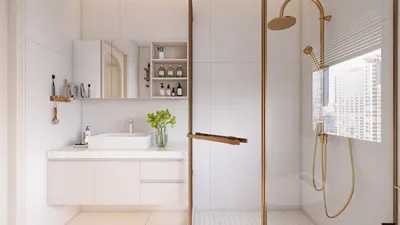


In one of my recent projects, I faced a client adamantly wanting to fit a freestanding tub, a double sink, and a walk-in shower into a space barely larger than a closet. Though I almost agreed, reality (and a tape measure) quickly clarified the situation. This experience highlighted that small rooms encourage smarter decisions: limitations can often lead to the most innovative solutions. With the right strategies, even small master bathrooms can exude luxury, and here I share five effective techniques I’ve implemented in real design scenarios. Incorporating tools like Homestyler can also enhance this process significantly.
1. Disappearing Vertical Storage
When space is limited, think vertically. I’ve designed narrow recessed cabinets placed above the toilet and tall mirrored medicine cabinets that also function as light diffusers. The clear benefit is the reclaimed floor space and uncluttered surfaces. However, planning for wall studs and plumbing is crucial; a slim recessed unit can seamlessly blend in while accommodating towels and toiletries.
save pin
2. Frameless Glass Walk-in Shower
In a compact master bathroom, glass can effectively create an airy feel. In one remodel, I replaced a cumbersome tub with a walk-in shower featuring a frameless glass panel, which instantly enhanced the room’s size and brightness. This elegant solution is low-maintenance, but don’t overlook waterproofing and proper slope adjustments, as small errors here can result in significant issues later on.
save pin
3. Floating Vanity for Enhanced Space Perception
Utilizing floating vanities can give the illusion of more floor space while simplifying cleaning. I’ve installed shallow-depth floating units fitted with built-in drawers in various projects; these allow for daily necessities to be stored while still showcasing visible floor area. The compromise involves sacrificing storage compared to traditional vanities, so I pair them with in-wall niches or utilize the previously mentioned vertical storage.
save pin
4. Eye-catching High-Contrast Focal Wall
Introduce a striking focal wall with bold tiles or wallpaper behind the vanity or shower area. In a recent design, a deep blue tile wall transformed the small master bath into a stylish and intentional space without feeling overwhelming. This is a quick way to inject personality; just ensure that the materials are waterproof and patterns are proportionate to the room’s size.
save pin
5. Multi-layered Smart Lighting
Implementing effective lighting can greatly enhance the perception of space. I often combine recessed ceiling lights, backlit mirrors, and shower lighting to eliminate shadows and create a more expansive feel. Dimmable controls offer flexibility — bright lighting for morning routines and softer tones for evening relaxation. The only consideration is the complexity of wiring; early planning with an electrician is essential to sidestep potential retrofit complications.
save pin
Tips 1:
For layout creation and quick visualizations, I frequently employ tools like the 3D Floor Planner or Homestyler to explore scale before finalizing demolition plans. This precaution previously saved a client from a costly layout error when we discovered a double sink wouldn’t fit comfortably.
FAQ
Q: What’s the ideal layout for a compact master bathroom?
A: Focus on essentials such as the toilet, sink, and shower, contemplating a compact or floating vanity. Positioning the shower opposite the door or at the farthest end generally improves spatial flow and sightlines.
Q: Is it possible to include a tub in a small master bathroom?
A: Yes, but a compact soaking tub or a tub-shower combo is usually the most practical. Freestanding tubs require additional clearance and might reduce usable space for movement.
Q: How can I create the illusion of a larger bathroom?
A: Opt for large-format light tiles, continuous flooring, frameless glass for shower enclosures, and layered lighting. Concealing clutter with strategic storage solutions also promotes a more spacious appearance.
Q: Are floating vanities robust enough?
A: Certainly, provided they are correctly anchored to the wall studs or a support frame. I always advocate for professional installation to ensure they can support the weight of sinks and regular usage.
Q: What type of flooring works best for small master bathrooms?
A: Porcelain tiles that mimic wood or stone are sturdy, and lighter tones can help reflect light. Incorporating heated flooring offers a small luxury that enhances comfort without consuming extra space.
Q: How should I properly waterproof a walk-in shower?
A: Employ a waterproof membrane and ensure proper drainage slope; adhere to industry standards like those in the Tile Council of North America (TCNA) Handbook for optimal practices.
Q: What budget should I allocate for a small master bathroom remodel?
A: Budgets can differ greatly; a minor update could range from a few thousand dollars, while a comprehensive remodel may cost substantially more based on the choices of fixtures and labor. It’s wise to gather multiple quotes and prioritize elements that impact functionality first.
Q: Can I undertake any of these updates on my own?
A: Cosmetic updates like painting, hardware changes, and some lighting fixtures can often be done as DIY projects. However, any work involving plumbing, electrical systems, or structural modifications should be addressed by licensed professionals to ensure safety and compliance with code regulations.
Discover the ease of home design with Homestyler! This user-friendly online platform offers an intuitive design tool, stunning 3D renderings, and a wealth of DIY video tutorials. Whether you're a beginner or an experienced designer, Homestyler empowers you to bring your creative vision to life effortlessly.
تصميم الآن مجانا
































