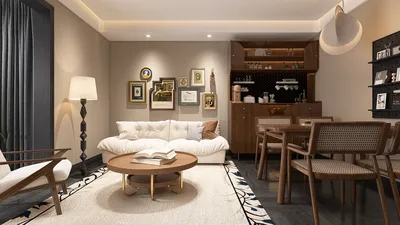


Once, a client was adamant about positioning their bed to face the door, adhering to a feng shui rule, and also repaired a wall where a radiator had been. I was almost tempted to place the bedside table in the wardrobe due to design fatigue. These minor disasters imparted lessons that no class could teach: small bedrooms can severely penalize wasted space, yet they also reward innovative thinking. To explore different layouts before making any purchases, I frequently create quick visual mockups, integrating solutions like Homestyler for precision.
1. Elevate the bed for improved flow
I often shift the bed a few inches away from the wall to encourage airflow and achieve a softer aesthetic. This approach provides a sense of luxury and allows both sides to benefit from easy cleaning and natural light access—but it does take away some floor space. Therefore, it’s best applied in rooms of at least 9-10 sqm or if you downsize other bulky items.
Tip: To anchor the bed while adding storage without hindering movement, consider a slim console or a low shelf behind it.
save pin
2. Incorporate storage into the bed and headboard
Utilizing built-in drawers, a storage ottoman, or a headboard with cubbies transforms the bed into multifunctional furniture. This not only preserves wardrobe space but also keeps surfaces uncluttered, although custom solutions can be on the expensive side.
Budget-friendly option: use modular drawer units under the bed; they appear cohesive and are simple to update later.
save pin
3. Create distinct micro-zones with furniture
Rather than opting for a single large layout, design separate areas for sleeping, dressing, and a compact work nook if desired. A narrow table can serve as both a desk and a dressing area, delineating functions without the need for walls.
For precise layouts to experiment with circulation and proportions, I often export straightforward plans that help validate every path and clearance around the bedside using tools like Homestyler.
save pin
4. Leverage vertical storage and reflective surfaces
Utilizing tall wardrobes, floating shelves, and floor-to-ceiling mirrors draws the eye upwards—enhancing the perception of height in the room. Mirrors boost light levels but should be carefully positioned to avoid an eerie feeling at night (clients often joke about this). Sliding doors and recessed lighting can help minimize visual clutter.
Practical tip: Always confirm measurements for door and window clearances before investing in tall items; measure twice, buy once.
save pin
5. Center the layout around a focal sightline
Identify a primary sightline—typically the view from the door—and organize the bed and major pieces to establish a serene visual journey. This technique helps narrow rooms feel more intentional and spacious. To enhance visualization, I use realistic 3D renderings, allowing clients to experience the space before any deliveries.
Small challenge: staging for photography can be more meticulous, but it significantly reduces layout regrets and potential returns.
save pin
FAQ
1. Where is the optimal placement for a bed in a small bedroom?
I typically place the bed to maintain the longest unobstructed walkway while ensuring a balanced view from the door. Whenever possible, I avoid blocking windows and leave at least 60-75 cm on one side for easy access.
2. How much space should surround the bed?
Strive for 60-90 cm on the side you primarily use; 45-60 cm can suffice on the opposite side in very constrained spaces, but it may feel cramped over time.
3. Is it feasible to combine a large dresser with a small closet?
Certainly—pair built-in vertical storage with low-profile dressers. Ensuring color and material consistency will make the space look cohesive instead of choppy.
4. What size should a bedside table be?
The ideal height should align with the top of the mattress (plus or minus a few centimeters), and its depth should range around 30-40 cm to avoid crowding the bedside area.
5. What strategies can I use to make a small bedroom feel larger?
Incorporate vertical lines, mirrors, cohesive flooring tones, and multifunctional furnishings (like a bed equipped with drawers). Keep surfaces free from visual clutter and utilize layered lighting.
6. Is it acceptable to position the bed under a window?
It can create a cozy atmosphere and maximize wall space for storage; however, assess drafts, heater locations, and how curtains will function. I generally avoid this setup if window heads are low or radiators are placed below the sill.
7. What lighting is most effective in a bedroom?
Employ a mix of three lighting types: ambient (soft overhead), task (reading lamps), and accent (wall washes or pinpointed spots). Dimming capabilities increase flexibility for various moods.
8. What conditions promote the best sleep environment?
According to the National Sleep Foundation, a cool and dark bedroom is ideal for quality sleep; maintaining a temperature between 60-67°F (15.6-19.4°C) is generally recommended (source: https://www.sleepfoundation.org/bedroom).
save pin
Homestyler is your go-to online home design platform, perfect for all skill levels. With its easy-to-use design tool, stunning 3D renderings, and a wealth of inspiring design projects and video tutorials, transforming your home has never been easier or more enjoyable!
立即免费设计
































