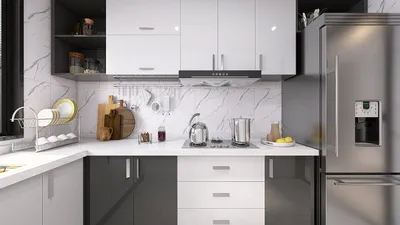


A client once insisted that every cabinet should have a unique knob, as they envisioned their kitchen resembling a 'thrift-store treasure hunt.' This posed a challenge for me as a designer and taught an important lesson about the significance of restraint. I discovered that an appropriately selected handle could either enhance or disrupt the overall flow of the kitchen. Sometimes, just a minor adjustment can transform a line of uninspired cabinets into something I would be eager to photograph. Utilizing tools like Homestyler for visual planning can be beneficial in these scenarios.
When needing to swiftly test a concept, I frequently create a quick mockup to assess the scale and finish before finalizing any hardware. These small trials can significantly mitigate both costs and the potential for regret later on.
1. Slim bar pulls for a contemporary, open feel
I often opt for slim bar pulls when a client desires a clean, modern aesthetic and ease of use. These pulls convey a modern vibe without being overly assertive. The benefits include their ergonomic design that works well with wood, lacquer, or matte finishes; however, caution is necessary with cheaper options as they can be unstable, so investing in durable screws and backplates is essential for quality.
save pin
2. Integrated or recessed finger pulls for a minimalist approach
Integrated pulls, such as routed grooves or edge pulls, provide a seamless and sophisticated appearance for cabinets. The primary benefits are a tidy look, which simplifies cleaning; however, this design can elevate cabinet fabrication costs and demands accuracy during installation to prevent gaps and sharp edges.
save pin
3. Classic cup pulls and mixed-metal knobs for character
Combining cup pulls on drawers with small knobs on doors has become my favored strategy when a client seeks a subtle vintage charm without fully committing to a farmhouse style. These choices conceal fingerprints and work well with tight drawer spaces; however, it's crucial to be mindful of the finish combinations — blending warm brass with cool chrome can yield beautiful results when done carefully. For assessing proportions in context, I occasionally create 3D previews using tools like Homestyler to confirm spacing and sightlines.
save pin
4. Leather or wooden strap handles for warmth and texture
For kitchens that need a cozy touch, I recommend leather or wood strap handles. They develop a lovely patina over time and introduce a tangible warmth. These materials offer a softer grip and suit layered designs, such as Scandinavian interiors; however, it's important to remember that leather requires periodic conditioning and wooden straps may wear out quicker in heavily used kitchens.
save pin
5. Edge pulls and hidden rails for compact kitchens or minimalist cabinetry
In tiny kitchens, where every detail matters, edge pulls or slim hidden rails maintain an uninterrupted and functional front appearance. They maximize usable surface area and can be cost-effective if standard aluminum profiles are utilized; however, one must be cautious of potential warping in doors or drawer fronts due to humidity and material selection. By integrating these features with AI-powered layout tools, such as Homestyler, the outcome typically feels both practical and serene.
save pin
FAQ
Q1: How should I select the right handle finish? I usually align the handle finish with the dominant metal in the space, such as the faucet or lighting, to create harmony, or intentionally contrast by incorporating one accent metal. It’s advisable to keep finishes within two families to prevent an overwhelming appearance.
Q2: Which is more ergonomic, knobs or pulls? Generally, pulls provide a more comfortable grip, particularly for larger drawers, while knobs may be quicker to install and are suitable for shallow doors. For households with mobility challenges, full-length pulls are the best choice for leverage.
Q3: What is a reasonable budget for each handle? You should anticipate spending from $3 for basic knobs to over $30 for designer pulls; integrated handles can elevate cabinet fabrication costs. I typically allocate about 1-3% of the kitchen budget to hardware based on the chosen finishes.
Q4: How can I mix metals safely? Yes, you can mix a primary metal with one contrasting accent and ensure that accent appears in at least three locations to enhance cohesion. I often showcase a brass tone in lighting, a few knobs, and an accessory for a cohesive design.
Q5: What maintenance is required for different materials? A mild soap and a soft cloth are generally sufficient for most finishes; however, avoid ammonia-based cleaners on specific brushed or plated metals. Leather requires conditioning while wood handles benefit from occasional oiling as well.
Q6: Do integrated handles help reduce cabinet costs? Not typically; integrated or custom edge pulls can complicate the fabrication process, potentially raising initial costs but adding resale value due to perceived quality. For budget considerations, select pre-made edge profiles that replicate the desired look.
Q7: How can I visualize handle options for my kitchen design? Experimenting with sample hardware on a drawer or utilizing digital mockups is advisable to test scale and finishes; I frequently rely on visual mockups prior to making purchases. Tools that enable the placement of hardware in a 3D scene, like Homestyler, facilitate faster decision-making and lower return rates.
Q8: Are there specific guidelines for handle placement? To ensure consistent ergonomics, many designers adhere to the recommendations provided by the National Kitchen & Bath Association (NKBA) regarding drawer and door heights and clearances (see https://www.nkba.org). These guidelines assist in positioning handles for optimal comfort and sightlines.
save pin
Homestyler is an exceptional online home design platform that empowers you to create stunning spaces effortlessly. With its user-friendly design tool, impressive 3D rendering, diverse design projects, and helpful video tutorials, you can unleash your creativity and transform your home like a pro!
Concevez maintenant gratuitement
































