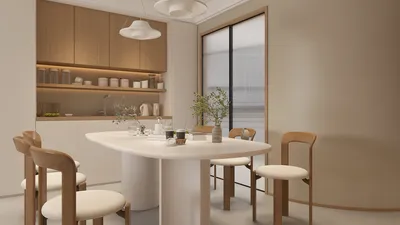


I once had a customer who was determined to design their petite kitchen to emulate a mountain cabin aesthetic — complete with avocado-colored cabinets, concrete countertops, and a driftwood chandelier. I almost joked about a picnic in the backyard, but this project made me realize how compact areas could ignite significant creativity. If you’re looking to envision rustic designs, that initial endeavor still influences my selections of materials and finishes, especially when using tools like Homestyler for layout visualizations.
Incorporate natural materials for added dimension
I enjoy combining warm wooden cabinets with honed stone countertops; the juxtaposition creates a deliberate look rather than a chaotic one. This approach offers immediate character and resilience, but the key challenge is ensuring that the wood and stone tones complement rather than clash. My advice is to test large material samples together under your kitchen’s specific lighting conditions prior to making a final decision.
save pin
Opt for matte finishes and soft hues
Earthy kitchens emit tranquility with matte surfaces — consider soft greens, clay shades, and charcoal tones. While matte finishes conceal fingerprints and provide a tactile feel, they can be prone to scratches compared to glossy alternatives. For a budget-friendly approach, you can achieve a matte effect with painted cabinets and a more economical countertop veneer instead of full stone.
save pin
Introduce greenery and organic textures inside
Incorporating plants, wicker baskets, and linen towels can instantly create a homey vibe in your kitchen. I frequently suggest positioning a trailing plant above open shelves to add a dynamic touch; it’s an affordable way to transform a plain corner into a visual highlight. If you’re keen to plan out where plants and shelving pieces might go, sketching a preliminary layout can help avoid surprises during installation.
save pin
Utilize textured backsplashes and open shelving
A handcrafted tile or reclaimed wood backsplash contributes a level of craftsmanship and charm that complements earthy designs. Open shelving can display ceramics and wooden bowls but requires a tidy organization — something that not everyone enjoys maintaining. For those on a tight budget, consider painting the backsplash wall in a rich clay tone and incorporating two open shelves instead of a full wall of custom cabinetry.
save pin
Create multi-functional islands and compact work areas
For smaller kitchens, I design islands that serve as prep areas, dining spots, and storage solutions. The benefit is substantial: maximizing utility in constrained spaces; however, one must be strategic about circulation and appliance arrangement. I typically create a mock-up of the workflow to guarantee a comfortable flow between the sink, stove, and refrigerator.
save pin
Tips 1:
Limit your design palette to three primary materials (such as wood, stone, and metal) and two accent colors for a harmonious feel. For budget-conscious projects, focus on robust surfaces in high-use areas while enhancing warmth with plants and textiles.
save pin
FAQ
Q1: What are the simplest modifications to make a kitchen feel grounded?
I suggest replacing cabinet hardware with matte brass, adding a few potted plants, and introducing a textured rug. These changes are cost-effective yet impactful.
Q2: Are earthy kitchens appropriate for small spaces?
Absolutely — compact areas benefit from natural elements that provide depth without cluttering the visual space. Scale is important: opt for slender shelves and smaller pots to maintain an open feel.
Q3: How do I care for wood and stone surfaces in a kitchen?
Utilize cutting boards and gentle cleaners, periodically seal stone surfaces, and avoid harsh abrasives on matte finishes. Consistent upkeep preserves a warm, lived-in appearance.
Q4: Is it feasible to achieve an earthy aesthetic on a limited budget?
Yes — prioritize one standout feature (like a butcher block or painted cabinets) and supplement with affordable accents like wicker baskets and herb pots. Clever DIY projects and thrifted items can significantly enhance the look.
Q5: What types of plants are ideal for kitchens?
Pothos, culinary herbs such as rosemary and thyme, and snake plants thrive in varying light conditions, making them suitable for kitchen environments. Position them near windows or use grow lights if natural light is scarce.
Q6: Are matte paints safe for kitchen air quality?
Indeed, many low-VOC matte paints are designed for indoor applications; look for products labeled low-VOC or zero-VOC to minimize emissions. The U.S. EPA offers guidance on volatile organic compounds and how to select safer options (EPA, https://www.epa.gov/indoor-air-quality-iaq/volatile-organic-compounds).
Q7: How can I test my kitchen layout ideas before starting a renovation?
I frequently create scaled sketches before moving on to a basic digital representation so clients can visualize flow and space utilization. If you want to preview your design in 3D, using Homestyler for a quick render can aid in selecting finishes and understanding spatial arrangements.
Q8: Where can I find tools for planning a small kitchen remodel?
Begin by gathering inspirational images to craft a mood board, then take measurements of your area and list essential elements. For detailed plans and layouts, many online case studies and planning resources provide templates and real-world examples to assist in your design journey.
save pin
Homestyler is your go-to online home design platform! With its user-friendly design tool, stunning 3D renderings, and a wealth of DIY video tutorials, you can effortlessly create and visualize your dream spaces. Transform your home with ease and inspiration today!
Diseño ahora GRATIS
































