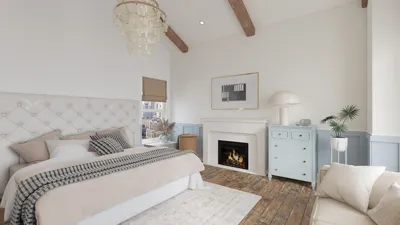


Installing recessed lights can often lead to learning experiences. For instance, a time I set the lights too close to a wall made my client liken them to runway lights, which was both amusing and instructional. From this incident, I grasped the significance of proper spacing in a kitchen setting: it can define work areas, mitigate glare, and even create an illusion of space in a compact galley kitchen. These small kitchens always encourage my creativity, so in this article, I’ll present five insightful recessed lighting spacing ideas that I have implemented in actual projects, showcasing the versatility of tools like Homestyler.
1. Standard wall offset — a reliable foundation
For general ceiling cans, my preferred technique is to position recessed lights approximately 12–18 inches away from the wall when dealing with an 8-foot ceiling. This configuration effectively highlights cabinets and backsplashes without casting harsh shadows. The benefit of this method is the reliable and even illumination it provides; however, it may require some adjustments for taller cabinets or ceilings. If you’re uncertain, I advise experimenting with temporary lamp placements before making any irreversible installations.
save pin
2. Dedicated task lighting for countertops
For prep and sink areas, I recommend tightening the lighting configuration: space lights between 18–24 inches apart and around 24–30 inches from the wall for standard-height cabinets. This setup delivers focused light, minimizing shadows where you prepare food. Although this involves more fixtures and slightly increased costs, you’ll appreciate the absence of shadows over your knife block.
save pin
3. Island-focused design in contemporary kitchens
Islands necessitate a unique approach—fixtures should be aligned in a linear pattern overhead with spacing of about 24–36 inches between them, positioned 12–18 inches from the island edge. This creates efficient task lighting while visually anchoring the island. Sometimes, I include dimmable features so that the island can serve various purposes, from late-night study sessions to enjoying a cozy glass of wine.
save pin
4. Layered lighting with accent and under-cabinet options
Integrating recessed ceiling fixtures with under-cabinet lighting provides a multi-dimensional approach: use wider spacing for ceiling lights (30–36 inches) while depending on under-cabinet lights for direct illumination on countertops. This method reduces the number of cans needed while maintaining a brightly lit workspace—both economical and stylish. However, it does require careful coordination between your electricians and cabinet installers.
save pin
5. Trick for petite kitchens: staggered and varied layouts
In smaller kitchens, I often opt for smaller diameter recessed lights and stagger their positioning to avoid creating a rigid grid pattern; I place them 10–14 inches from the wall to keep the space feeling open and airy. The advantage here is a balanced, inviting atmosphere without overwhelming brightness; however, it can be a challenge to ensure all task areas are adequately lit, which is why mock-ups can be quite beneficial.
save pin
Utilizing lighting calculators and planning tools
When determining the best spacing, I frequently begin by sketching a quick ceiling design before verifying it with a digital modeling tool. This helps me visualize real dimensions and sightlines. For a quick assessment from floor to ceiling, using a 3D floor planner like Homestyler is recommended to explore fixture placements and shadow effects prior to final installation.
save pin
FAQ
Q: How far should recessed lights be set back from the wall in a kitchen? A: Typically, 12–18 inches for an 8-foot ceiling; you can adjust further out for taller ceilings or cabinets.
Q: What’s the standard spacing for recessed lights over an island? A: Generally, 24–36 inches apart and centered over the island; however, this may change depending on the island’s dimensions and intended tasks.
Q: Are recessed lights preferable to pendant lights? A: These serve different purposes—recessed lights offer broader ambient or task lighting, while pendant lights provide concentrated illumination and style. I often incorporate both in my designs.
Q: Which diameter is best for recessed kitchen lights? A: Common sizes are 4-inch and 6-inch trims; 4-inch suited for closer spacings, and 6-inch for wider coverage. Your choice will depend on both ceiling height and aesthetic considerations.
Q: Is glare from recessed lights an issue with glossy backsplashes? A: Indeed, placing fixtures at low angles too close to the wall can lead to reflections; it’s wise to test their placement and consider using diffused trims or adjusting beam angles to mitigate glare.
Q: Do building codes influence recessed light spacing? A: Yes, there are regulations concerning wiring, fire-rated housings, and clearances—be sure to adhere to local electrical codes and use insulation-contact rated cans as necessary. For authoritative guidance, refer to the National Electrical Code (NEC) for specific information.
Q: Should I consider using dimmers for recessed kitchen lighting? A: Yes, dimmers provide flexibility for different tasks and atmospheres while also prolonging bulb lifespan. Ensure that your dimmers are compatible with the LED fixtures you choose.
Q: What’s the best way to test lighting placement before installation? A: Experiment with a temporary clamp lamp or LED work lights at your proposed ceiling locations, then evaluate their effectiveness during evening hours to check for shadows and coverage.
save pin


Looking to transform your living space? Homestyler is your go-to online home design platform! With its user-friendly design tool, stunning 3D renderings, and a wealth of DIY video tutorials, you'll find countless inspiring ideas to make your dream home a reality—effortlessly!
Zaprojektuj teraz za darmo
































