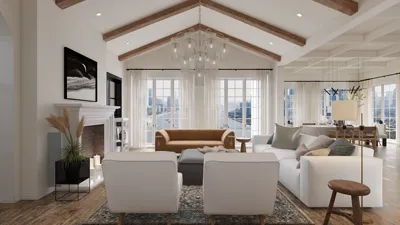


In a past project, I advised a client on opting for a cozy recessed lighting arrangement instead of their choice of glaring neon pink strip lights above the TV. This experience was an enlightening moment for me about the importance of balance and taste in design. The experience made me appreciate how well-placed recessed lighting can transform the atmosphere of a living room, enhancing it subtly rather than taking center stage. Particularly in small spaces, a well-thought-out ceiling LED layout can create an illusion of spaciousness, warmth, or even drama, depending on how the lights are positioned.
1. Layered Ambient + Accent Recessed Lighting
My go-to technique starts with a warm ambient layer using dimmable recessed fixtures set in a consistent grid pattern. Then, I incorporate accent lights above artwork or fireplaces to draw attention to specific areas. The benefit of this setup is the ability to control the mood dynamically, delivering a refined appearance; however, careful planning of the wiring and switch locations is essential for easy integration of these layers.
save pin
2. Cove-In-Set Recessed Lighting for a Soft Glow
Installing low-profile recessed fixtures in a shallow cove along the perimeter can produce a gentle, indirect light that feels both inviting and luxurious. This setup can brighten the room's edges and visually elevate the ceiling, although it may incur higher costs due to necessary carpentry work. I've successfully implemented this design in several smaller living rooms, helping them feel more open without the harshness of direct light.
save pin
3. Task-Focused Recessed Lights for Reading Nooks
For areas designated for reading or relaxing with a side table, I recommend using adjustable recessed lights that can direct illumination where it's needed the most. This targeted lighting method minimizes overall glare and is more energy-efficient than lighting up the entire space. Keep in mind that precise positioning is crucial, and you may need replaceable bulbs to ensure the quality of light remains optimal.
save pin
4. Dimmable Zones with Smart Recessed Fixtures
Creating separate zones for your recessed lighting, operated by dimmers or smart switches, allows for versatile use — whether it’s a movie night, hosting guests, or enjoying a quiet evening at home. I suggest using warm temperature bulbs in living areas; although implementing smart zoning offers incredible flexibility, it may also be more costly and requires some technical setup.
save pin
5. Layering with Decorative Pendants + Recessed Lighting
Combining a standout pendant light over a coffee table with surrounding recessed fixtures allows you to emphasize the pendant while also ensuring even background illumination. This combination provides an intentional and sophisticated look, but it’s important to coordinate the heights of your fixtures and prevent the pendant from casting unsightly shadows.
Do you want an efficient way to experiment with layouts before making physical changes? I often draft ceiling plans in a 3D floor planner, such as Homestyler, to visualize light distribution and spacing. This method has saved me from many awkward mishaps and has assisted clients in confidently selecting their finishes.
save pin
Tips 1:
A practical budget insight is to opt for LED recessed fixtures that come with integrated drivers for durability and lower upkeep. If you're dealing with existing ceilings, consider using shallow housings to reduce the need for extensive renovations. And always aim for layered control — at least two circuits to optimize your recessed lighting setup.
save pin
FAQ
Q1: How many recessed lights do I need for a living room? A1: A typical recommendation is one recessed light for every 4–6 square feet for general ambient lighting, adjusted for the lumen output of the fixtures and the height of the ceiling. For areas needing task or accent lighting, add specific fixtures as required.
Q2: What is the best color temperature for living rooms? A2: Warm white (2700K–3000K) is ideal for creating a cozy atmosphere in living spaces, while 3000K provides a slightly sharper look without feeling too sterile.
Q3: Can I mix recessed lighting with other types like track or pendant lights? A3: Absolutely — a mix of decorative pendants or track lighting alongside recessed fixtures can produce depth and allow for various functions, combining both ambient and task lighting effectively.
Q4: Are recessed lights energy efficient? A4: Contemporary LED recessed fixtures are designed to be highly energy efficient and boast extended lifespans, leading to lower energy bills and reduced maintenance frequency.
Q5: Do I need a professional for installing recessed lighting? A5: For tasks involving new wiring or alterations to the ceiling, hiring a licensed electrician is advisable to ensure safe installation and code compliance; however, simple fixture replacements may be feasible if existing wiring is suitable.
Q6: How can I avoid the 'hole-punched' look from recessed lighting? A6: Stagger your recessed fixtures, opt for fewer lights with better spacing, and combine them with accent fixtures or cove lighting to create a layered and visually pleasing effect.
Q7: Is there a reliable resource for lighting standards? A7: Yes — the Illuminating Engineering Society (IES) provides guidelines and is a trusted source for lighting design practices (refer to IES guidelines for more info).
Q8: How do I prepare my layout before actual installation? A8: I suggest creating a simple ceiling plan with a free floor plan creator, like Homestyler, to experiment with spacing and sightlines; visual drafts help avoid costly errors.
save pin
Homestyler is your go-to online home design platform. With its user-friendly design tool, stunning 3D renderings, and a wealth of DIY video tutorials, you can effortlessly create and visualize your dream spaces. Whether you're a novice or a pro, Homestyler makes home design fun and accessible!
Design Now for FREE
































