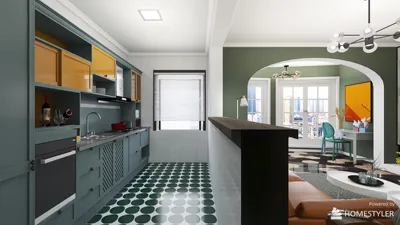


Once, I took on the task of painting an entire studio apartment in 'sunset orange' due to a misunderstanding of a client's mood board — she actually intended for coral. This led to some laughter, a valuable lesson learned, and it highlighted how vibrant colors can transform a small space when executed correctly. If you want to visualize changes in 3D, utilizing such mock-ups can spare you the headache of paint mishaps later: visualizing changes in 3D is crucial.
Creativity often flourishes in small spaces. In this article, I'll share five actionable painting strategies I've personally implemented in real home painting projects, complete with insights on their advantages, challenges, budgets, and handy tips to help you avoid my coral mix-up.
1. Create an accent wall with smart contrast
I frequently suggest creating a single accent wall for renters or those on a budget. Select one wall, perhaps behind the bed or sofa, and apply a richer, deeper hue, while keeping the rest of the walls neutral — this approach enhances depth without committing to an all-over color.
Benefits include dramatic visual impact, minimal cost, and easy reversion. The main challenges involve choosing the right wall (steering clear of the smallest one) and ensuring the paint finish complements your room's lighting. A useful tip is to test a 12x12 sample patch at various times during the day.
2. Treat the ceiling as the fifth wall
Ceilings often go overlooked, but painting them a soft blue or warm cream can create the illusion of more space or a cozier environment. For example, I once painted a narrow hallway ceiling in pale sky blue, and it instantly felt much longer.
Advantages include uniqueness, with the ability to make spaces appear taller or more intimate. On the downside, cutting in on the ceiling requires patience and the right ladder. Budget-wise, you typically just need one extra quart for most small spaces.
save pin
3. Implement stripes, panels, and faux trim for height
Vertical stripes or painted panels can add the illusion of height and structure. I once utilized two-tone vertical stripes in a tiny entryway to achieve a taller, more deliberate appearance. It offers a refined carpentry aesthetic without the high costs.
Pros include customizable styles that can conceal imperfections. However, challenges like precise measuring and taping exist (I always use a level for marking). Additionally, when planning color zones in kitchens, I recommend optimizing the flow before selecting paint, as cabinets and counters influence the best hues.
save pin
4. Use color zoning for open-plan areas
Open-plan studios can benefit immensely from color zoning — employing different but complementary shades to delineate sleeping, cooking, and living spaces. I once chose a muted green for the kitchenette alongside a warm beige in the living area; the apartment immediately felt like three distinct zones instead of one chaotic room.
The advantages include defining space without walls and budget-friendly options. Challenges consist of maintaining a consistent undertone to prevent clashes between zones. A pro tip is to use the same trim color throughout to unify the different areas.
save pin
5. Use durable paints for bathrooms and busy areas
Bathrooms and mudrooms require paint that can withstand moisture and scuffs. I often recommend semi-gloss or satin finishes for these areas, as they are easier to clean; a vibrant, moisture-resistant color can greatly enhance a small bathroom. If you need layout ideas before painting, you can explore layout inspiration for small rooms to understand how color and space interact, including tools like Homestyler for planning.
The advantages here include longevity and simplified maintenance. However, be aware that semi-gloss tends to highlight imperfections more, making preparation essential. A budget tip: investing in a good primer for stained or high-humidity walls can save you from future repainting.
save pin
FAQ
Q: How do I gauge the amount of paint needed for a small room? Measure both the height and width of the walls, deducting the areas of doors and windows, then divide the total square footage by the coverage specified on the paint can (commonly 350–400 sq ft per gallon). Always purchase a bit extra for touch-ups.
Q: What finish is recommended for bedrooms in contrast to bathrooms? Bedrooms often benefit from an eggshell or matte finish for added coziness, while bathrooms should utilize satin or semi-gloss for their moisture-resistant characteristics and ease of cleaning.
Q: Is it possible to paint over wallpaper? In certain scenarios, you can, but generally, removing the wallpaper or at least priming it is advisable. Keeping painted wallpaper may lead to peeling if the adhesive fails over time.
Q: How long should I wait between paint coats? Most contemporary latex paints recommend a wait time of 2–4 hours between coats, though always refer to the manufacturer's guidelines and consider environmental factors such as humidity and temperature.
Q: Will bold colors impact resale negatively? Bold colors can work if applied as accents. For whole-home resale, it's safer to stick to neutral tones and reserve striking colors for accent walls or small spaces that potential buyers can easily alter.
Q: Should I be cautious about lead paint in older homes? If your home predates 1978, it is crucial to test for lead before any sanding or stripping of paint. According to the U.S. EPA, homes built before that time may contain lead-based paint, and specific precautions must be taken during renovations (refer to epa.gov for more information).
Q: What strategies can I employ to save on painting projects? Handle preparation work yourself, like filling holes and sanding, while hiring professionals for cutting-in and final coats. Opt for quality paint; it usually covers better and requires fewer applications, ultimately saving time and money.
Q: When should I consider hiring a professional? Seek professional assistance if you encounter extensive drywall damage, suspect lead paint presence, or require comprehensive color consultations for your entire home. Professionals can expedite large projects while ensuring a uniform finish and durability.
save pin
Homestyler is your go-to online home design platform, perfect for both novices and seasoned decorators. With its user-friendly design tool, stunning 3D renderings, and a wealth of DIY video tutorials, you can effortlessly create and visualize your dream spaces. Start designing today!
Design Now for FREE
































