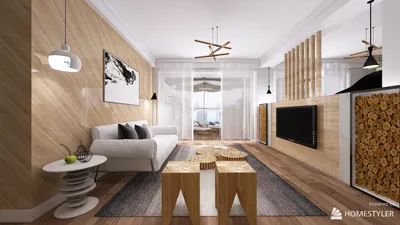


An LED wall serves multiple functions beyond merely illuminating a space. It can create a specific ambiance, enhance visibility for tasks, and establish a rhythm within the area. When designed thoughtfully, it can make ceilings appear taller, facilitate smoother movement, and provide a serene focal point instead of an overwhelming display. In this guide, I will introduce you to a practical approach for materials that balances brightness, color uniformity, thermal safety, and straightforward installation. Additionally, you can utilize tools like Homestyler to visualize your design effectively.
Before commencing your project, solidify your plan with specific performance objectives. According to the Illuminating Engineering Society (IES), general ambient lighting levels for living spaces should range from 100 to 300 lux, with task work areas requiring 300 to 500 lux; your LED wall should enhance these levels without overshadowing them. In professional environments, the WELL v2 Light concept emphasizes the importance of minimizing glare and achieving color rendering that fosters visual comfort. The smooth distribution, the ability to dim the lights, and accurate color representation hold equal importance to brightness. I typically design my feature walls to provide about 75 to 150 nits (cd/m²) for ambient scenes and dim to 1–10% for evening settings.
The psychological impact of color is significant. According to Verywell Mind’s exploration of color psychology, warm shades often feel invigorating, while cooler tones promote tranquility. In terms of LED lighting, color temperatures of 2700 to 3000K create a cozy feeling, while 3500 to 4000K appear neutral and adaptable, and temperatures above 5000K can come across as clinical under low light. Keep these guidelines in mind when selecting your LED strips and drivers.
Planning the Concept and Layout
Begin with your vision: whether it’s a striking gradient, a gentle backlight behind panels, or a full matrix designed for animations. Sketch out your wall to determine illuminated areas, dark borders, and cable paths. I aim for a clear balance in spatial ratios—approximately 60 to 70% lit surface space and 30 to 40% negative space in living rooms to create a breathable wall design. If you’re evaluating furniture arrangements and sightlines around the feature, consider utilizing a room layout tool like Homestyler for glare angle assessments and viewing distance simulations.
Choosing LED Type and Optical Strategy
Select your light engine according to the effect you wish to achieve:
For backlighting panels, opt for high-density strips (e.g., 120 to 180 LEDs/m) and incorporate a diffuser or maintain a minimum 45 to 60 mm gap to avoid dotting. When grazing textured surfaces such as wood slats or stone, opt for linear optics or an aluminum channel equipped with an opal lens to soften any harsh contrasts.
Calculating Power, Drivers, and Dimming
Calculate your total wattage. For instance, a 10-meter strip at 12 W/m would total 120 W. Add a buffer of 20 to 30%, thus choosing a 150 W driver. Pay attention to voltage drops: at 12 V, lengths exceeding approximately 5 m gain from using parallel feeds or switching to 24 V strips. Use UL-listed or CE-compliant constant-voltage drivers that match the strip voltage. For dimming, consider PWM low-voltage dimmers (inline) or 0–10 V / DALI / DMX setups for architectural control. Establish scenes that align with IES's recommended ambient ranges and dim down appropriately for evening comfort.
Understanding Thermal, Safety, and Wiring Standards
The lifespan of LED components hinges on how effectively you manage heat. Always install strips on aluminum channels or heat-dissipating materials; avoid using foam alone as a substrate. Ensure that bend radii are maintained and take steps to relieve tension near solder connections. Each power branch should be protected by fuses that correspond to the wire gauge and load. Employ stranded copper wiring, respect polarity, and comply with local electrical codes—especially if drivers are installed in confined spaces like closets or plenum areas.
Ensuring Color Quality and Consistency
Seek LEDs with a CRI of 90 or above, providing a robust R9 value of 50 or greater for rich red tones. Consistency in binning is crucial: procure all strips from a single batch and vendor to minimize color discrepancies across panels. If integrating RGB with white, consider RGBW strips that feature dedicated warm or neutral white pathways for clear, everyday settings. Maintain a consistent correlated color temperature throughout the wall; minor CCT variations can be noticeable across expansive surfaces.
Surface, Diffusion, and Glare Control
Select a diffuser that offers a balance of light transmission and uniformity. Opal polycarbonate lenses generally transmit 60 to 70% of light while concealing the diodes. For backlit acrylic, start with thicknesses ranging from 3 to 6 mm and test spacing to prevent hot spots. Aim for luminance consistency within ±10 to 15% across various zones for a calmer ambiance and reduced disability glare from seating positioned off-axis.
Framework and Access Panels for Mounting
Construct a shallow service cavity—typically 40 to 60 mm deep—to conceal wiring, channels, and in-wall rated drivers. Include at least one accessible panel near the drivers for maintenance purposes. Use French cleats or hidden brackets to facilitate the removal of cladding without damaging LEDs. Clearly label each run and leave a pull string in conduit for future enhancements.
Controls, Scenes, and Automation
The simplest approach involves using a wall-mounted low-voltage dimmer with memory presets. For a more sophisticated setup, consider a smart bridge that handles day/evening scenes, motion detection, and voice commands. I set up three primary scenes: Media (15–25% output, warm CCT), Entertain (40–60%, neutral), and Focus (60–80%, neutral-cool). Align these settings with WELL principles for glare reduction and visual comfort to minimize eye strain during extended use.
Detailed Build Sequence
Draft model elevations that outline stud positions, outlet locations, and cable pathways. Mark where drivers will be placed to ensure proper ventilation.
Install wooden battens or establish a service cavity. Before application, prime reflective backers in white for enhanced diffusion. Dry-fit the aluminum channels to assess layout.
Run low-voltage cables, create service loops, and install inline fuses, connecting everything to junction blocks. Ensure high and low voltage lines are kept separate per regulations.
Mount channels securely using screws or adhesive, ensuring they are level to prevent thermal breaks. Test the fit of diffusors, but hold off on installation until testing is complete.
Clean surfaces with isopropyl alcohol. Attach strips meticulously, ensuring polarity and cut marks are respected. Solder connections or use high-quality connectors; tint pads lightly to prevent them from lifting.
Verify polarity, check voltage at the far ends, and guarantee uniform brightness across the installation. Evaluate the dimming range for flicker by using slow-motion video to identify PWM artifacts.
Securely snap in the lenses or install the diffusing face. Use black foam tape at edges to seal any light leaks effectively. Define scenes and save presets accordingly.
Acoustics and Material Compatibility
LED walls pair exceptionally well with soft, sound-absorbing materials. In lively environments, consider incorporating felt panels or perforated MDF featuring acoustic backing around or opposite to the light source. The gentle appearance of a diffused wall is most effective when sound reflections are minimized, ideally achieving an RT60 time between 0.5 to 0.8 seconds in living areas.
Upkeep and Longevity
Regularly dust the lenses every three months. Recalibrate color scenes whenever strips are replaced. Keep spare lengths of strips from the same batch for consistency. It's common for drivers to outlast the strips, so ensure you have access for replacements without damaging the existing finishes.
Financial Considerations and Value Engineering
When looking for cost efficiencies, consider using 24 V strips to lower cable requirements; combine drivers when feasible, and opt for static white if color is seldom utilized. Conversely, investing in aluminum channels, high-quality drivers, and bin-consistent LEDs will enhance the visual finish and longevity of your installation, more than any other expense can.
Common Mistakes to Avoid
FAQ
Aim for a soft 75 to 150 nits for ambient lighting. Ensure that the entire room remains within IES recommendations (100 to 300 lux for living spaces) by layering the LED wall effectively without it becoming the sole light source.
Maintain a color temperature of 2700 to 3000K for cozy evenings, or 3500K for a versatile neutral experience. Reserve higher color temperatures for daylight task settings when tunable white options are available.
For daily use, high-CRI white typically appears more refined. Introduce RGBW if you desire occasional color touches without sacrificing a clean white appearance.
Increase LED density, incorporate an opal diffuser, and maintain a gap of 45 to 60 mm between LEDs and the diffusing surface when using backlighting.
Match the driver voltage to your strip (12 V or 24 V) and oversize wattage by 20 to 30%. Employ PWM dimmers for straightforward configurations, or use 0–10 V/DALI/DMX for architecture-level control with scene setups.
Position the LED wall behind or neighboring a screen, implementing dimmed warm scenes (15–25%). Utilize diffusors and avoid having a direct line of sight to exposed diodes.
Purchase all components from a single batch with documented binning, ensuring a CRI of 90+ and stable CCT—steer clear of mixing vendor lots. Recalibrate scenes post-installation for optimal results.
Absolutely. Ensure there's ample airflow around drivers, avoid enclosing them in sealed cavities, and adhere to the manufacturer's specifications on derating to prevent premature failures.
Avoid operating at 12 V for long spans. Feed from both ends or the center, or upgrade to 24 V to mitigate voltage drop. Confirm far-end voltage while under load using a multimeter.
Ensure that each segment runs to a distribution block fitted with appropriately rated fuses. Clearly label circuits and maintain separation between low-voltage and mains connections.
Select drivers and controllers that align with your ecosystem, whether through 0–10 V gateways or bridges like Zigbee, Z-Wave, or Thread, while programming scenes that conform to daily routines.
Utilize matte finishes, satin paints, and opal lenses for a sophisticated appearance. Pair these with warm woods or acoustic felt to elevate both the visual experience and acoustics of the space.
Homestyler is your go-to online home design platform, perfect for creating stunning interiors. With its user-friendly design tool, impressive 3D renderings, and a wealth of design projects and DIY video tutorials, you can effortlessly transform your home into a masterpiece. Start designing today!
Desain sekarang Gratis
































