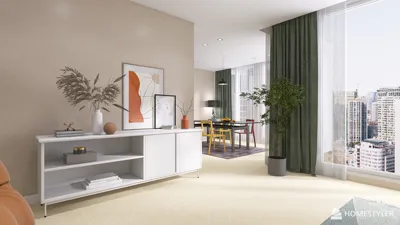


I once had a client who desired their laundry space to serve as a pet-wash station, a linen cupboard, and even a mini greenhouse — all fit within a narrow 1.2m-wide nook. This chaotic request nearly drove me to quit coffee, but it underscored how small spaces can fuel incredible creativity. When planning a compact laundry layout, a clear outline along with some smart strategies can save you both time and money.
Tips 1:
Here, I share five practical Australian laundry ideas that I apply regularly: efficient layouts, moisture-resistant finishes, and storage tricks that are useful in real family settings. These tips are budget-conscious and inspired by actual renovations I have overseen in Sydney and Melbourne, and they integrate nicely with tools like Homestyler.
1. Optimize stacking with ventilated cabinets
Stacking your washer and dryer is a great way to save floor space, but proper ventilation is crucial. I always recommend utilizing a ventilated cabinet or an open shelf above these machines to avoid mildew, especially in Australia's humid conditions. This affordable solution only requires careful planning for service access — make sure to include a removable panel.
save pin
2. Incorporate a trough that doubles as prep space
A deep stainless steel or composite trough is versatile enough for soaking, pet baths, and various tasks. I've often installed fold-down benchtops above troughs, allowing clients to utilize prep space whenever needed. Just remember to consider weight and height; choose hardware that can handle regular usage.
save pin
3. Implement pull-out drying and ironing solutions
Retractable rods, pull-out rails, and wall-mounted foldaway irons are must-haves in narrow laundry spaces. These systems not only keep things organized but are also perfect for renters. If you're aiming to create a detailed floor plan quickly, using a tool like Homestyler can help ensure there's enough clearance for these features before making any purchases.
save pin
4. Utilize waterproof finishes along with effective ventilation
Moisture poses a significant challenge in Australian laundries, particularly in coastal homes. I prefer water-resistant cabinetry and tile up to the splash zone, in addition to recommending a high-quality extractor fan even for internal laundries. While this involves some extra costs, it effectively avoids expensive mold remediation later on.
save pin
5. Maximize hidden storage with multi-functional doors
When space is limited, I lean on slim vertical cupboards, toe-kick drawers, and bi-fold doors that conceal appliances. Designing doors that include hanging rails for cloth bags or ironing boards is also a favorite strategy. To help my clients visualize their final spaces, I often suggest utilizing Homestyler for a 3D layout, which reduces decision-making time and minimizes change orders.
save pin
FAQ
Q1: What is the minimum size for a functional laundry in Australia?
With careful planning using stackable appliances and pull-out features, a functional laundry can be compact, measuring as small as 1.2–1.5 meters wide. More critical than the actual square meters are workflow and door clearances.
Q2: How can I prevent mould in a small laundry?
To keep mould at bay, opt for waterproof finishes, ensure proper extraction or cross-ventilation, and avoid trapping moisture; a small fan set on a timer can significantly help. Regularly drying out seals and gaskets around machines is equally important.
Q3: Are front-loading machines better for tight spaces?
Absolutely. Front-loaders are excellent for stacking and can offer additional benchtop space when stacked. Just be sure to check for adequate service access and vibration damping when installing them on timber floors.
Q4: What materials perform best against humidity in laundries?
Powder-coated aluminium, marine-grade plywood, and composite benchtops excel in humid conditions. It’s advisable to avoid MDF with paper veneers unless thoroughly sealed.
Q5: What budget should I set for a small laundry renovation?
Basic updates, including cabinetry, shelving, and paint, can start as low as a few thousand AUD. Complete overhauls involving plumbing, tiling, and ventilation will generally be more expensive. Always procure multiple quotes with a clear scope before commencing work.
Q6: Is it feasible to combine laundries with bathrooms or kitchens?
Yes, but merging these spaces requires meticulous attention to waterproofing and ventilation design. While combined spaces can save on footprint, they often introduce complexity in compliance and moisture management.
Q7: Are there Australian standards I should consider for ventilation and drainage?
Certainly — be sure to adhere to state building codes and plumbing standards. Consulting the YourHome guide is also recommended for best practices about ventilation and moisture control.
Q8: How do I select finishes for coastal homes?
When choosing finishes for coastal environments, prioritize corrosion-resistant fixtures, ceramic tiles, and high-quality sealed joinery. I typically recommend stainless steel components and UV-stable paints to ensure durability in seaside conditions.
save pin
Homestyler is your go-to online home design platform, perfect for turning your creative ideas into reality. With its user-friendly design tool, stunning 3D renderings, extensive design projects, and helpful DIY video tutorials, you’ll find everything you need to inspire and execute your home makeover!
Projete agora para LIVRE
































