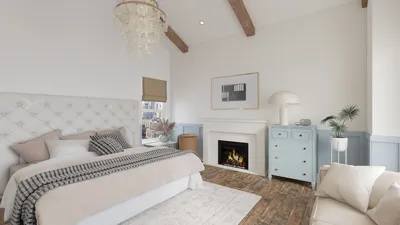


Throughout my experience with compact bedrooms, studio nooks, and home offices, I've often relied on small convection and fan heaters. The Inalsa range stands out as an essential part of my toolkit, delivering quick and precise heating solutions. The crucial factor is to align the heater's output with the room's size, ensuring clean airflow around the unit, and implementing straightforward comfort controls to avoid overheating the air in less-used spaces. When selected correctly, a portable heater with 1–2 kW power can maintain a cozy environment in rooms sized from 80 to 160 square feet without significantly increasing your energy expenses.
A fundamental guideline drawn from established workplace and comfort studies reveals that task comfort significantly influences perceived productivity. Research conducted by Gensler consistently emphasizes thermal comfort as one of the top factors individuals deem crucial. Steelcase's studies corroborate this, finding that physical comfort—encompassing temperature and airflow—plays a vital role in focus and well-being across various work environments. Such insights are in line with the WELL v2 thermal comfort standards, which recommend personal control and localized heating solutions when centralized systems fall short. Guided by these principles, I approach heating decisions in small spaces with a focus on localization, control, and responsiveness, often utilizing tools like Homestyler for layout assistance.
The ambiance of color and lighting is instrumental in creating a sense of warmth within a room. According to insights from Verywell Mind on color psychology, warm tones such as terracotta and amber can enhance the perception of warmth; when coupled with 2700–3000K lighting, occupants frequently tolerate slightly cooler air temperatures while still enjoying a cozy environment. Consequently, your Inalsa heater may operate less frequently per hour when enhanced visual warmth and glare-free lighting contribute positively to the overall atmosphere.
How to Properly Size an Inalsa Room Heater
When managing small apartments in India or compact units in global cities, I base heater sizing on both volume and potential air leakage. A practical rule of thumb is to allocate 10 W per square foot for reasonably sealed spaces during mild winters, and 12–15 W per square foot for drafty rooms or colder climates. For instance, a bedroom measuring 100–120 square feet with standard ceiling height is effectively served by a 1000–1500 W Inalsa ceramic or fan heater. If ceilings exceed 10 feet, consider increasing the capacity by 10–15% or opting for a model that features oscillation for improved air distribution.
I consciously avoid the tendency to over-size heaters. A 2000 W unit in a compact 80 square foot area can lead to cyclical heating, creating uncomfortable hot-cold zones and drying out the air more rapidly. By right-sizing the heater, sound levels remain manageable, and the uncomfortable temperature discrepancies on the skin are minimized.
Placement and Layout Strategy
The objective is to ensure an even convective flow with unobstructed air intake and exhaust. I maintain a distance of 0.6–1.0 meters from bedding, curtains, and upholstered items, never directing the heated airflow toward the face or limbs for extended periods—this localized heating can elevate comfort levels by 3–5°C. Instead of placing the heater in corners that could retain heat, I prefer positioning it along a longer wall, tilted 15–30° toward areas where air circulates to promote uniform mixing. If you’re rearranging furniture to boost airflow, utilizing a space planning tool like Homestyler can effectively assess clearances and heat pathways.
Thermal Comfort Fundamentals I Rely On
- For sedentary activities, I aim for an air temperature of 20–22°C, with some personal variability. A cozy reading area often feels adequate at 19–20°C when complemented by a throw blanket and warm lighting.
- Draft management: maintaining an average airflow speed of below approximately 0.15–0.2 m/s at ankle height is essential to minimize discomfort.
- Keeping relative humidity levels between 35–50% helps make the indoor environment feel less oppressive during winter. If the heater causes the air to dry out, employing a small humidifier or placing a bowl of water near (but not directly on) the heater can aid in stabilizing comfort levels.
Safety and Compliance Practices
Heaters should always sit on flat, non-combustible surfaces. I prioritize models that come equipped with features like tip-over protection, overheat shutdown mechanisms, and cool-touch bodies, especially in households with pets or children. Power cords must be laid out straight without coils, as tangled cords can entrap heat. I enforce a strict 1-meter clearance away from fabrics. For bedroom settings, I opt not to leave the heater running unattended; instead, I preheat the room for 15–20 minutes, then keep it operating at a low power.
Energy Consumption and Cost Management
- Utilize lower power settings (for example, 800–1000 W) for maintenance and switch to high power solely when rapid warm-up is necessary.
- Integrate with a plug-in thermostat or use the heater’s built-in thermostat to prevent temperature overshoot. Small space heaters can experience rapid temperature swings of 2–3°C in confined areas; having feedback control mechanisms in place saves energy.
- Enhance your space's insulation: door sweeps, foam gaskets at outlets on external walls, and closing off unutilized vents can reduce the wattage requirements.
- Layering heat with additions like a small rug, thermal curtains, and a high-back chair can minimize radiant heat loss, allowing you to set the thermostat 1°C lower.
Noise, Light, and Behavior Modifications
Fan heaters produce a broad hum that some individuals find comforting while others find it distracting. When I set up a work nook, I strive to maintain sound levels beneath approximately 40–45 dBA at ear level to promote concentration—research by Steelcase has demonstrated that reduced noise levels enhance cognitive performance in individual tasks. Visually, I avoid bright status indicators aimed at the bed or workspace; using tape to dim these or repositioning them can preserve a circadian-friendly environment during evenings.
Selecting the Ideal Inalsa Model for a Small Space
- Power output: For areas of 80–150 square feet, look for heaters rated between 1000–1500 W. Models featuring dual settings and a fan-only option are especially useful during transitional seasons.
- Design: Taller or oscillating units distribute heat more uniformly throughout narrow spaces; compact ceramic heaters are more suitable for short, square rooms.
- Controls: Essential features for bedrooms include a thermostat with distinct settings, a timer ranging from 30 to 120 minutes, and safety features like tip-over protection.
- Air intake and filtration: A basic dust filter helps remove burnt dust odor and enhances the heater's efficiency over time.
Light, Color, and Perceptual Warmth
According to color psychology, utilizing warm palettes can help the mind perceive spaces as more inviting. I typically recommend 2700K bulbs with matte lampshades and accents in sienna, clay, or muted ochre. The goal is to harmonize warm colors with low-glare lighting. When reading, it’s vital to maintain a task illumination level of 300–500 lux on the material while keeping ambient lighting lower for contrast. This strategy reduces the tendency to crank up the heater simply to feel warmer.
Air Quality and Maintenance Practices
An undeniable fact is that heaters tend to disperse dust particles. During winter, I make it a routine to vacuum the heater's intake weekly, clean the casing, and tidy the area around the room's perimeter where dust accumulates. For those with sensitivities, using a small HEPA purifier positioned opposite the heater's airflow can help capture particulates without causing chills.
When a Space Heater Falls Short
In situations where rooms lose heat rapidly (due to single-glazed windows or inadequate frames), explore affordable solutions: thermal curtains, window films, and door seals. If you frequently experience cold floors, consider a compact under-desk radiant mat to provide an additional 50–100 W of localized warmth while maintaining a cooler overall room temperature. Should condensation persist, prioritize sealing the space’s envelope first; a heater alone cannot rectify damp walls.
My Quick Setup Workflow
1) Calculate the area: floor size multiplied by 10–15 W.
2) Position for effective airflow: along a long wall, maintaining 0.6–1.0 m of clearance in front.
3) Preheat: run on high for 10–20 minutes, then reduce to low.
4) Adjust lighting: opt for 2700–3000K temperatures, minimizing glare; incorporate warm accents.
5) Program the timer/thermostat: aim for 20–22°C, and avoid operating unattended overnight.
6) Assess sound travel: ensure the fan direction is not aimed towards your microphone or ear in workspace settings.
7) Weekly upkeep: clean the intake, check the cord, and verify the tip-over switch functionality.
FAQ
Typically, a power range of 1000–1200 W suffices for moderately sealed rooms. If the space is drafty or features high ceilings, consider moving towards 1500 W.
I do not advocate for unattended use overnight. Preheat the space, then maintain lower power while you remain awake. Timers and thermostats should be used to prevent overshooting the set temperature, keeping a consistent 1 m clearance from fabrics.
For sedentary tasks, temperatures of 20–22°C are generally agreeable for most individuals. Combine this with warm lighting and minimize drafts to stay at the preferred lower end.
Place the heater along a long wall, ensuring there is 0.6–1.0 m of clear space in front, angled slightly toward the primary circulation path. Steer clear of tight corners and avoid direct aiming at beds.
For narrow spaces, tower heaters equipped with oscillation provide more even heat distribution. Ceramic cubes are excellent choices for compact square rooms and close-range warming tasks.
Maintain relative humidity levels between 35–50%. Enhance comfort with a small humidifier, a bowl of water near the heater (but not resting on it), and reduce high-power bursts that quickly overheat the air.
Numerous individuals find that spaces illuminated with 2700–3000K lighting and warm colors seem cozier; often, you can slightly reduce the thermostat setting by around 1°C without any loss of comfort.
I don't endorse using extension cords. If unavoidable, opt for a heavy-duty cord that exceeds the heater’s amperage rating, keep it fully extended, and ensure it is not placed on rugs. Regular checks for heat damage are advisable.
Ensure the heater's fan isn’t directed at the ear or microphone. Models operating below approximately 45 dBA at your workstation are generally acceptable for focused activities.
Routine maintenance includes weekly dusting of the intake, monthly deep cleaning, and covering the heater when not in use. Yearly checks for tip-over and overheating cutoffs are important.
While a heater can elevate air temperatures, it won’t resolve issues related to moisture presence. It’s critical to first seal leaks, improve ventilation, and contemplate a dehumidifier; heaters should then augment comfort.
If the unit continuously operates at high settings without achieving desired comfort, or you detect strong drafts around doors or windows, focus on enhancing your room’s envelope (seals, films, curtains) prior to increasing heater size.
Homestyler is your go-to online platform for home design! Its user-friendly design tool, stunning 3D renderings, and a wealth of inspiring design projects and video tutorials make it easy to transform your ideas into reality, regardless of your experience level. Get started on your dream space today!
Diseño ahora GRATIS
































