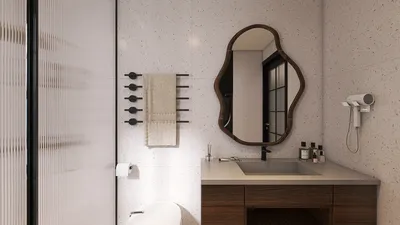


In my experience, I had a client desiring their laundry room to evoke a spa-like atmosphere. They asked for eucalyptus accents, a hanging fern, and shelves that seemingly floated in mid-air. Unfortunately, I installed the shelves three inches too low, which taught me an invaluable lesson: proper sightlines and clearances are crucial, often more so than visually appealing Instagram shots. This experience highlighted how even minor blunders can lead to significant insights about space efficiency, reinforcing my habit of visualizing layouts using tools like Homestyler before making any cuts.
1. Sleek Floating Shelves with Concealed Hampers
Consider using deep, slim floating shelves positioned strategically above a pull-out or slide-out hamper. This setup allows for easy access to detergents and small baskets at eye level, while the concealed hamper maintains a tidy appearance. However, accuracy in measurements is key to ensure the hamper fits beneath the shelf, which can be easily achieved by double-checking your calculations.
save pin
2. Cozy Wood Shelves with Built-in Drying Rod
Opt for wood shelves complemented by a slender metal rod beneath them. This offers a convenient place for air-drying delicate items without the need for bulky drying racks. Wood adds warmth to the typically functional laundry room and better conceals marks compared to painted MDF. Be cautious of humidity; selecting sealed wood or a water-resistant finish is wise to prevent warping over time.
save pin
3. Corner Floating Shelves to Optimize Vertical Storage
Corners are often overlooked in space design. Employing three tapered floating shelves can transform an underutilized corner into a functional display and storage area. I successfully implemented this in a compact laundry closet, resulting in ample shelf space for supplies and even a small plant. Installation may be trickier in drywall corners, so be prepared to use toggle anchors or locate the studs strategically for efficient workflow configuration.
save pin
4. Transparent Glass or Acrylic Floating Shelves for an Open Feel
If your laundry space tends to feel cramped and lacks light, clear glass or acrylic shelves can create an illusion of openness while allowing light to flow freely. These shelves are ideal for placing folded towels or decorative jars, though it's important to remember that they require frequent cleaning due to visibility of smudges. Still, the benefit is a lighter aesthetic that enhances the perception of space.
save pin
5. Combination of Open Shelves + Cabinets with a Fold-Down Workspace
Integrating floating shelves with a shallow cabinet and a fold-down plywood surface offers an excellent solution for folding or ironing laundry. The shelves keep everyday items readily accessible while the cabinet can discreetly store bulkier or less appealing tools. For quick configuration tests, I sometimes rely on AI-enhanced tools like Homestyler, which can inspire ideas and streamline the design process.
save pin
FAQ
Q1: What is the ideal height for floating shelves above the washer?
The recommended height is typically around 42 to 48 inches from the floor to accommodate standard counters; adjustments may be required based on your machine's dimensions and the tallest items you plan to store. Always ensure there's enough clearance for operating lids or accessing controls.
Q2: Can floating shelves support heavy laundry materials?
Certainly, floating shelves can hold heavy laundry supplies if they are properly secured to the studs or anchored with heavy-duty hardware, and if they use robust brackets or hidden supports. Pay attention to depth and thickness; opting for thicker boards and appropriate fixings is crucial.
Q3: What materials are best suited for humid laundry environments?
Materials like sealed hardwood, marine-grade plywood, treated MDF, or metal work well in humid conditions; avoid raw particleboard unless adequately sealed. Consider using moisture-resistant paint or a clear polyurethane finish for added protection.
Q4: What depth is ideal for floating shelves in a laundry room?
Floating shelves are generally best at depths of 10 to 14 inches; narrower options (8 to 10 inches) work well for detergents and small baskets, while deeper shelves are suitable for folded towels. Keep in mind to allow clearance for lids or baskets.
Q5: Are floating shelves safe for installation above appliances?
Yes, floating shelves can be safely installed above appliances, provided that heavier items are kept on lower shelves, ensuring everything is secure. It is advisable to refrain from placing fragile items directly above vibrating machines; instead, utilize secured cabinets or containers.
Q6: Is professional installation necessary for floating shelves?
If you feel confident in locating studs and using the right anchors, a do-it-yourself approach can work. However, for complicated layouts, masonry walls, or concealed plumbing, it is wise to hire a professional to avoid potential pitfalls.
Q7: Are there any recommended guidelines or standards for floating shelves?
Consulting established industry guidelines can be beneficial. The National Kitchen & Bath Association (NKBA) offers valuable insights regarding ergonomics and clearance, which can be effectively applied to laundry room layouts as well.
Q8: How can I effectively determine shelf placement before installation?
To visualize placement, create mock-ups using cardboard or temporary boards and spend a few days observing the room. This quick test helps prevent common errors like installing shelves too low or too shallow, improving overall project outcomes.
save pin
Looking to redesign your space? Homestyler is the ultimate online home design platform! With its easy-to-use design tool, stunning 3D renderings, and a wealth of inspiring design projects and video tutorials, you can effortlessly create your dream home, regardless of your experience level.
Progetta ora GRATIS
































