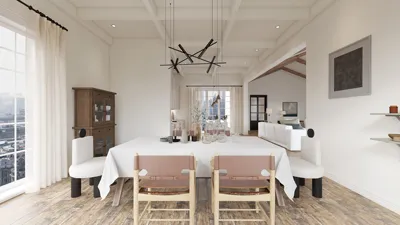


I consider the hob to be the core of the kitchen—everything radiates from this central point. The optimal outcomes arise from aligning heat sources, preparation areas, and ventilation to create a seamless workflow that feels natural and maintains a tranquil atmosphere. My strategy combines practical clearances with material considerations, layered lighting, and a visual harmony that keeps the chef focused while enhancing the space's elegance, often facilitated by tools like Homestyler for design precision.
When making placement decisions, aesthetics are not the sole priority. I emphasize the cooking triangle and sightlines, validating my choices with ergonomics and performance metrics. For instance, task lighting positioned near the hob should provide around 300–500 lux to effortlessly monitor simmering pots without glare, which aligns with the IES task lighting guidelines. Additionally, the importance of well-being in high-temperature zones drives me to optimize ventilation and thermal comfort, endorsing indoor air strategies under the WELL v2 Air framework.
Center the Hob with Practical Geometry
Begin by respecting necessary clearances. I ensure that there is at least 400–600 mm on either side of the hob for landing and staging utensils, with a minimum aisle width of 1,000–1,200 mm in front so two individuals can pass safely without colliding with hot cookware. The hob is ideally positioned between preparation (sink/cutting) and plating (serving), commonly centered along a run of 1,800–2,400 mm to prevent congestion. In galley or L-shaped kitchens, a compact triangle keeps total travel under 7 meters, thus minimizing steps and reducing heat exposure. When considering design layouts, utilizing tools like Homestyler can help you visualize clearances before final decisions are made.
Ventilation: Capture First, Then Husk
Effective extraction is essential. For most residential hobs, I establish a baseline of hoods that achieve 8–12 air changes per hour in the cooking zone. I prioritize capture efficiency rather than sheer CFM—deep canopies and proximity are crucial factors. I typically aim for 600–900 mm above the hob for wall-mounted hoods, decreasing height for downdraft systems, and strive to keep duct runs as short and smooth as possible. Acoustic comfort is vital—constant noise exceeding 55 dB can be tiring. A variable-speed fan paired with an efficient baffle minimizes sound and enhances grease capture. Consulting guidelines on ventilation strategies, particularly from WELL, aids in ensuring effective thermal and pollutant control while grounding your choices in established standards like WELL v2 Air to maintain accountability in performance.
Different Hob Types and Their Heat Dynamics
The heat source utilized defines the rhythm in cooking. Gas provides immediate visual feedback and extensive pan compatibility; induction delivers quicker boiling times, precise control, and cooler ambient conditions due to direct magnetic heating. I prefer induction for prioritizing safety and indoor air quality, while I choose gas for tactile flame control and high-heat wok cooking needs. For cooking versatility, incorporating a flex induction zone alongside a high-output gas burner strikes a balance between flexibility and precision.
Countertop Materials and Edge Considerations
Countertops surrounding the hob must withstand impacts, heat, and oil. I typically opt for sintered stone or premium quartz for their heat resistance and easy maintenance; stainless steel seamlessly integrates into professional-grade kitchens and can extend into the splash zone for enhanced cleanliness. Edge profiles are important—options like eased or half bullnose edges reduce the risk of chipping and provide comfort when moving hot pans quickly. It is advisable to keep grout lines away from primary splash areas to avoid staining; large-format slabs help minimize upkeep.
Illuminating the Cooking Area
Incorporate both task and ambient lighting. Under-cabinet LEDs, directed at the hob, reduce shadowing created by your body, while a color temperature of 3000–3500K keeps food tones appealing without yellowing. I adjust task lighting to achieve 300–500 lux at the work surface—this aligns well with IES task lighting recommendations—and avoid exposed light sources that may glare off polished pans. If using a glass splash, it’s beneficial to add a matte zone or micro-textured surface behind the hob to manage reflections.
Controls, Reach, and Safety Measures
Human factors significantly influence the cooking experience. Controls should be positioned either facing forward or angled; rear-mounted knobs can lead to overreaching across heat sources. I maintain a distance of 450–600 mm between the hob and sink to prevent splashing issues, while also keeping transfer distances short. For families with children, induction with auto-off and cool-to-touch surfaces is an excellent choice. For gas hobs, robust grates that provide continuous support are imperative for safely sliding heavy pots.
Understanding Color Psychology: Maintaining Calm in Heat
Cooking can be a high-energy activity; thus, having calming backdrops assists concentration. Using neutral, soft colors around the cooking line—like soft greige, mineral whites, or slate—helps diminish visual clutter. Warm metals such as brass or aged bronze can add a touch of character without overwhelming the space. For accent details, it’s best to use subtle saturated colors on handles or smaller appliances. Studies on color psychology indicate that intense reds may elevate perceived intensity; therefore, I ensure these hues are balanced with cooler undertones, drawing from insights on color and mood.
Creating Rhythm and Visual Cohesion
A well-structured hob area relies on disciplined composition. I align hood centerlines with the hob, synchronize the reveals of upper cabinets, and repeat proportional bands—like 1:2:1 across the splash, hood, and shelves—to maintain a visually stable environment. If the hob is positioned on an island, I incorporate a low-height visual frame (such as a thin metal rail or subtle change in materials) to indicate the hot zone without obstructing conversation.
Island Hobs: Fostering Social Engagement with Smart Boundaries
Island cooktops serve as social spaces. Maintain a buffer of 250–300 mm beyond the reach of pans to ensure safety, and consider elevating the seating area or using tempered glass dividers to guard guests from splatters. Pendant lighting should hang sufficiently high (700–800 mm above the counter) to maintain clear sightlines while still delivering 200–300 lux on the island surface. For heavy frying scenarios, I recommend either a ceiling-mounted hood with deep capture capability or a robust downdraft paired with induction to limit plume spread.
Reliable Workflow Patterns
Establish a straightforward left-to-right or right-to-left organization: prep → hob → resting. Place oils, salt, and tools within 300 mm on the dominant-hand side. Sturdy pots can be stored beneath the hob in deep drawers featuring soft-close systems; lids can be organized in a shallow pull-out near the cooking area. I prefer a slim rail for frequently utilized utensils and a concealed magnetic strip for knives, keeping them out of steam's way. If you are testing various setups, utilizing a room design visualization tool like Homestyler can effectively simulate flow without rearranging actual cabinetry.
Acoustic Comfort in the Cooking Space
Hard surfaces can amplify noise. To mitigate clatter, consider introducing micro-perforated panels or softer finishes away from the immediate splash zone—such as upholstered backs on seating, textured rugs in peripheral areas, or acoustic baffles above the dining area—to keep the kitchen feeling calm. A quieter hood and silicone handles on pans can help diminish mechanical sounds; the reward is enjoying longer cooking sessions.
Prioritizing Sustainability and Long-Term Maintenance
Opt for induction if you're leaning towards electrification and cleaner indoor air. Pair it with a recirculating hood only when exterior ducting is impractical—otherwise, duct out and employ high-efficiency filters. Regarding materials, focus on durable, repairable surfaces and select LEDs with high efficacy and long L70 durability. Maintenance routines are crucial: clean baffles every week, conduct deep cleaning of ducts annually, and inspect sealants around the hob to prevent dirt and moisture from entering.
Design Elements That Enhance the Space
- Aim for symmetry with slight asymmetry: center the hob while allowing unique utensil zones to convey personality.
- Create knife-and-spice niches: slim recesses in the splash can help maintain clear counters.
- Include an integrated pot-filler: only when plumbing is conveniently routed and splash details can control drips.
- Use contrasting textures: pair matte splashes with satin metals to reduce glare and add depth.
Frequently Asked Questions
For optimal landing zones and tool staging, I recommend maintaining 400–600 mm of space on each side and 1,000–1,200 mm of aisle width in front for safe movement and pot manipulation.
Aim for 300–500 lux at the work plane to clearly see textures and simmer cues without glare. This is in line with typical ranges supported by IES task lighting references.
Induction excels in speed, precision, and cooler ambient temperatures, along with robust safety features; gas provides visual flame feedback and high-heat capabilities. A mixed setup can achieve an optimal balance of both.
Typically, I recommend maintaining 600–900 mm for wall hoods, depending on the guidance from the manufacturer, the size of pans, and the height of the ceiling. Keeping duct runs short and smooth promotes better air capture and reduces noise levels.
Direct under-cabinet lights forward, utilize 3000–3500K for comfortable color rendering, and consider matte or micro-textured splash materials to soften reflections.
Maintain a distance of 450–600 mm between the hob and sink to facilitate efficient transfer while minimizing splash and steam issues.
Yes, but with safety precautions: include a buffer of 250–300 mm beyond the pan reach, raise the seating ledge, and use a powerful hood with effective capture or a downdraft induction arrangement to limit splatter.
Specify quieter, variable-speed hoods, introduce softer textures away from the splash zone, and contemplate acoustic treatments at the dining end to mitigate noise.
Preferred materials include sintered stone, high-grade quartz, or stainless steel for heat resistance and hygiene; avoid porous materials where splashes are likely to cause staining.
Utilizing neutral, subdued backgrounds minimizes visual clutter; reserve bold saturated accents for less prominent elements. Research into mood responses can be explored through color psychology.
Only use a recirculating option as a last resort when ducting out is not feasible. Opt for high-quality, regularly replaced filters; generally, external ducting performs better for pollutant removal.
Utilize an interior layout planner to simulate clearances, traffic flows, and sightlines before finalizing the cabinetry and duct routing.
Homestyler is your go-to online home design platform! With its user-friendly design tool, stunning 3D renderings, and a wealth of inspiring design projects and video tutorials, you can effortlessly create and visualize your dream space—perfect for both beginners and seasoned designers!
Zaprojektuj teraz za darmo
































