

Surprisingly, even a small room can provide an incredibly rich and immersive audio experience, provided that the sound system and its layout take into account acoustics, ergonomics, and the spatial environment. Having fine-tuned numerous compact living spaces, home offices, and dens, I’ve observed that the most effective setups achieve a fine balance between speaker directivity, symmetrical placement, and reflection management, all without excessively occupying floor space. For optimization, consider utilizing tools like Homestyler to visualize and plan your layout effectively.
The acoustic performance within confined spaces is significantly influenced by both the geometry of the room and various human factors. Research conducted by Steelcase indicates that background noise and subpar acoustics can detrimentally affect cognitive performance and provoke fatigue. Low-frequency buildup and premature reflections commonly arise in smaller areas. Moreover, WELL v2 recognizes acoustic comfort as critical to the well-being of occupants, advocating for speech privacy and limited background noise. These standards reiterate the necessity of precise speaker placement and calibrated sound levels in small rooms.
Data collected from measurements supports the argument for controlled sound environments within compact rooms. Statistically, according to WELL v2, sound levels in both living and working spaces benefit from clearly defined thresholds that facilitate focus and restorative activities. Research on workplace acoustics from Steelcase also highlights a direct connection between effective sound management and noticeable improvements in focus and overall satisfaction. This data guides my decisions around speaker sensitivity and amplifier strength: the goal is to achieve clarity at comfortable volumes rather than overwhelming noise levels.
Fundamental Principles for Audio in Small Spaces
My approach to building audio systems in small rooms revolves around three fundamental components: close-range listening, controlled sound dispersion, and balanced bass. Positioning nearfield—ideally 3.5 to 6 feet from the speakers—reduces interaction with the room, preserving sound details. Speakers that exhibit moderate directivity, such as two-way bookshelf models, maintain energy on the primary axis, while soft furnishings help to mitigate sidewall reflections. The management of bass is critical: compact subwoofers with adjustable crossover and phase settings efficiently address bass issues without drowning out midrange frequencies.
Ideal Speaker Options
Bookshelf speakers, especially when used with dedicated stands, perform exceptionally well in restricted settings. Their smaller cabinet size minimizes boundary boom compared to larger floorstanding options. I focus on models that offer a neutral frequency response, with either sealed or front-ported designs (better suited for placement near walls), and sensitivity ratings between 86 and 90 dB for optimal pairing with mid-range amplifiers. Active monitors are another excellent choice due to their built-in amplification and DSP, which simplify gain structure and room adjustment. For spaces centered around television usage, a low-profile soundbar with a wireless sub can be highly effective for enhancing dialogue clarity.
Amplification and Source Considerations
Compact Class D amplifiers provide clean audio power while generating minimal heat, making them perfect for tight spaces such as consoles or shelving. Ideally, aim for an output range of 40 to 100 watts per channel into 8 ohms; this will adequately drive efficient bookshelf speakers in smaller areas without causing distortion. Streaming DACs facilitate ease of connection and maintain straightforward access to cabling. I also ensure to calibrate input levels carefully to avoid digital clipping while retaining 10 to 15 dB of headroom for dynamic content.
Integrating Subwoofers Effectively
In small environments, a single well-positioned subwoofer can often outperform two inadequately placed units. For optimal performance, consider placing the sub in a front corner, between 6 to 24 inches away from the walls, and adjust the crossover frequency within the range of 60 to 90 Hz while fine-tuning phase for the smoothest sound at the main seating area. Utilize test tones to identify response peaks; typically, small room modes are concentrated around 40 to 80 Hz. A compact sealed sub generally provides tighter timing, which is preferable for music-oriented settings.
Importance of Room Layout and Listening Geometry
The geometry of the listening arrangement is crucial, often outweighing the quality of equipment in smaller rooms. Strive for an even layout where speakers are equidistant from the sidewalls, forming an equilateral or slightly isosceles triangle with the listening position. In challenging room configurations, a layout design tool like Homestyler can assist in visualizing speaker angles, seating offsets, and obstructions. Ensure tweeters are at ear level, slightly angle the speakers toward the listening area, and avoid directly placing them on media consoles—using decoupled stands helps suppress resonance.
Acoustic Treatments with Balance
The objective is to manage reflections, not to achieve absolute silence. I address the first reflection points using absorptive panels or heavier curtains, introduce plush rugs between the speakers and seating area, and employ bookshelves or diffusing decor on the rear wall to disperse sound energy. Implementing even a few targeted adjustments can significantly enhance the clarity of sound while reducing harshness and revealing subtle details.
Comparing Soundbars and Bookshelf Speakers
For streamlined setups, modern soundbars excel at delivering clear dialogue and virtual surround sound, especially when paired with a compact subwoofer. Conversely, bookshelf speakers provide a broader stereo field and more natural tonal qualities for musical playback. If the seating arrangement is intimate and positioned centrally, bookshelf speakers are typically the superior choice; however, if the space functions primarily for television viewing with several listeners, a soundbar could be the more practical option.
Utilizing DSP, Calibration, and Room Correction
In compact rooms, digital room correction can be game-changing. Utilizing DSP integrated within active monitors or external processing units allows me to manage bass peaks and synchronize audio timing. I begin with manual speaker positioning and basic acoustic modifications before finalizing settings through calibration sweeps. It’s important to keep adjustments minimal; if the DSP necessitates substantial alterations, reevaluate speaker arrangements.
Material Selection and Vibration Management
Choosing dense, heavy materials for stands and furniture effectively curtails sympathetic resonance. I prefer sand-fillable stands, closed-back shelving, and isolation pads beneath speakers and subs. Soft textures—like wool rugs and cotton drapes—facilitate acoustic absorption while enhancing comfort in the room. Additionally, opting for low-VOC finishes contributes to maintaining indoor air quality as the audio system operates within the space.
Audio Levels, Listening Preferences, and Comfort
Human factors play a critical role: extended listening at volumes above 80 to 85 dB can lead to fatigue, while reflections in small rooms amplify perceived sound levels. I typically aim for 65 to 75 dB for regular listening, reserving higher peaks for brief durations. This approach aligns with comfort guidelines outlined in WELL v2 and reflects the acoustic levels advocated by numerous workplace studies.
My Preferred Formula for Small-Room Audio Systems
- Two-way sealed or front-ported bookshelf speakers positioned on decoupled stands
- A compact Class D integrated amplifier (40 to 100 W per channel)
- One sealed subwoofer with adjustable crossover and phase settings
- Streaming DAC with dependable app control capabilities
- Minimal DSP utilized for bass equalization and level adjustment
- Rug, curtains, and two first-reflection treatment panels
- Symmetrical placement ensuring tweeters are at ear height with a slight toe-in
Detailed Placement Steps
1) Start by determining the optimal listening position, moving it away from the room's center to circumvent axial mode hotspots.
2) Set the speakers so that their center distance is approximately 60 to 80% of the distance to the seating.
3) Position the subwoofer in a front corner, execute a sound sweep, and document any response peaks; make minor adjustments to find the best response.
4) Tackling early reflections and decoupling equipment is essential for clarity.
5) Calibrate the audio levels, ensuring sufficient headroom for dynamic content.
Trusted References
I consistently refer to acoustic guidelines and well-being frameworks from WELL v2, alongside workplace research from Steelcase, to establish standards for quiet and comfortable listening environments. These resources bolster a design philosophy centered on clarity, intelligibility, and overall well-being.
Frequently Asked Questions
Q1: Are floorstanding speakers appropriate for small rooms?
A1: They can work, but often floorstanding models will generate excessive bass in constrained areas. Bookshelf speakers on stands usually deliver clearer sound and more flexible placement options.
Q2: What volume level is ideal for listening in small spaces?
A2: It's best to aim for around 65 to 75 dB for daily listening, with higher peaks reserved for brief sessions. This promotes comfort and adheres to WELL v2 guidelines.
Q3: Where is the optimal position for the subwoofer?
A3: Initially place it in a front corner, 6 to 24 inches from the wall. Adjust the crossover frequency to between 60 and 90 Hz and optimize phase for the best seat response.
Q4: Is a soundbar sufficient for music playback?
A4: Soundbars excel in providing clarity for dialogue and ease of use. However, for superior stereo imaging and tonal accuracy, two bookshelf speakers typically outperform them.
Q5: Are acoustic panels necessary?
A5: Generally, two to three panels at first reflection spots coupled with a thick rug will suffice. A blend of absorptive and diffusive surfaces is effective for maintaining a vibrant sound.
Q6: What power should my amplifier provide?
A6: For small environments, an output of 40 to 100 watts per channel into 8 ohms is often sufficient for speakers with 86 to 90 dB sensitivity, allowing for clean headroom.
Q7: Are active monitors a suitable option?
A7: Absolutely. They come with built-in amplification and DSP, simplifying calibration while often delivering superb nearfield sound quality.
Q8: How can I minimize excessive bass?
A8: Opt for sealed or front-ported designs, manage the crossover and phase settings of the sub, prevent speakers from being placed too close to corners, and consider using a rug.
Q9: Should I angle the speakers slightly?
A9: Yes, a slight angle toward the listening area typically enhances imaging and reduces reflections from side walls, particularly important with moderately directive tweeters.
Q10: Does the material of furniture influence sound quality?
A10: Indeed. Dense materials help reduce resonance, while softer finishes facilitate absorption, enhancing sound clarity without stiffening the room's acoustic qualities.
Built on technology originally developed at Autodesk, Homestyler empowers anyone to design beautiful, realistic spaces in minutes. Join over 18 million users who have already discovered a smarter way to plan, visualize, and bring their dream homes to life — all from the comfort of a browser.

Minimalist Gray Fabric Loveseat Sofa with Throw Pillows 3D Model

Modern Marble Top Solid Wood Console Table With Decorative Accents 3D Model
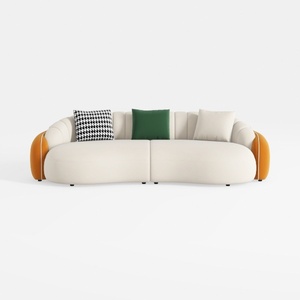

Modern Two Tone Fabric Curved Living Room Sofa 3D Model
Homestyler is your go-to platform for effortless home design. With a user-friendly online tool, stunning 3D rendering, a plethora of design projects, and informative DIY video tutorials, you can easily bring your vision to life and transform any space into your dream home.
Projete agora para LIVRE
































