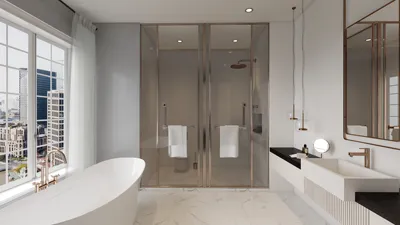


I once worked with a client who was determined to have all recessed lighting placed directly in line with where his headboard would sit — prioritizing symmetry over functionality. After a restless night filled with mockups and a minor dispute over the effects of halo lighting, I realized that lighting involves a delicate balance of distance and visual impact. Even small spaces can inspire grand ideas, and the meticulous arrangement of recessed lights is one of those subtle elements that can completely transform a space.
1. Wall washing: 6–18 inches to achieve a soft glow
To create a gentle wash that enhances textures or art, I generally position recessed cans at a distance of 6 to 18 inches from the wall. When set closer (6–10 inches), they deliver a smooth and uniform wash over textured surfaces. Conversely, placing them further away (12–18 inches) softens the contrast for flatter walls. This method adds visual intrigue without necessitating additional fixtures; however, moving too close may result in harsh bands of light on certain finishes.
save pin
2. Accent lighting for artwork: 12–24 inches
To make a painting or niche truly stand out, install the recessed lights approximately 12 to 24 inches from the wall and adjust them to focus the beam on the center of the artwork. This spacing effectively minimizes glare while ensuring the highlight remains concentrated. Although this approach may be slightly more expensive due to the potential need for directional trims, the outcome mimics a gallery-like atmosphere.
save pin
3. General room lighting: adhere to the 4-foot guideline
For consistent ambient lighting, I follow a practical rule of spacing recessed fixtures about 4 feet apart and beginning placement around 2 to 3 feet from the wall where ceiling heights are standard (8–9 feet). This ensures balanced illumination throughout the floor and walls. While effective and straightforward, rooms with elevated ceilings or darker paint may require further adjustments.
save pin
4. Cove and soffit lighting: 3–6 inches for gentle uplighting
When planning for cove or soffit uplighting, I recommend positioning cans 3 to 6 inches from the vertical wall. This allows the light to graze the ceiling and produce a soft glow. This technique minimizes shadowing and enhances the perception of height, but it's essential to incorporate baffles or trims to reduce glare when seated below.
save pin
5. Designing for small rooms and kitchens: blend distances for practicality
In kitchens and compact bathrooms, I often combine different distances — a spacing of 2 to 3 feet over work areas and 6 to 12 inches from cabinets or backsplashes for enhanced task visibility. This mixed placement caters to both functionality and aesthetics: while it may complicate planning and require additional fixtures, it ultimately enhances usability.
If you're drafting layouts, utilizing mockups can help visualize actual shadows and highlights. I frequently use Homestyler for plan visualizations before making any cuts to ceilings, which effectively prevents potential issues and callbacks.
save pin
Tips 1:
Begin by measuring ceiling height, wall color, and fixture beam angle. Warmer LEDs and lower beam spreads will require different spacing than brighter, wider floods. If you're uncertain, experiment with a single recessed can to make adjustments before committing to a full layout.
save pin
FAQ
Q1: What distance should recessed lights be from walls in living rooms?
A1: For living rooms with standard 8–9 foot ceilings, begin placing fixtures around 2–3 feet from the wall. For wall washing, a distance of 6–18 inches is effective, with lights spaced roughly every 4 feet for a uniform coverage.
Q2: How should I approach recessed lighting with higher ceilings?
A2: Elevated ceilings necessitate greater spacing and may require higher wattage or lumen output. Start fixtures further from the wall (12–18 inches) and increase spacing to 6–8 feet, depending on the beam angle.
Q3: How do beam angles and trims influence light placement?
A3: Narrow beam angles focus lighting and need exact placement, whereas wider beams can be spaced further apart. Select trims that help manage glare and beam spread.
Q4: Is it possible for recessed lights to highlight textured walls?
A4: Absolutely — positioning fixtures closer together (6–10 inches) can reveal striking texture highlights, but it's wise to test this first to prevent unwanted striping.
Q5: What is the optimal distance for lighting artwork?
A5: Aim to place fixtures around 12–24 inches from the wall, directing them to illuminate the center of the artwork for even distribution without hotspots.
Q6: Are there any building codes that affect placement?
A6: Regulations typically concern fire-rated housings, insulation contact (IC) ratings, and spacing with respect to HVAC or sprinklers; local codes can vary, so always verify with your municipality.
Q7: How can I determine proper spacing for recessed lights?
A7: A common practice for general lighting is to space fixtures in feet equal to the ceiling height — for instance, in an 8 foot room, aim for approximately 8 foot spacing — then refine according to beam angle and layout. For accuracy, rely on photometric data provided by the fixture manufacturer.
Q8: Where can I visualize fixtures before installation?
A8: I highly recommend using a dependable floor planner to draft fixture locations and simulate light distribution; it’s a valuable step that prevents mistakes and ensures appropriate distances. Additionally, for technical assistance on lumens and beam spread, refer to the Illuminating Engineering Society (IES) standards found at https://www.ies.org/, which offers authoritative recommendations.
save pin
Originally incubated at Autodesk, Homestyler has grown into one of the most widely adopted home design platforms in the world, now trusted by over 18 million users. Whether you're a homeowner exploring ideas or a professional designer delivering client-ready renders, Homestyler brings industry-leading 3D technology to your fingertips — no experience required.
Homestyler is your go-to online home design platform, perfect for bringing your creative visions to life. With its user-friendly design tool, stunning 3D renderings, and a treasure trove of DIY video tutorials, transforming your space has never been easier or more enjoyable!
Zaprojektuj teraz za darmo
































