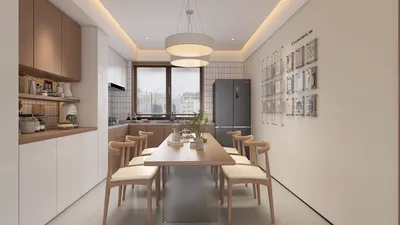


Over the past decade, I have designed numerous compact kitchens, and the most effective layouts utilize every inch as valuable space while avoiding a cramped feel. Modular kitchens in small areas benefit significantly from vertical designs, meticulously planned ergonomics, and multi-layered storage. When executed properly, these kitchens can appear spacious, functional, and truly enjoyable for cooking, with tools like Homestyler enhancing the design process.
It is vital that space efficiency does not come at the expense of health or functionality. The WELL v2 standard emphasizes that thoughtfully designed environments promote comfort and productivity. Key components like glare-free lighting, adequate ventilation, and ergonomically appropriate heights are essential for everyday kitchen activities. According to Steelcase research, poor environmental conditions can lead to a loss of up to 23 minutes of productivity per day; though this study is workplace-focused, the same issues apply at home, where ineffective lighting and layouts can waste valuable time and energy. I maintain task lighting levels of 300–500 lux for preparation areas, coupled with warmer ambient lighting at 2700–3000K to create a soothing environment, integrating indirect lighting to minimize shadows.
The design of compact kitchens is largely influenced by human reach and movement rather than aesthetics. The NKBA guidelines recommend a minimum walkway of 36 inches in work aisles and at least 15 inches of landing space next to refrigerator doors. In smaller homes, I optimize these clearances: a 32-inch width can be adequate for aisles meant for one cook when using appliances with minimal protrusion and shallow handles. While maintaining a functional kitchen triangle is still important, organizing spaces into distinct zones for prep, cooking, cleaning, and serving is often more practical, utilizing designs that might include linear or L-shaped layouts, which can be effectively created using Homestyler.
Choose the Optimal Layout for Your Space
Compact kitchens often thrive with layouts such as one-wall, galley, or small L-shaped designs. I begin by mapping out circulation paths and the swing space for appliances, followed by planning storage solutions. If you are exploring various layouts or cabinet modules, using a room layout tool can help visualize clearances, door overlaps, and appliance arrangements before finalizing your design. Consider tools like Homestyler for this purpose.
Maximize Vertical Storage While Maintaining Visual Lightness
Utilizing full-height cabinetry can significantly increase storage capacity, but it may also create a heavier appearance. I mitigate this by pairing tall units with open shelving or ribbed glass doors above eye level to preserve sightlines. Narrow pull-out sections (6–9 inches) next to the cooking area can conveniently hold oils and spices; a 24-inch pantry featuring roll-out shelves provides superior access compared to deep fixed shelves. To prevent collisions in narrow aisles, take advantage of the interior space in blind corners with swing-out carousels and top-hinged lift-up doors.
Smart Modules: Favor Drawers Over Doors
In limited spaces, deep drawers are far more effective than traditional cabinet doors for storing pots, pans, and mixing bowls. I typically design each 24–30-inch base module with two deep drawers and one shallow drawer. A streamlined utensil drawer placed near the cooktop and a knife insert within the prep zone are also advantageous. For waste disposal, I recommend a double-bin pull-out beneath the sink, conveniently positioned alongside cleaning supplies, ensuring traffic flows smoothly and separating compost from recycling is simple.
Choosing Appliances: Maintain Dimensional Discipline
Selecting 24-inch or 27-inch appliances instead of the standard 30 inches can be beneficial if cooking volumes permit. Induction cooktops are great for saving counter space while enhancing safety by minimizing residual heat. A combination microwave-convection oven can also help make the best use of wall space for ovens. Opt for panel-ready dishwashers to create a consistent aesthetic; in extremely compact kitchens, an 18-inch dishwasher can deliver functionality without overwhelming the space. It's best to choose low-profile handles and flat fronts to ensure sufficient aisle clearance.
Layered Lighting: Prioritize Task, Then Ambient
Cooking requires ample light where knives contact ingredients. Installing under-cabinet LED strips at around 4000K provides clear task lighting without being harsh; I aim for 300–500 lux on work surfaces, while maintaining overall ambient light at approximately 150–250 lux. Dimming options allow you to soften the atmosphere post-cooking. Installing a small adjustable sconce near the sink effectively reduces shadows during cleanup. Always be mindful of reflections on glossy surfaces; using matte finishes can be more forgiving.
Understanding Color Psychology for Visual Expansion
Using light, low-saturation colors can make constricted spaces appear larger. Soft warm whites, pale greige, and muted sage help reduce visual clutter and create a restorative environment. According to the insights from Verywell Mind’s review of color psychology, blues can induce calmness; therefore, I prefer softer blue tones in kitchens to avoid a chillier atmosphere, pairing these tones with warm metals or wood accents. High-contrast elements should only be placed where necessary, such as toe-kick shadows and subtle black accents for hardware, to add rhythm without diminishing the perceived size of the space.
Focusing on Ergonomics, Handles, and Touch Points
The usability of small kitchens is heavily influenced by ergonomics. I recommend a counter height of 36 inches (adjustable between 35–37 based on user needs). Implementing soft-close mechanisms lessens noise and tension. Low-profile edge pulls help avoid collisions in tight aisles. Vertical dividers in upper cabinets ensure easy access to trays and cutting boards. For those with mobility concerns, consider replacing wall cabinets in corners with open shelving at shoulder height to ease reach difficulties.
Streamlining Workflows and Establishing Micro-Zones
Arrange tasks in compact sequences: sink → prep → cook → serve. Position the trash pull-out between the sink and prep area, and store oils and seasoning supplies in a pull-out beside the cooktop. Keep cutting boards and knife storage conveniently within the prep zone. For double cooks, creating a second mini-prep station with a 15-inch auxiliary counter near the refrigerator and ensuring it has its own task lighting can help reduce collisions during cooking.
Selecting Durable, Matte, and Light-Reflecting Materials
Opt for quartz or sintered stone with light matte finishes that resist stains and minimize glare. Choose satin finishes for hardware instead of mirror-polished to avoid visual clutter. Employ large-format tiles or consistent resilient flooring to minimize grout joints and make the kitchen feel larger. Using back-painted glass or soft-finished ceramic tiles for the backsplash brightens the area without overwhelming it with reflections.
Enhancing Acoustic Comfort in Open-Plan Spaces
Small kitchens frequently function in conjunction with living areas. Installing acoustic panels on adjacent walls or a pinboard wrapped in fabric can help dampen noise. Soft-close drawers and induction cooktops are quieter than gas options. If entertaining is often on the agenda, consider adding a slim rug runner and fabric shades to help absorb sound.
Sustainable Practices for Kitchen Design
Implementing long-lasting LED lighting strips (with a CRI of 90+), water-saving faucets, and durable cabinets featuring low-VOC finishes contributes to a healthier and more resilient small kitchen environment. Opt for appliances with reliable service networks and energy-efficient ratings to avoid premature replacements. Consider using modular components that can be updated—handles, cabinet fronts, or even slim pull-out features—without requiring complete renovation.
Effective Design Tactics to Enhance Perception of Space
- Concentrate taller units in clusters rather than spreading them out to maintain open wall areas.
- Use open shelves for the top 12–18 inches to lessen visual heaviness.
- Incorporate a shallow ledge (3–4 inches) above the backsplash for spices, oils, and small plants.
- Center the sink with the window mullion for balanced sightlines.
- Opt for flush lighting fixtures or slim linear options to avoid protrusion.
- Continue the same countertop material into the windowsill to elongate the visual plane.
FAQ
Q1: What layout is ideal for an extremely narrow kitchen?
A galley layout with symmetrical aisles and full-extension drawers typically outshines a one-wall format for more complex cooking demands. Maintaining a minimum of 36 inches in the main work aisle, as per NKBA suggestions, while choosing appliances with shallow handles will help preserve flow.
Q2: How much task lighting should I install?
In prep areas, aim for a lighting level of 300–500 lux on the working surface. Pair this with under-cabinet LED strips at approximately 4000K and dimmable ambient lighting around 150–250 lux to achieve a balance between clarity and comfort, aligning with IES task-lighting standards.
Q3: Are open shelves practical in compact kitchens?
Absolutely, if they are well-organized. Limit open shelving to essential items while keeping the upper shelves decorative, and opt for matte finishes to minimize glare. Balance is key with closed storage solutions to reduce the feeling of clutter.
Q4: What appliance dimensions are optimal?
Consider 24-inch dishwashers, 24–27-inch cooktops, and counter-depth refrigerators. Combination microwave-convection appliances utilize space effectively while fulfilling baking needs.
Q5: How can I avoid a cramped feel in the kitchen?
Cluster tall cabinets, utilize light color schemes, incorporate layered lighting, and minimize hardware protrusion. Creating visual continuity—through consistent flooring and counter materials— enhances the perception of size in the area.
Q6: What is the minimum clearance needed?
The NKBA recommends maintaining 36-inch work aisles. For extremely confined kitchens, 32 inches can work in single-cook scenarios where door swings are carefully managed and flat-front appliances are present, though this should be a last resort.
Q7: Is an induction cooktop worth considering in a small kitchen?
Definitely. Induction provides quicker heating, minimizes ambient warmth, and operates quieter than gas, often allowing for slimmer vents in specific circumstances.
Q8: Which materials facilitate easy maintenance?
Invest in light matte quartz or sintered stone surfaces, satin-finish hardware, and large-format flooring to lessens the visibility of cleaning lines and fingerprints. Implementing soft-close hardware also helps protect finishes while reducing noise.
Q9: How can I enhance acoustics without undergoing a remodel?
Consider introducing a fabric rug runner, soft Roman shades, and a cork or textile pinboard on a nearby wall. These touches can absorb noise and smoothen conversations.
Q10: Which color schemes expand the room's visual feel?
Utilizing soft warm whites, pale greige, muted sage, or desaturated blues and greens will help open up the space visually. Maintaining gentle contrasts rather than stark black-and-white tones can also prevent a constricted appearance.
Q11: Where should recycling and waste be placed?
Position a double-bin pull-out unit between the sink and prep areas. This not only streamlines operations but also keeps the floor uncluttered.
Q12: Is it feasible to include seating in a minimal kitchen?
A slim breakfast ledge (10–12 inches wide) at one end of the run or a fold-down wall table can work well. Choose stools that fit entirely underneath to maintain adequate circulation.
Looking to transform your home? Homestyler offers an intuitive online design tool that allows you to visualize your ideas with stunning 3D renderings. Explore a variety of inspiring design projects and enhance your skills with easy-to-follow video tutorials. Create your dream space effortlessly!
Zaprojektuj teraz za darmo
































