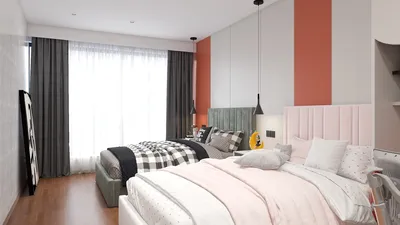


There was a time I convinced a client that a king-sized bed would seamlessly fit in a 12 x 15 room — only to discover that there was no space for bedside tables and an upset partner. This experience taught me to approach small master bedrooms as puzzles: reposition one element, and the entire layout transforms. If you're looking for quick inspiration on room arrangement, I will share five effective strategies that I’ve honed through numerous projects in confined spaces. Small areas ignite immense creativity, and a few simple adjustments can help a 12 x 15 master bedroom feel spacious.
1. Centered Bed with Built-In Flanking Storage
I prefer to position the bed in the center of the longest wall, accompanied by sleek built-ins or floating nightstands aligned on either side — this arrangement gives the room a sense of balance and purpose. The advantages are clear: it creates symmetry, offers ample surface area, and includes concealed storage. However, you must adhere to a cohesive color scheme; otherwise, the built-ins may visually overpower the space. Budget-friendly suggestion: consider using open shelves above recessed nightstands to achieve a similar aesthetic without the need for custom carpentry.
2. Angled Bed to Create a Curved Walkway
For a more dynamic layout, consider angling the bed toward a corner; it unlocks a diagonal flow and enhances the sense of depth in the room. I implemented this design in a 12 x 15 remodel, where we achieved a charming reading nook by the window — clients adored the boutique hotel ambiance. The main concern is ensuring that the mattress and bedding align correctly, but the visual benefits far outweigh the minor inconvenience.
3. Platform Bed with Under-Storage and Minimalist Headboard
A platform bed featuring built-in drawers is my go-to solution when closet space is limited; it maintains a tidy floor while reducing the need for additional furniture. It works well for storing linens or seasonal clothing, although the trade-off may be a somewhat bulkier appearance if not paired with lighter fabrics. I typically advise using a low-profile headboard and soft-colored walls to give the impression of higher ceilings.
4. Daybed/Seating Zone Opposite the Bed
Incorporating a designated seating area opposite the bed transforms a 12 x 15 room from merely a sleeping space to a multifunctional sanctuary. In one project, I converted that area into both a vanity and a reading bench, making it ideal for morning routines. Be prepared to compromise on having a narrow dresser unless you choose vertical storage solutions or wall-mounted shelves.
5. Wall-Mounted Lighting and Floating Furniture for Airiness
To optimize floor space, I recommend installing wall lights and utilizing floating vanities or nightstands; this allows the room to feel more open and simplifies cleaning. The downside? Careful planning for electrical outlets and wall mounting is essential; doing it correctly can save money in the long run by eliminating the need for rewiring. When experimenting with layouts, I appreciate using Homestyler for 3D visualizations, which can help test sightlines before making permanent alterations.
Practical Styling Tips I Always Use
Maintain a cohesive color scheme and introduce a singular accent hue to minimize visual clutter — stripes or a rug with a grain pattern can create an illusion of length in the room. Strategically placing mirrors across from windows can amplify light and create the effect of additional square footage; I once transformed a dim 12 x 15 space into one of the brightest rooms by incorporating two well-positioned mirrors. Remember, effective lighting layers — ambient, task, and accent — are crucial for making the room versatile from morning routines to late-night reading.
Layout Tools and When to Call a Pro
I quickly sketch three potential layouts for every client: 'sleep-first', 'storage-first', and 'living-first' — typically, one layout stands out. If you want to visualize each option in 3D, using detailed layouts through tools like Homestyler can help prevent unpleasant surprises, such as blocked radiators or restricted door swings. Engaging a designer is beneficial when complicated built-ins or electrical work are required, while simpler changes, like updating nightstands or incorporating a rug you already possess, can have a substantial impact.
Small Challenges and How I Solve Them
Doors and windows often dictate room layout more than we'd prefer, and accessing closets can feel tight. My quick solutions include opting for pocket doors, switching swing directions, or using sliding wardrobe options. For awkward nooks, a custom wardrobe or stacked drawers can transform wasted space into functional storage — incremental improvements can significantly enhance a 12 x 15 layout. If you're interested in AI-driven layout suggestions, I also explore innovative designs using Homestyler for fresh ideas.
Tips 1:
Measure twice, place once. Capture photos from each room corner and sketch furniture to scale — even a basic grid can save you hours and eliminate buyer’s remorse. Focus on items you use daily and maintain pathways of at least 24 inches for smooth movement.
FAQ
Q1: Is 12 x 15 large enough for a king bed?
A1: Absolutely, a king bed fits comfortably in a 12 x 15 room if you plan for adequate bedside space and circulation. Typically, centering the bed or placing it against the longer wall yields the best results.
Q2: Which bed placement helps a 12 x 15 appear larger?
A2: Positioning the bed along the longer wall or angling it diagonally can enhance the perceived depth of the room. Utilizing low-profile furniture and a light color palette amplifies this effect.
Q3: How much storage should I consider in a 12 x 15 master bedroom?
A3: Aim for at least 80–100 linear feet of storage (closet plus drawers) for two adults; complement this with under-bed drawers or custom built-ins if closet space is constrained.
Q4: Is it possible to include a workstation in a 12 x 15 master bedroom?
A4: Yes, a compact wall-mounted desk or a slender console can function as a workstation without overwhelming the space. Position it near natural light for an inviting setting.
Q5: What’s the best lighting strategy for small master bedrooms?
A5: Layering lighting is key: use a central dimmable fixture, bedside reading lights, and accent lighting for art or shelves. This approach enables you to adjust the mood and function with minimal fixtures.
Q6: How do I determine the right rug size for a 12 x 15 room?
A6: Commonly recommended sizes are 8x10 or 9x12 rugs; ideally, the rug should extend under the front two-thirds of the bed and reach into walking areas to unify the overall layout.
Q7: Are built-in wardrobes worthwhile?
A7: Built-ins optimize vertical space and can be customized for your storage requirements, making them a valuable long-term investment for smaller master bedrooms.
Q8: Does using light colors genuinely make a room feel larger?
A8: Yes. Research and design practices illustrate that lighter walls and reflective surfaces enhance perceived space by bouncing more light. For related lighting strategies, check the guidance from the National Sleep Foundation on creating restful, well-lit bedrooms (https://www.sleepfoundation.org).
Homestyler is your go-to online home design platform, perfect for bringing your ideas to life. Its user-friendly design tool, stunning 3D renderings, and a wealth of inspiring design projects and video tutorials make creating your dream space an enjoyable experience—no prior experience needed!
تصميم الآن مجانا
































