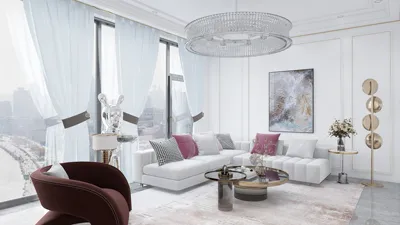


I once attempted to convert a broom closet into a laundry room due to a client's insistence on maximizing every square foot of a 1600 sq ft home for efficiency. It seemed like a fantastic idea until we discovered that there was no space for the dryer door to open — which highlights an important lesson: creativity must align with practicality. Limited spaces require smarter designs, and that’s where the excitement lies.
Open-Plan Living with Defined Areas
Transforming the primary living areas, including the dining and kitchen, into a versatile open-plan layout can enhance the perception of space and brightness in the home. I often incorporate a partial divider — such as a low storage unit or a glass bookshelf — to provide a visual delineation while allowing light to flow freely. The benefits include excellent natural light and social interaction; however, one drawback is the need for noise mitigation strategies like rugs and upholstered pieces to minimize echo.
save pin
Split-Bedroom Design for Enhanced Privacy
Positioning the primary suite on one side of the home and three bedrooms on the opposite side is a popular design choice for families who prioritize privacy. This layout helps ensure that the parents' zone remains tranquil while kids or guests make use of the additional bedrooms. The trade-off is a slightly longer hallway, but with thoughtful corridor storage solutions, this can be transformed into functional space.
save pin
Versatile Bedroom Configurations
Consider designing two of the four bedrooms as multifunctional spaces — for example, a guest room that doubles as a home office or a nursery that can be repurposed into a study. I’ve implemented Murphy beds and sliding desks in constrained areas to ensure functionality without creating clutter. The advantage: future-proofing your home design; the downside: you may require custom millwork, which could elevate costs.
save pin
Central Bath and Powder Room Layout
With four bedrooms in a 1600 sq ft home, strategically placing a full bathroom between the secondary bedrooms and a smaller ensuite or powder room near the common areas effectively balances convenience and plumbing efficiency. In a recent design, I integrated the laundry with a secondary bathroom to reduce plumbing runs — a solution that worked well, although some clients dislike sharing the space with laundry appliances.
save pin
Clever Storage Solutions and Built-Ins
Innovative storage solutions are essential in compact homes: built-in wardrobes, under-stair drawers, and recessed kitchen pantries help keep the space tidy. I always advise planning storage early in the design process, as it’s more challenging to add this later. Although it may incur slightly higher initial costs, it saves a significant amount of stress as every inch becomes critical.
Are you looking to quickly draft and evaluate these layouts? I prefer to use the 3D floor planner to visualize options and verify circulation and lighting before finalizing construction decisions. Homestyler can be a valuable resource for this purpose.
save pin
Tip 1:
Budget tip: modest cosmetic enhancements along with intelligent cabinetry often provide greater perceived value than costly fixtures. For families, it’s wise to focus on durable flooring and easy-to-maintain surfaces. If uncertain, consider crafting a basic plan using a free floor plan creator to explore options without hefty investment.
save pin
Frequently Asked Questions
How can I fit 4 bedrooms into 1600 sq ft without feeling cramped?
Utilize open-plan public spaces, create compact bedroom designs, and incorporate dual-purpose rooms. Emphasize built-in storage and minimize lengthy hallways to maximize usable area.
What is the ideal bedroom size for a 4-bedroom, 1600 sq ft house?
A common layout features a master bedroom sized approximately 150–180 sq ft and three additional bedrooms between 100–120 sq ft each; this configuration maintains comfort while adhering to area constraints.
Should I include two full bathrooms in a 1600 sq ft, 4-bedroom home?
Yes, ideally: one ensuite for the master and one shared bathroom for the other bedrooms. A powder room near the living spaces is beneficial for guests and eases bathroom congestion.
How do I maximize natural light in a compact floor plan?
Incorporate open-plan public areas, ensure windows are placed on multiple sides, and consider clerestory or transom windows for interior spaces. Light colors and reflective surfaces further enhance daylight.
Is an open kitchen preferable to a closed kitchen in a 1600 sq ft home?
Open kitchens create a sense of spaciousness and facilitate social interactions, although if you cook regularly, a partial divider or well-positioned exhaust might help manage odors and mess.
What are cost-effective methods to add storage in a small house?
Incorporate built-in wardrobes, under-stair drawers, and recessed shelving. While custom solutions may incur higher initial costs, they often provide superior space efficiency.
Where can I find reliable design tools to test layouts?
You can explore and visualize plans using reputable online design tools and planners; high-quality 3D mock-ups help identify circulation issues early on. Tools like Homestyler are excellent for rapid visualization and iteration.
Are there established guidelines for minimum room sizes?
Yes, many local building regulations outline minimum bedroom sizes; for instance, the International Residential Code (IRC) frequently referenced by builders provides minimums for habitable rooms and egress standards (see IRC for specifics).
save pin
Homestyler is your go-to online home design platform, perfect for anyone looking to create stunning spaces. With its user-friendly design tool, impressive 3D renderings, diverse design projects, and helpful video tutorials, you can easily transform your ideas into reality—no experience needed!
지금 무료로 디자인하세요
































