


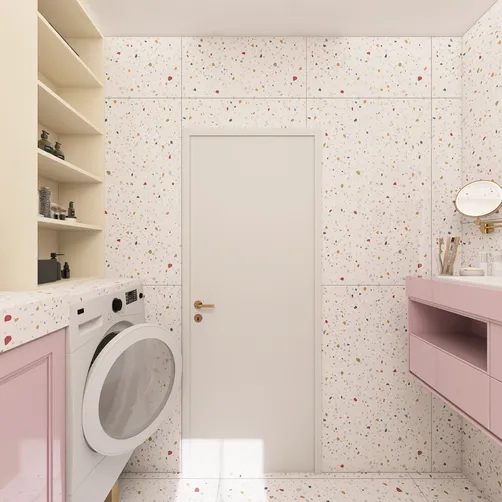
A well-designed half bath that seamlessly integrates a laundry area can be incredibly effective, provided that circulation, innovative storage solutions, and thoughtful fixture choices are prioritized. In my recent renovations, I have consistently targeted a clear pathway of 900–1,100 mm from the entrance to the sink, which allows users to navigate comfortably, even when carrying laundry baskets. Research supports this efficiency focus, with Gensler's workplace studies indicating that well-structured, multifunctional spaces minimize task-switching disruptions and facilitate faster routines through intuitive flow. According to Steelcase, clutter and poor organization can heighten cognitive load, emphasizing the necessity for clean lines and easily accessible zones. Explore the layout options with tools like Homestyler to visualize the space effectively.
The foundation of any effective combination bathroom and laundry area is quality lighting and comfort. The IES suggests maintaining approximately 300–500 lux for general tasks in bathrooms, with mirrors requiring 500–700 lux for grooming purposes. Personally, I keep ambient lighting around 300–350 lux while ensuring that task lighting near the vanity reaches above 600 lux. In terms of wellness, the WELL v2 standard highlights the importance of managing glare and achieving high color rendering for occupant comfort—utilizing high CRI (90+) LEDs minimizes color distortion while checking details or applying makeup at the mirror. Moreover, Verywell Mind points out that cooler lighting can enhance alertness; I typically use lighting of around 3,500–4,000K in laundry areas and slightly warmer tones of 3,000–3,500K at the vanity to create a balance between functionality and comfort.
Plan the Circulation First
When space is limited, prioritizing circulation over decoration is essential. I ensure at least a 900 mm clear width from the door to the vanity, making sure washer doors do not obstruct walking paths. For elongated spaces, a galley layout—placing the vanity on one side and stacked laundry with shallow storage on the opposite—often leads to the least conflict. To experiment with various layouts, utilizing a room layout tool like Homestyler can simulate door swings, appliance clearances, and movement patterns for laundry baskets.
Choose Compact, High-Efficiency Fixtures
Selecting wall-hung toilets and vanities can generate a sense of openness by exposing more floor area. I prefer vanities that are 18–20 inches deep in compact rooms and opt for round-front bowls to enhance circulation. Stacked washer-dryer configurations reclaim precious floor space; I recommend models that allow reversible doors to keep handles clear of primary pathways. Additionally, where plumbing permits, incorporating a small utility sink within the vanity enables convenient stain treatment without the need for additional fixtures.
Zone the Room: Clean, Treat, Fold
Consider arranging the space into three micro-zones: clean (toilet/vanity), treat (utility sink or counter), and fold (horizontal surfaces and storage). It is helpful to place the treatment zone beside the laundry area to minimize drips transferring across the room. A folding counter measuring 600–900 mm over a front-load washing machine delivers utility while maintaining a streamlined appearance. Keeping detergents and stain removal items within shoulder height (approximately 1,200–1,400 mm) helps minimize bending while ensuring safe access.
Strategic Storage That Feels Light
Incorporate recessed niches above the toilet for storing paper products, and use shallow, full-height cabinets (250–300 mm deep) to house detergents, towels, and cleaning supplies. I prefer open shelving only in areas where they won’t create visual clutter in the main sightline upon entry. Utilizing pull-out bins for sorting (lights, darks, delicates) with labels placed on the inside edge fosters a clean facade. Employing magnetic or slim rail systems on the sides of tall cabinets offers a neat storage solution for lint rollers and brushes.
Materials That Stand Up to Moisture
Moisture is an unavoidable aspect of a bath-laundry combination. Porcelain tile floors with a DCOF suitable for wet areas ensure confident steps; matte finishes help to reduce glare. For walls, semi-gloss or scrubbable paints provide resistance to splashes. I often recommend compact laminate or quartz for countertops—these non-porous surfaces withstand the effects of detergents and stain removers better than traditional wood surfaces. Adding silicone at all penetrations and maintaining a small 10–15 mm upstand behind countertops assists in preventing water damage.
Acoustics and Vibration Control
In compact spaces, the noise from laundry machines can be quite dominant. Incorporating rubber isolation pads and dense underlayment beneath tile flooring can effectively dampen vibrations. I also include soft-close mechanisms throughout to avoid abrupt noise spikes in echo-prone environments. If the budget permits, installing a solid-core door between this area and adjacent living spaces can significantly decrease sound transmission.
Ventilation, Odor, and Humidity Management
Effective ventilation is essential. Pair an appropriately sized exhaust fan with a timer, aiming for 1–2 air changes per hour as a practical baseline in small areas, increasing this rate during active drying. Ensure a short, well-sealed duct run and include backdraft dampers. Installing a slim louver or providing an undercut in the door can facilitate makeup air. For controlling odors, utilizing sealed bins and designating a specific spot for bleach or ammonia-based cleaning products can prevent contamination.
Light Layers for Function and Mood
Incorporate ambient, task, and accent lighting. Aim for ambient lighting of around 300–350 lux through dimmable ceiling fixtures; task lighting near the mirror should flank faces to minimize shadows. Under-cabinet strips installed over the washer provide focused illumination for sorting. To reduce glare, it’s advisable to choose diffused lenses and position fixtures outside of direct sight lines. Consistent color temperature across each zone is key, helping to prevent visual fatigue.
Color Psychology in Tight Spaces
Colors have the power to either calm or energize small rooms. Utilizing cool, desaturated hues can convey cleanliness and subtly enhance the perception of space. Warm accents—such as towels, a small runner, or decorative cabinet pulls—contribute a welcoming touch without cramping the room's feel. For specific tasks like spot cleaning, slightly cooler task lighting (3,800–4,000K) can enhance alertness, while warmer ambient lighting helps maintain a hospitable atmosphere.
Smart Fixtures and Micro-Utilities
Integrating motion sensors for low-level night lighting and occupancy sensors for exhaust fans effectively reduces energy use while promoting better air quality. A fold-down drying rack mounted above the laundry machine ensures that drips are kept away from walking paths. If you frequently steam clothing, designating a heat-safe vertical space with tiled splash protection and hooks for neatly organizing cords is advantageous.
Ergonomics: Heights, Reaches, and Safety
Position counters within the height range of 860–910 mm to alleviate back strain during folding tasks. Store detergents at eye-to-shoulder height and position heavier items at waist level. For front-load machines, maintain a clearance of at least 500–600 mm in front for comfortable loading; if the space constraints are severe, consider a pocket or outswing door to prevent interference with appliance doors. Non-slip mats placed near the vanity and utility sink add a layer of safety without overwhelming the visual space.
Sustainable Choices That Work Hard
Incorporating energy-efficient LEDs with a long lifespan can help reduce heat load and minimize the need for replacements. Opting for low-VOC paints improves indoor air quality. When selecting new appliances, prioritize those that feature high spin speeds to reduce drying time and minimize moisture exposure. Choosing durable, repairable hardware as well as standardized hinge systems enhances cabinet longevity.
Space-Expanding Visual Tricks
Positioning mirrors across from the vanity can reflect light and create an illusion of depth. Design storage elements to draw the eye upward by installing taller cabinets with narrower widths, which can feel less bulky than wider counterparts. Maintain continuous floor lines and avoid excessive material transitions that can disrupt the visual flow of space. Utilizing a single light, neutral hue on expansive surfaces while reserving contrasts for smaller accents creates a harmonious effect.
Layout Ideas for Different Footprints
• Galley: Place the vanity and toilet on one side, with stacked laundry and shallow storage on the opposite side; prioritizing symmetrical sightlines can help reduce visual clutter.
• L-Shape: Position laundry units along the shorter leg and the vanity along the longer leg; corners are excellent spots to hide pull-out hampers.
• Corridor with Pocket Door: Incorporating a pocket door can free up usable floor space; placing a slim counter over front-load units creates an efficient folding area while ensuring clear circulation paths.
Maintenance Rhythms
Organize zones for maintenance: perform weekly wipe-downs at the counter and utility sink, clean the washer gaskets monthly, and schedule quarterly checks for silicone sealing in wet areas. Keeping a dedicated caddy for cleaning supplies specific to both the bath and laundry can prevent potential chemical interactions.
FAQ
Q1: How much lighting do I need in a combined half bath and laundry?
A1: Aim for approximately 300–350 lux during ambient lighting and 500–700 lux at the mirror. Ensure that color rendering index (CRI) is 90+ for accurate color representation when treating stains and grooming.
Q2: What clearances should I maintain around the washer and dryer?
A2: Maintain a clearance of 500–600 mm in front of front-load doors, in addition to service space per manufacturer specifications. Aim for a main circulation path of around 900–1,100 mm wherever possible.
Q3: Are stacked units better for small rooms?
A3: Absolutely, stacking appliances frees up floor space for storage or folding surfaces. Select reversible door options to prevent circulation conflicts.
Q4: How do I control noise from laundry machines?
A4: Employing rubber isolation pads, dense underlayment beneath tiles, and soft-close cabinetry can significantly mitigate sound. A solid-core door adds a major advantage in sound reduction.
Q5: What ventilation strategy works best?
A5: Integrate an exhaust fan with a timer and ensure that air can be drawn in through door undercuts or louvered passages. Elevate airflow during drying cycles to effectively manage humidity and odors.
Q6: Which materials handle moisture and chemicals well?
A6: Utilize porcelain tile for flooring, semi-gloss or scrub-resistant wall paint, as well as quartz or compact laminate countertops for optimal resistance against moisture and detergent exposure.
Q7: How can color help a small combo room feel larger?
A7: Implement light, desaturated tones for significant surfaces, keeping contrasts minimal. Cooler task lighting enhances focus, while warmer ambient tones contribute to a cozy atmosphere.
Q8: What are practical storage solutions without making the room feel cramped?
A8: Opt for recessed niche storage, shallow tall cabinets (250–300 mm), labeled pull-out bins, and a fold-down drying rack to maintain an uncluttered visual theme while ensuring functionality.
Q9: Is a utility sink necessary?
A9: Although not mandatory, a compact utility basin included with the vanity is quite useful for handling stains and hand-washing when space allows.
Q10: How do I prevent glare at the mirror?
A10: Implement diffused sconces positioned at face level on both sides of the mirror, avoiding overhead-only lighting and selecting high-CRI LEDs to ensure adequate shielding.
Q11: What ergonomic heights should I follow?
A11: Set counters to a height between 860–910 mm to promote comfortable folding, keeping detergent accessibility at 1,200–1,400 mm, and positioning heavier items around waist level to facilitate safe lifting.
Q12: Can I add smart controls to improve the space?
A12: Indeed, integrating occupancy sensors for exhaust fans and low-level night lights can minimize energy consumption while improving air quality without requiring manual adjustments.
Homestyler's roots trace back to Autodesk, the global leader in design and engineering software. That heritage lives on in every feature we build. Today, with a community of more than 20+ million registered users (platform data, 2026) worldwide, Homestyler continues to make professional-quality interior design accessible to everyone — from first-time decorators to seasoned architects.

Modern Japandi Rattan Solid Wood Arched Wardrobe 3D Model

VEVOR 6 Fluted Drawer Dresser, Wooden Chest of

Minimalist Japandi Solid Wood Rattan 3 Door Cabinet 3D Model
Discover the magic of home design with Homestyler! This user-friendly platform offers a powerful online design tool, stunning 3D renderings, a wealth of design projects, and engaging DIY video tutorials. Transform your space with ease and creativity—perfect for both novices and seasoned designers!
Design Now for FREE









![Design [4]](https://hs-designs.homestyler.com/production/design/images/07c2de3a-88ec-4be8-8910-ff255b795bc2/1731419398293/7841697.jpg?x-oss-process=image/resize,w_502,m_mfit/format,webp)